
Table of Contents
The CEO’s Growth Dilemma: Beyond Stalled Revenue and Disconnected Teams
Learn Sales Funnels: Redefining a Strategic Imperative for CEOs
The Disconnect: Why Traditional Funnels Fail to Deliver Predictable Growth
Achieving Marketing-Sales Funnel Alignment: The Engine for Unified Growth
Developing Your Strategic Sales Funnel: From Awareness to Advocacy
Optimizing Sales Pipeline for Predictable Revenue: Data-Driven Strategies
Implementing and Sustaining a Strategic Funnel: Overcoming Internal Hurdles
Real-World Impact: Case Studies of Unified Funnel Success
The Future of Growth: Continuous Evolution of Your Sales Funnel Strategy
Frequently Asked Questions
Is your company’s growth stalled, despite robust sales efforts and considerable marketing spend? Do you often find your sales team blaming marketing for poor leads, and marketing pointing fingers at sales for not closing enough deals? If your revenue feels more like a lottery win than a predictable outcome, you are not alone. Many C-suite leaders grapple with this frustrating reality: a perceived “sales funnel” that is less a smooth conduit for revenue and more a fragmented collection of disconnected tactics.
As a Strategic Educator for Growth Leaders, I understand that you, the CEO, are tired of silver bullets and tactical noise. You demand a strategic framework that brings clarity, predictability, and sustained growth. This article is engineered to shift your perception of the sales funnel from a mere departmental tool to a core, integrated growth engine for your entire business. By the end, you will see that a well-designed, unified sales funnel is not just a sales department’s tool. It is a crucial, measurable strategic framework that integrates marketing efforts, identifies growth bottlenecks, and drives predictable revenue for the entire company.
The CEO’s Growth Dilemma: Beyond Stalled Revenue and Disconnected Teams
The frustration is palpable when a business, despite its best intentions and investments, hits a growth ceiling. You have poured resources into marketing campaigns, expanded sales teams, and invested in new technologies, yet the desired leap in revenue remains elusive. The root cause often traces back to a fundamental misunderstanding or underestimation, of the sales funnel’s strategic role.
The classic pain points are strikingly consistent:
Demand for Predictable Growth: The unwavering demand for significant, predictable revenue growth is the ultimate Key Performance Indicator for any CEO. Without a reliable mechanism to generate and convert demand, this becomes an increasingly daunting challenge.
Stagnant or Unpredictable Revenue: Revenue streams remain inconsistent or fail to scale despite significant investments in both sales and marketing. The budget is there, the effort is there, but the returns are not consistent or scalable.
Inter-Departmental Finger-Pointing: An infuriating blame game persists between sales and marketing teams. Marketing claims they deliver leads. Sales claims those leads are unqualified. This internal friction siphons energy and resources from the true mission of growth.
Overwhelmed by Tactical Solutions: You feel overwhelmed by point solutions for SEO, social media, CRM, or email marketing. These promise quick fixes but lack a cohesive strategic framework for predictable revenue.

Traditional approaches often fail at the C-suite level precisely because they treat sales and marketing as separate silos. Each has its own objectives, metrics, and even language. This disconnection is a relic of an outdated business model. It is incapable of supporting the complex, customer-centric journeys of today. To transcend these limitations, a unified, strategic approach to business growth is not just beneficial. It is an absolute imperative.
Learn Sales Funnels: Redefining a Strategic Imperative for CEOs
For too long, the sales funnel has been relegated to a tactical discussion, a diagram understood primarily by sales managers and marketing specialists. This narrow perception fundamentally undermines its potential. As a CEO, your role in understanding and championing this concept is critical. It shifts the sales funnel from a mere sales department tool to an integrated, company-wide growth engine.
What a Sales Funnel Truly Represents
At its core, a sales funnel is far more than a simple pipeline for leads. It is a strategic visualization of your customer’s journey, from their first interaction with your brand to becoming a loyal advocate. It represents the structured progression of prospects through defined stages. Each stage is designed to nurture their interest, address their needs, and ultimately convert them into paying customers. Crucially, it provides a measurable framework for every touchpoint and intervention required to move a potential customer from unawareness to conversion and beyond.
The Evolution of the Sales Funnel
The historical view of the sales funnel as a straightforward, linear path—Awareness, Interest, Desire, Action—is now largely obsolete. The modern customer journey is rarely linear. It is iterative, influenced by multiple channels, and often includes self-education, peer reviews, and re-entry points. Today’s sales funnel strategy recognizes this complexity, envisioning a dynamic, interconnected ecosystem. Here, marketing and sales efforts continually feed and inform each other, adapting to customer behavior and market shifts. It is a holistic system designed for continuous feedback and optimization.
Why Deep Understanding is Non-Negotiable for C-Suite Leaders
For a CEO, understanding the sales funnel is not about mastering the minutiae of CRM entries or specific ad campaign metrics. It is about comprehending the overarching mechanism that drives your company’s revenue. It is about seeing where revenue opportunities are lost, where investments are inefficient, and where the customer experience falters. Without this strategic grasp, you are steering the ship without a reliable navigation system. You are vulnerable to unpredictable currents and missed opportunities. Your engagement signals to your teams that this integrated approach is a top-level priority, fostering the collaboration essential for success.
The Disconnect: Why Traditional Funnels Fail to Deliver Predictable Growth
The primary reason many organizations struggle with unpredictable revenue and internal discord is a fundamental disconnect within their sales funnel. This is not just about a broken process. It is about systemic issues that prevent a unified view of the customer journey and cohesive revenue generation.
The Siloed Mentality: Marketing Versus Sales
Perhaps the most pervasive and damaging issue is the deeply entrenched siloed mentality between marketing and sales. They operate as separate entities with distinct, often misaligned, objectives and incentives, leading to a disjointed customer experience and significant inefficiencies.
Marketing’s Focus on Top-of-Funnel Metrics
Marketing teams, when operating in a silo, often focus exclusively on vanity metrics at the top of the funnel. They prioritize generating leads, website traffic, and impressions, without sufficient emphasis on the quality or readiness of these leads for sales engagement. For example, a marketing team might celebrate a surge in generic lead magnet downloads, generating hundreds of leads who are merely curious, not actively seeking a solution. They then pass them directly to sales without any qualification or nurturing. This creates a volume-over-value scenario that frustrates sales.
Sales’ Reactive Reliance on Leads
Conversely, sales teams, when operating in a silo, become reactively reliant on whatever leads marketing provides, often without sufficient context or nurturing. They spend valuable time chasing unqualified prospects, leading to high lead attrition rates and demoralization. Imagine a sales team cold-calling a list of contacts who downloaded a general industry report, only to find most have no immediate need or budget. This leads to countless dead-end conversations and a perception that “marketing’s leads are junk.”
The Impact of Misaligned Key Performance Indicators
When marketing is measured purely on lead volume and sales on closed deals, without a shared understanding of lead quality or conversion metrics across the funnel, conflict is inevitable. Marketing might hit its lead target, but sales misses its revenue target, and there is no shared accountability for the handoff or the journey in between. This fosters an “us versus them” culture rather than a unified revenue team.
Lack of a Unified, Comprehensive View
Beyond the siloed departments, there is often no single source of truth or shared understanding of the customer journey. Each department might have its own data sets, its own interpretation of customer behavior, and its own tech stack. This prevents a holistic view. Critical insights about how customers move through the marketing funnel, engage with content, or react to sales outreach are fragmented. This makes it impossible to identify systemic bottlenecks.
Consequences for the Business
The ramifications of a disconnected sales funnel are severe. They include:
- Inefficient Spending: Marketing budgets are wasted on unqualified leads. Sales resources are squandered chasing prospects with low conversion potential.
- High Lead Attrition: Promising prospects are lost due to poor nurturing, untimely outreach, or disjointed communication.
- Unpredictable Revenue: Without a clear, measurable funnel, revenue becomes a guessing game. This makes accurate sales forecasting impossible and strategic planning a challenge.
- Internal Friction: The blame game persists. This erodes morale, collaboration, and ultimately, your company’s growth potential.

Professor’s Note
The word ‘funnel’ implies a smooth, one-directional pour — but real buyers loop back, compare notes with colleagues, disappear for months, and return. If you manage your funnel like a literal funnel, you’ll be blindsided by every prospect who doesn’t behave that way. Think of it less as a pipe and more as a map with multiple paths that all need to lead somewhere useful.
Achieving Marketing-Sales Funnel Alignment: The Engine for Unified Growth
The antidote to the disconnected funnel is not merely better communication. It is a fundamental paradigm shift. It is about converging marketing and sales efforts into a single, cohesive customer journey strategy, often framed under the umbrella of Revenue Operations (RevOps). This marketing sales funnel alignment transforms disparate activities into a powerful, unified engine for predictable growth.
Building a Shared Understanding and Language
The first step in achieving true marketing sales funnel alignment is to dismantle the conceptual silos. This requires intentional effort to build a common understanding and adopt a unified language across both departments.
Establishing Common Goals and Objectives
Instead of marketing aiming for “leads” and sales for “deals,” both teams must align on a single, overarching goal: predictable revenue growth. This means defining shared objectives like “increasing marketing-sourced revenue by X percent” or “improving MQL-to-customer conversion by Y percent.” These inherently require joint effort and accountability.
Developing Unified Definitions
Ambiguity around terms like “lead” or “qualified” is a major source of friction. Marketing and sales must collaboratively define what constitutes a Marketing Qualified Lead (MQL), a Sales Qualified Lead (SQL), and even Product Qualified Leads (PQLs) if applicable. For instance, an MQL might be defined as a prospect who has downloaded a high-value whitepaper AND attended a webinar, demonstrating specific intent beyond general interest. An SQL then becomes an MQL who has accepted a discovery call and meets specific BANT (Budget, Authority, Need, Timeline) criteria.
Creating a Single, Comprehensive Buyer Persona
A unified buyer persona is the bedrock of alignment. This persona should detail not just demographic information, but also pain points, motivations, preferred communication channels, and common objections. Both marketing and sales use this single persona to craft relevant messaging, design lead nurturing strategies, and tailor sales conversations. This ensures consistency and relevance throughout the entire customer lifecycle.
Operationalizing Marketing-Sales Funnel Alignment
Once the conceptual groundwork is laid, the next phase involves embedding this alignment into daily operations, processes, and technology.
Implementing Joint Strategic Planning Sessions
True collaboration emerges from consistent, structured interaction. This means regular joint strategic planning sessions where marketing and sales leadership define shared objectives, forecast needs, and identify potential bottlenecks. Furthermore, weekly or bi-weekly “funnel review” meetings with representatives from both teams ensure ongoing communication, shared problem-solving, and continuous optimization of the sales process.
Developing Integrated Content Strategies
Content is the fuel of the modern sales funnel. An aligned strategy ensures that content is not just for top-of-funnel awareness. It also provides middle-of-funnel lead nurturing (e.g., case studies, product demos, comparison guides) and bottom-of-funnel sales enablement (e.g., objection handling scripts, personalized proposals). Marketing creates the content, and sales leverages it effectively at the right moments in the customer journey.
Streamlining Lead Qualification and Handoff Processes
The handoff from marketing to sales is a critical juncture. It must be clearly defined, automated where possible, and continuously refined. This includes agreed-upon service level agreements (SLAs) for lead response times, automated alerts, and clear criteria for when a lead moves from MQL to SQL status. This ensures no qualified lead falls through the cracks.
The RevOps Framework: Integrating People, Processes, and Technology
This unified approach is increasingly formalized through a Revenue Operations (RevOps) framework. RevOps is not just a buzzword. It is a strategic function that integrates marketing, sales, and customer success operations, aiming to optimize the entire customer lifecycle for maximum revenue. It ensures that all teams work from a single source of truth, utilize integrated technology stacks, and share common metrics. This transforms the sales funnel into a truly synergistic business growth strategy.
Professor’s Note
Companies often assume that buying one unified CRM will fix marketing-sales conflict. It won’t, if the two teams still privately mean different things by ‘qualified.’ Technology can display a shared number, but it can’t force two departments to agree on what that number means. The definitional work — sitting down and agreeing on what an MQL actually is — has to happen before the software rollout, not after.
Developing Your Strategic Sales Funnel: From Awareness to Advocacy
As a CEO, your role is not to micro-manage the sales process. It is to understand and strategically design a robust, measurable, and integrated sales funnel strategy. This involves recognizing the distinct stages of the modern customer lifecycle and ensuring your company’s efforts are aligned at each point.
Mapping the Modern Customer Lifecycle Stages
The contemporary sales funnel expands beyond the traditional “sales process” to encompass the entire customer lifecycle. This acknowledges that revenue does not stop at the first sale. It involves guiding prospects from initial discovery to becoming loyal customers and brand advocates.
Awareness (Top of Funnel)
This is where potential customers first recognize they have a problem or opportunity, and your brand enters their consideration set. The goal here is broad reach and establishing thought leadership.
- Demand generation: Activities focused on creating interest in your products or services, often before a specific need is identified.
- Brand building: Establishing your company’s reputation and presence in the market.
- Content marketing: Providing valuable, educational resources such as blog posts, infographics, general whitepapers, and industry reports that address broad industry challenges.
- Metrics: Website traffic, content engagement (e.g., shares, comments), brand mentions, social media reach.
Consideration (Middle of Funnel)
At this stage, prospects are actively researching solutions to their identified problem. They are evaluating options and comparing different providers, including yours.
- Lead nurturing strategies: Automated email sequences, personalized content delivery, and targeted messaging designed to educate prospects and build trust over time.
- Personalized communication: Moving beyond generic messaging to address specific pain points or interests demonstrated by the prospect.
- Educational webinars: In-depth online presentations that demonstrate your expertise and offer solutions.
- Case studies: Real-world examples of how your product or service has solved similar problems for other clients, demonstrating tangible value.
- Product demos: Live or recorded demonstrations of your solution’s capabilities, showcasing its features and benefits in action.
- Metrics: Lead magnet downloads, email open or click-through rates, MQL conversion rates (the transition from general interest to qualified intent).
Decision (Bottom of Funnel)
This is the critical stage where prospects are ready to make a purchase decision. They are narrowing down their options and looking for compelling reasons to choose your solution.
- Sales enablement tools: Resources and training provided to your sales team to help them effectively guide prospects through the final stages of the buying process (e.g., battle cards, pricing guides, competitive analysis documents).
- Competitive analysis: Providing clear differentiators against competitors to help prospects understand your unique value proposition.
- Detailed proposals: Tailored proposals that clearly outline the solution, pricing, and terms, addressing the prospect’s specific needs.
- Personalized sales conversations: Direct, one-on-one interactions where sales representatives can address specific questions, overcome objections, and build rapport.
- Objection handling: Proactive and effective strategies for addressing concerns or hesitations raised by prospects.
Closing techniques: Strategies and best practices for securing the commitment and finalizing the sale. - Metrics: SQL conversion rates (MQLs moving into active sales pipeline), sales call volume, proposal acceptance rates, won deals.
Post-Purchase/Retention and Advocacy
The funnel does not end at the sale. It extends into ensuring customer satisfaction, retention, and encouraging advocacy. This stage is crucial for long-term predictable revenue via Customer Lifetime Value (CLTV).
- Customer success initiatives: Proactive support, onboarding programs, and ongoing engagement to ensure customers maximize value from your product or service.
- Upsell or cross-sell opportunities: Identifying and pursuing opportunities to sell additional products or services to existing customers.
- Loyalty programs: Rewarding repeat business and fostering long-term relationships.
- Soliciting referrals and reviews: Encouraging satisfied customers to become brand advocates, generating new, highly qualified leads.
- Metrics: Customer churn rate, customer lifetime value (CLTV), referral rates, repeat purchase rate, net promoter score (NPS).
Identifying Critical Conversion Points and Micro-Conversions
Within each major stage, there are multiple smaller “micro-conversions”—actions prospects take that indicate progress. For example, a micro-conversion in the Awareness stage might be a website visitor subscribing to your blog. In the Consideration stage, it might be attending a demo or downloading a specific case study. Identifying and measuring these micro-conversions provides granular insight into funnel health and allows for precise optimization.
Defining Clear Ownership and Accountability
For the unified funnel to work, there must be clear ownership and accountability. While RevOps oversees the entire flow, specific teams or individuals must be responsible for optimizing performance within their segment. Marketing typically owns Awareness and early Consideration. Sales owns late Consideration and Decision. Customer Success owns Post-Purchase. However, their goals and metrics must be inextricably linked.
Professor’s Note
The single biggest predictor of whether a funnel redesign sticks isn’t how good the initial plan was — it’s whether anyone keeps reviewing it six months later. Market conditions and buyer behavior drift continuously, so a funnel that was perfectly calibrated at launch will be measurably stale within a year if it isn’t revisited. Build the review cadence into the plan from day one, not as an afterthought once performance slips.
Optimizing Sales Pipeline for Predictable Revenue: Data-Driven Strategies
A strategically designed sales funnel is a powerful asset. Its true potential is unlocked through continuous, data-driven optimization. As CEO, your focus here is on leveraging analytics, technology, and a culture of continuous improvement to ensure peak funnel performance and, crucially, predictable revenue.
Key Performance Indicators (KPIs) for CEO Oversight
For a CEO, the sheer volume of data can be overwhelming. The key is to focus on a concise set of high-level KPIs that provide a clear picture of funnel health, efficiency, and revenue predictability.
Comprehensive Conversion Rates
This includes the rates at which prospects move from one stage to the next: visitor-to-lead, MQL-to-SQL, SQL-to-customer. If your MQL-to-SQL conversion rate drops suddenly, it signals an issue with lead quality, lead nurturing, or sales qualification processes. This demands immediate attention.
Lead Velocity Rate and Sales Cycle Length
Lead velocity rate (the rate at which qualified leads grow month-over-month) indicates future pipeline health. Sales cycle length (the average time it takes to close a deal) is critical for accurate sales forecasting and resource allocation. Deviations in these metrics directly impact revenue predictability.
Customer Acquisition Cost (CAC) and Customer Lifetime Value (CLTV)
These are fundamental for assessing the profitability and sustainability of your growth. Your Customer Acquisition Cost must be significantly lower than your Customer Lifetime Value for your business model to be viable long-term. Funnel optimization directly impacts these figures by improving efficiency and retention.
Pipeline Coverage and Deal Velocity
Pipeline coverage measures the value of your active pipeline relative to your revenue targets. This indicates whether you have enough potential deals to meet goals. Deal velocity tracks how quickly deals move through the sales pipeline, highlighting potential bottlenecks or efficiencies in your sales process.
Marketing ROI and Sales Effectiveness Metrics
Beyond individual lead metrics, you need an aggregated view of marketing’s return on investment and the overall effectiveness of your sales team. Examples include average deal size, win rate per representative, and quota attainment. Optimizing sales pipeline performance relies on these indicators.
Technology as a Strategic Enabler: Powering Your Funnel
Technology is not just an expense. It is the infrastructure that enables a unified, optimized sales funnel. Strategic investment in the right platforms is critical for automating processes, gaining insights, and scaling operations.
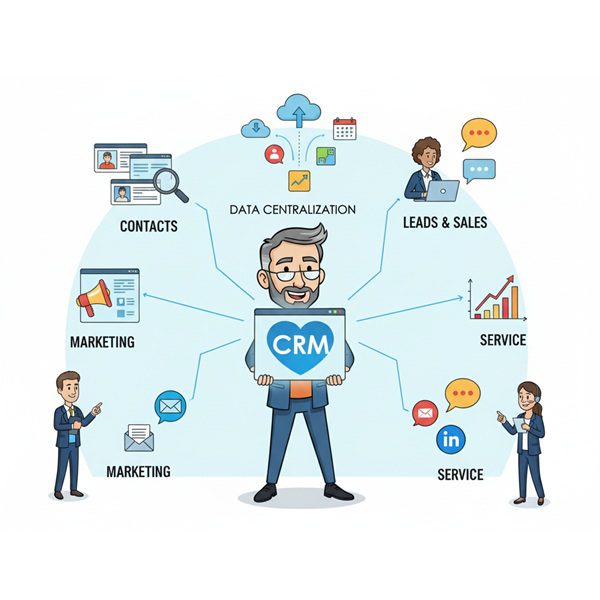
Centralizing Operations with Robust CRM Systems
A comprehensive CRM (Customer Relationship Management) system is the single source of truth for all customer data. It tracks interactions from first touchpoint through sales, onboarding, and customer support. This provides a unified view of every customer’s journey and enables sales forecasting. For instance, integrating your marketing automation platform with your CRM ensures that sales reps have full visibility into every piece of content a prospect has consumed before their first call. This drastically improves contextual relevance.
Utilizing Marketing Automation Platforms
Marketing automation platforms (MAPs) allow you to segment audiences, deliver personalized content at scale, score leads based on engagement, and automate the handoff of qualified leads to sales. This ensures that prospects receive timely, relevant information, moving them seamlessly through the marketing funnel.
Implementing Business Intelligence (BI) and Analytics Tools
Beyond basic dashboards, advanced BI and analytics tools aggregate data from all systems (CRM, MAP, website analytics) to provide deep insights into funnel performance. They can identify specific stages where prospects drop off, reveal which content performs best, and pinpoint where sales process optimization is needed most.
Exploring AI and Machine Learning
Emerging technologies like AI and machine learning can supercharge funnel optimization. They can predict which leads are most likely to convert, identify optimal times for outreach, personalize messaging at scale, and even forecast revenue with greater accuracy by analyzing historical data and customer behavior patterns.
Continuous A/B Testing and Experimentation
Optimization is an ongoing process, not a one-time fix. A culture of continuous A/B testing across all funnel stages is essential for identifying what works best and continually improving conversion rates. This includes testing website headlines and email subject lines to sales script variations and pricing models.
Proactive Identification and Unblocking of Bottlenecks
A key aspect of optimizing sales pipeline is actively seeking out and eliminating bottlenecks. This involves regularly reviewing funnel stage-to-stage conversion rates. If your MQL-to-SQL conversion rate is consistently low, it indicates a bottleneck in lead qualification or nurturing. If sales cycle length increases, it could point to issues with proposal delivery, objection handling, or follow-up processes. Proactive analysis prevents these blockages from compounding and impacting revenue.
Implementing and Sustaining a Strategic Funnel: Overcoming Internal Hurdles
Designing a unified sales funnel is one thing. Successfully implementing and sustaining it across an entire organization is another. This requires strong leadership, a commitment to cultural change, and deliberate strategies to overcome inherent resistance.
Leadership’s Imperative Role in Driving Change
As CEO, your visible and consistent commitment is the single most critical factor in driving this transformation. This is not a project to delegate and forget. It is a strategic imperative that requires your active championship.
Articulating a Clear Vision
You must clearly communicate why this shift is happening and what the strategic benefits are for the entire company, not just individual departments. Explain how a unified funnel will lead to predictable revenue, improved customer experience, and more efficient resource allocation.
Actively Championing Cross-Departmental Collaboration
Lead by example. Participate in joint marketing-sales planning sessions. Recognize and reward instances of successful collaboration. Break down silos by fostering informal and formal communication channels between teams that historically operated independently.
Setting the Tone for a Data-Driven Culture
Demonstrate your reliance on data for decision-making. Insist on shared dashboards and metrics. Hold both marketing and sales leadership accountable for combined funnel performance, not just individual departmental KPIs. This establishes that performance will be measured by shared outcomes.
Cultivating a Culture of Accountability and Transparency
Beyond top-down directives, a sustainable unified funnel requires a culture where accountability is shared, and performance is transparent.
Implementing Shared Dashboards and Performance Reporting
Develop centralized dashboards that display key funnel metrics—from top-of-funnel lead generation to closed-won revenue. These dashboards should be accessible to and understood by both sales and marketing teams. This fosters a common understanding of progress and challenges.
Establishing Regular, Inter-Departmental “Funnel Review” Meetings
Beyond executive planning, create dedicated “funnel review” meetings involving managers and key contributors from both teams. These sessions are for joint problem-solving, discussing lead quality, sales progress, content effectiveness, and identifying where interventions are needed across the marketing sales funnel alignment.
Designing Compensation and Recognition Programs
Align incentives with the new, unified goals. Consider bonuses or recognition for achieving shared revenue targets, improving MQL-to-SQL conversion rates, or increasing customer lifetime value. This is more effective than focusing solely on individual sales quotas or lead generation numbers.
Strategic Training and Reskilling Programs
The transition to a unified funnel often requires new skills and ways of thinking. Marketing teams may need training on lead qualification. Sales teams might benefit from a deeper understanding of content strategy and lead nurturing. Customer success teams need to understand their role in the overall customer lifecycle. Investing in these training programs is crucial for ensuring everyone is equipped for the new approach.
Addressing Common Resistance Points
Change is hard. Be prepared to address resistance that may arise from comfort with existing processes, fear of new responsibilities, or skepticism about the new framework. Communicate openly, address concerns, demonstrate early wins, and continuously reinforce the long-term benefits for individuals and the company. Fostering buy-in at all levels is essential for successful implementation.
Real-World Impact: Case Studies of Unified Funnel Success
The strategic shift to a unified sales funnel is not theoretical. It delivers tangible, measurable results. These B2B case studies illustrate the profound impact of integrating marketing and sales efforts around a common growth engine.
Case Study 1: B2B SaaS Company’s Accelerated Growth
Initial Challenge: Stagnant Lead Quality and Unpredictable Conversions
HorizonTech, a mid-sized B2B SaaS company, was grappling with a common problem: their marketing team consistently delivered high volumes of leads to sales, but conversion rates remained stubbornly low. Sales reps spent excessive time chasing unqualified prospects, leading to low morale and unpredictable monthly revenue. The CEO recognized that their fragmented marketing funnel and sales pipeline were hemorrhaging potential.
Strategic Solutions Implemented: Integrated Content Journey, MQL Re-definition, Sales Enablement Tools
The leadership team initiated a comprehensive marketing sales funnel alignment strategy. They began by:
- Re-mapping the Customer Journey: Both marketing and sales collaborated to define a detailed customer journey, identifying key decision points and information needs at each stage.
- Integrated Content Journey: Marketing developed targeted content (e.g., industry reports for awareness, interactive tools for consideration, deep-dive case studies for decision) that directly supported the sales process.
- MQL Re-definition with Sales Input: They jointly redefined an MQL to include specific behavioral triggers (e.g., engaging with a product demo video, requesting a pricing guide) and demographic criteria, ensuring higher intent.
- Streamlined Handoffs: Automated alerts and immediate CRM updates ensured sales received qualified leads with full engagement history.
- Sales Enablement Tools: Sales reps were equipped with playbooks, competitive battle cards, and personalized proposal templates, all aligned with the new content strategy.
Measurable Outcomes: Significant Increase in MQL-to-SQL Conversion, Reduction in Sales Cycle, Predictable Revenue Growth
Within 12 months, the results were transformative:
- MQL-to-SQL Conversion Rate: Increased by 45%, indicating vastly improved lead quality and qualification.
- Sales Cycle Length: Reduced by 20%, as reps spent less time qualifying and more time closing high-intent prospects.
- Predictable Revenue Growth: Quarterly revenue became far more predictable, allowing for more confident investment and strategic planning. The company achieved a 30% increase in annual recurring revenue (ARR) with the same marketing and sales headcount.
Case Study 2: Enterprise Company’s Transformation of a Legacy Sales Process
Initial Challenge: Fragmented Customer Data, Long Sales Cycles, Low Representative Efficiency
GlobalCorp, a large enterprise specializing in complex B2B solutions, faced challenges common to established organizations: a legacy sales process, customer data scattered across disparate systems, and highly individualized sales approaches that led to inconsistent performance and long sales cycles. Their sales pipeline efforts were stifled by a lack of visibility.
Strategic Solutions Implemented: CRM Overhaul, Automated Lead Nurturing, Sales Coaching
The CEO championed a major initiative to modernize their sales funnel strategy. Key actions included:
- CRM Overhaul and Integration: A complete migration to a unified, cloud-based CRM system, integrating all marketing automation, sales activity, and customer service data into a single platform. This provided a true 360-degree view of the customer.
- Automated Lead Nurturing: Implemented sophisticated lead nurturing strategies that delivered personalized content and triggered sales outreach based on prospect engagement levels. This reduced the burden on sales for early-stage qualification.
- Sales Process Optimization and Coaching: Standardized the sales process into clear stages with defined exits and entrances. Sales leadership then provided targeted coaching, focusing on specific skills required at each stage (e.g., discovery questions for early stages, negotiation tactics for late stages).
- RevOps Team Formation: Established a dedicated Revenue Operations team to oversee the entire revenue lifecycle, ensuring seamless handoffs, data integrity, and cross-functional process optimization.
Measurable Outcomes: Improved Pipeline Visibility, Increased Average Deal Size, Higher Sales Team Productivity
The strategic overhaul delivered significant ROI:
- Improved Pipeline Visibility: The unified CRM provided real-time, accurate insights into the entire sales pipeline, enabling precise sales forecasting and resource allocation.
- Increased Average Deal Size: By focusing sales efforts on the most qualified prospects and providing them with better enablement, the average deal size increased by 15%.
- Higher Sales Team Productivity: Representatives spent 25% more time engaging with high-value prospects, leading to a 20% increase in closed deals per representative annually. This comprehensive sales funnel strategy transformed their growth trajectory.
Key Takeaways from Successful B2B Funnel Integration
These cases underscore several critical lessons:
- Alignment is Paramount: The most successful companies prioritize marketing-sales funnel alignment. They dismantle silos and foster a shared vision for revenue growth.
- Data is Your Compass: Every successful funnel optimization relies on rigorous data collection, analysis, and interpretation to identify bottlenecks and inform decisions.
- Technology is an Enabler, Not a Solution: CRM, marketing automation, and BI tools are powerful. However, they are only effective when integrated and deployed within a well-defined strategic framework.
- CEO Leadership is Non-Negotiable: The commitment, vision, and active participation of the CEO are essential for driving and sustaining this fundamental organizational change.
The Future of Growth: Continuous Evolution of Your Sales Funnel Strategy
Achieving a unified, strategic sales funnel is not a destination. It is an ongoing journey. In today’s rapidly evolving business landscape, maintaining momentum and adapting to market dynamics are paramount. Your sales funnel strategy must be agile, responsive, and perpetually optimized.
The Importance of Ongoing Analysis, Refinement, and Iteration
Even the most perfectly designed funnel will lose effectiveness if not continuously monitored and refined. Market conditions shift, customer behaviors evolve, and competitive landscapes change. Regular, deep-dive analysis of your conversion metrics, sales cycle lengths, and customer feedback is crucial. This ongoing analytical rigor must lead to strategic iteration—testing new approaches, refining existing processes, and adapting your content and outreach to current realities. The commitment to learn sales funnels is a commitment to continuous improvement.
Adapting the Unified Funnel to Emerging Technologies and Evolving Behaviors
The pace of technological innovation demands a flexible funnel. Consider how emerging technologies like advanced AI in sales for predictive analytics, hyper-personalization, or conversational AI bots can enhance your lead nurturing strategies or sales process optimization. Customer behaviors are also constantly shifting—the rise of video content, changes in B2B buying preferences, or new communication channels. Your unified funnel must be agile enough to integrate these shifts, identify new market opportunities, and leverage them for growth.
Fostering a Culture of Innovation, Experimentation, and Learning
Ultimately, the longevity and success of your strategic funnel hinge on your people. Foster an environment where sales, marketing, and customer success teams are encouraged to experiment, share insights, and continuously learn. Celebrate successful tests, but also learn from failures. This culture of innovation ensures that your revenue engine remains cutting-edge and responsive.
Positioning the Unified Sales Funnel as a Core Business Growth Strategy
As CEO, your most critical takeaway is this: the unified sales funnel is not a project. It is the fundamental operating system for your predictable revenue. It is the strategic framework that integrates every customer-facing function, identifies every growth bottleneck, and translates every marketing effort into measurable sales outcomes. By embracing this truth and leading its ongoing evolution, you position your company not just for growth, but for sustained, predictable, and market-leading success. This is Beyond the Basics: How CEOs Can Strategically Learn Sales Funnels for Unified Growth.
Ready to transform your company’s growth trajectory and move beyond unpredictable revenue?
Schedule a strategy session to optimize your company’s sales funnel for predictable growth.
Frequently Asked Questions
Why should a CEO learn sales funnels instead of leaving it to sales and marketing teams?
A sales funnel isn’t just a departmental tool — it’s the mechanism that determines whether revenue is predictable or a guessing game. When a CEO understands and champions the funnel, it signals that unified marketing-sales collaboration is a top-level priority, which is essential for breaking down silos.
What’s the difference between a traditional sales funnel and a modern one?
Traditional funnels follow a rigid linear path: Awareness, Interest, Desire, Action. Modern sales funnels reflect a non-linear customer journey shaped by multiple channels, self-education, and re-entry points, requiring marketing and sales to continuously feed and inform each other rather than operating as isolated stages.
What causes most sales funnels to fail at driving predictable revenue?
The most common cause is a siloed mentality between marketing and sales — marketing chasing top-of-funnel volume metrics while sales reactively work whatever leads arrive, with no shared definitions of “qualified” or joint accountability for the handoff between the two.
What KPIs should a CEO track to learn how their sales funnel is performing?
Focus on stage-to-stage conversion rates (visitor-to-lead, MQL-to-SQL, SQL-to-customer), lead velocity rate, sales cycle length, Customer Acquisition Cost versus Customer Lifetime Value, and pipeline coverage — these give a concise, high-level view without getting lost in departmental data.
What results can a company expect from aligning its sales funnel?
Results vary, but the case studies in this guide show real outcomes: one B2B SaaS company saw a 45% increase in MQL-to-SQL conversion and 30% ARR growth within 12 months, while an enterprise company increased average deal size by 15% and rep productivity by 20% after unifying its CRM and sales process.