
Table of Contents
The CEO’s Strategic Blind Spot: Why Jargon Obscures Growth
What is GoHighLevel (GHL)? The All-in-One Platform for Strategic Growth
Cutting Through the Noise: Your Definitive Sales & Marketing Glossary for CEOs
Navigating the Customer Journey: Essential Terms for Pipeline & Conversion
Decoding Performance: Key Metrics & KPIs for Strategic Decision-Making
Beyond Definitions: Fostering Strategic Alignment and Collaboration
Data-Driven Decisions: Reputation Management and Performance Analytics
Empowering Growth: How Clarity Fuels Revenue and Unifies Teams
Frequently Asked Questions
As a CEO, you navigate a complex landscape of market shifts, financial pressures, and competitive dynamics. Yet, one of the most persistent, subtle hindrances to your strategic objectives often lies within your own walls: the Tower of Babel that can emerge between your sales and marketing teams. You are smart, driven, and likely tired of the finger-pointing, the disconnected tactics, and the feeling of drowning in jargon while starving for a cohesive strategy. This isn’t merely about miscommunication. It is a direct impediment to revenue growth and strategic agility.
This article serves as your definitive, business-oriented resource. Our purpose is to provide you with a robust understanding of essential sales and marketing terminology, enabling you to bridge communication gaps, make informed strategic decisions, and, ultimately, drive unified revenue growth. Understanding these key terms is not merely an academic exercise. It is critical for you to steer your organization effectively, ensuring every department aligns on the path to success.
The CEO’s Strategic Blind Spot: Why Jargon Obscures Growth
You have likely experienced it: a marketing report filled with metrics like “impressions” and “engagement rates” that do not clearly translate to sales pipeline growth. Or, a sales update focusing on “qualified leads” that marketing insists are not truly “sales-ready.” This is not a failure of effort. It is often a failure of shared language, a strategic blind spot that obscures genuine progress.
The Frustration of Disconnected Teams: Symptoms of a Jargon-Filled Environment
Consider a scenario: you have just invested significantly in a new marketing campaign, expecting a surge in qualified leads. Sales, however, complains the leads are “cold” and a waste of their time. Marketing points to increased website traffic and lead volume, declaring success. Meanwhile, you are left with a spent budget, a frustrated sales team, and marketing feeling undervalued. This familiar dynamic is a symptom of a jargon-filled environment.
Finger-pointing Between Sales and Marketing
When terms like “lead,” “opportunity,” or “conversion” are interpreted differently by sales and marketing, finger-pointing becomes inevitable. Sales might accuse marketing of delivering “junk leads,” while marketing might fault sales for “poor follow-up.” Without a common lexicon, each team operates in its own conceptual silo, blaming the other for perceived shortcomings.
Misaligned Goals and Conflicting Strategies
This linguistic divide directly translates into misaligned goals. Marketing might optimize for metrics that inflate “leads” without considering sales’ criteria for qualification, leading to a high volume of unworkable prospects. Sales, in turn, might pursue opportunities that fall outside the ideal customer profile defined by marketing, burning through resources on low-probability deals. Such conflicting strategies ensure suboptimal outcomes.
Wasted Budget on Disconnected Tactics
When marketing funds are allocated to campaigns that do not effectively generate sales-ready opportunities, or sales resources are expended on unqualified prospects, your budget is being wasted. Every dollar spent on disconnected tactics due to a lack of shared understanding is a direct drain on your revenue operations and overall profitability.
The Hidden Cost of Ambiguity: How Misunderstood Terms Impact Business Outcomes
The true cost of ambiguous terminology extends far beyond internal friction. It directly impedes your ability to lead, measure, and grow.
Delayed or Poor Strategic Decisions
Imagine being presented with a strategic plan where key performance metrics are defined inconsistently across departments. How do you accurately assess performance, identify bottlenecks, or pivot strategy? Ambiguity creates analytical paralysis, forcing you to delay critical decisions or make them based on incomplete or flawed data. This hinders effective strategic planning.
Inability to Accurately Measure Performance
If “conversion rate” means one thing to your digital marketing manager and another to your sales director, how can you truly understand your sales funnel’s efficiency or the return on investment of your marketing spend? This lack of clarity prevents you from establishing reliable business metrics and KPI definitions, making it impossible to measure true performance or hold teams accountable.
Erosion of Trust and Internal Communication Breakdown
When teams repeatedly fail to understand each other’s contributions or challenges due to linguistic barriers, trust erodes. This internal communication breakdown fosters an environment where collaboration suffers, innovation stagnates, and the entire organization struggles to function as a cohesive unit.
Why CEOs Need a Clear-Thinking Translator: Bridging the Sales-Marketing Divide
Your role as CEO is not just about setting vision. It is about ensuring the operational clarity that brings that vision to life. By becoming the arbiter of shared language, you can transform internal friction into a unified force for revenue growth.
Empowering Informed Decision-Making
With a consistent understanding of key terms, you gain the clarity required to scrutinize reports, challenge assumptions, and make truly informed decisions. You can confidently allocate resources, optimize processes, and guide your teams towards measurable success, moving from reactive problem-solving to proactive strategic leadership.
Unifying Teams for Common Revenue Goals
A shared lexicon acts as the bedrock for true sales and marketing alignment. When both teams operate from the same definition of “lead,” “opportunity,” and “conversion,” they can collaborate more effectively on an integrated strategy aimed squarely at common revenue goals. This fosters a sense of shared ownership for the entire customer lifecycle, driving unified revenue growth.
Setting the Foundation for Scalable Growth
Ambiguity is the enemy of scale. When processes are clear and terminology is consistent, you create a repeatable, optimized revenue engine. This clarity allows you to identify what truly drives results, replicate success, and build a foundation for sustainable, scalable growth without the drag of internal misinterpretations.

Professor’s Note
Knowing that MQL stands for Marketing-Qualified Lead is trivial. Knowing why your sales team keeps rejecting the MQLs marketing sends over is the actual strategic question. A definition without context is just vocabulary; a definition tied to a business outcome is a diagnostic tool.
Cutting Through the Noise: Your Definitive Sales & Marketing Glossary for CEOs
The solution to internal communication breakdown is not more data. It is more clarity. This section is designed to be your go-to resource. It is a definitive, business-oriented guide addressing directly “where can you find the definition of sales and marketing terms” that truly matter for strategic leadership.
Understanding the Resource: Beyond Superficial Definitions
This is not just another generic online dictionary. This is your C-suite resource, meticulously curated to provide actionable business insights that transcend superficial definitions.
Moving Beyond Superficial Definitions to Actionable Business Insights
Many glossaries offer a dictionary-style explanation, which is helpful but rarely sufficient for a CEO. Our approach is to provide context, explaining not just what a term means, but why it matters to your strategic decision-making, its implications for revenue operations, and its role in an integrated strategy. This is about transforming definitions into understanding that fuels action.
Providing a Definitive, Business-Oriented Resource for C-Suite Leaders
This resource is not for entry-level practitioners. This is a comprehensive sales marketing glossary built for you, the leader accountable for the entire P&L. It frames terms within the context of business outcomes, profitability, and scalable growth, ensuring that every definition directly supports your strategic agenda.
Addressing Key Business Terminology Explained
You no longer need to scour the internet or rely on fragmented internal documents. This guide consolidates the most critical business terminology explained for sales and marketing functions, providing a centralized, reliable source that you can reference to demystify marketing jargon and sales processes alike.
Foundational Concepts: The Building Blocks of Sales & Marketing Strategy
Before diving into the mechanics of the customer journey, a solid grasp of these foundational concepts is essential for crafting a coherent and effective strategy.
Market Segmentation: Defining Target Audiences for Precision
Market segmentation is the process of dividing a broad consumer or business market into subgroups based on shared characteristics. This allows you to tailor your marketing and sales efforts to specific needs. Common examples include geographic, demographic, psychographic, and behavioral segmentation.
Segmentation impacts every aspect of your business, from product development and pricing to messaging and distribution channels. It is crucial for achieving optimal product-market fit and ensures your resources focus on the most receptive audiences, maximizing return on investment.
Target Audience and Ideal Customer Profile (ICP): Who Are You Really Trying to Reach?
Your Target Audience refers to the specific group of consumers most likely to want your product or service. This is the group to whom your marketing efforts are directed. An Ideal Customer Profile (ICP) takes this a step further, defining the characteristics of the company or individual that would gain the most value from your product or service and, conversely, provide the most value to your company. This includes attributes like industry, company size, revenue, challenges they face, and even their technological stack.
A clearly defined ICP is crucial for efficient resource allocation, ensuring that both sales and marketing teams pursue the highest-value prospects. It streamlines messaging, reduces wasted effort, and significantly improves the efficiency of your customer acquisition cost (CAC).
Brand Identity and Positioning: What You Stand For and How You Are Perceived
Brand Identity encompasses the visible elements of a brand, such as color, design, and logo, that identify and distinguish the brand in consumers’ minds. More profoundly, it is the sum of all characteristics that your company projects. Brand Positioning is the process of creating a unique perception of your brand in the minds of your target audience, distinguishing it from competitors.
Beyond just logos, your brand identity and positioning directly influence market perception, customer loyalty, and competitive advantage (brand equity). A strong, consistent brand commands higher prices, reduces sales cycles, and attracts top talent, becoming a significant asset in your revenue growth.
Value Proposition: The Core Benefit You Offer
Your Value Proposition is a promise of value to be delivered. It is the primary reason a prospect should buy from you. It clearly articulates how your product or service solves customer problems, improves their situation, or delivers specific benefits, and distinguishes you from competitors.
A compelling value proposition is essential for every sales pitch and marketing message. It simplifies communication, makes your offering irresistible, and directly impacts your ability to generate quality leads and close deals. Without a clear value proposition, your teams will struggle to articulate why customers should choose you.
Sales & Marketing Alignment: The Nexus of Revenue Generation
The chasm between sales and marketing often starts with misaligned definitions of a “qualified” prospect. Bridging this gap is paramount for revenue operations.
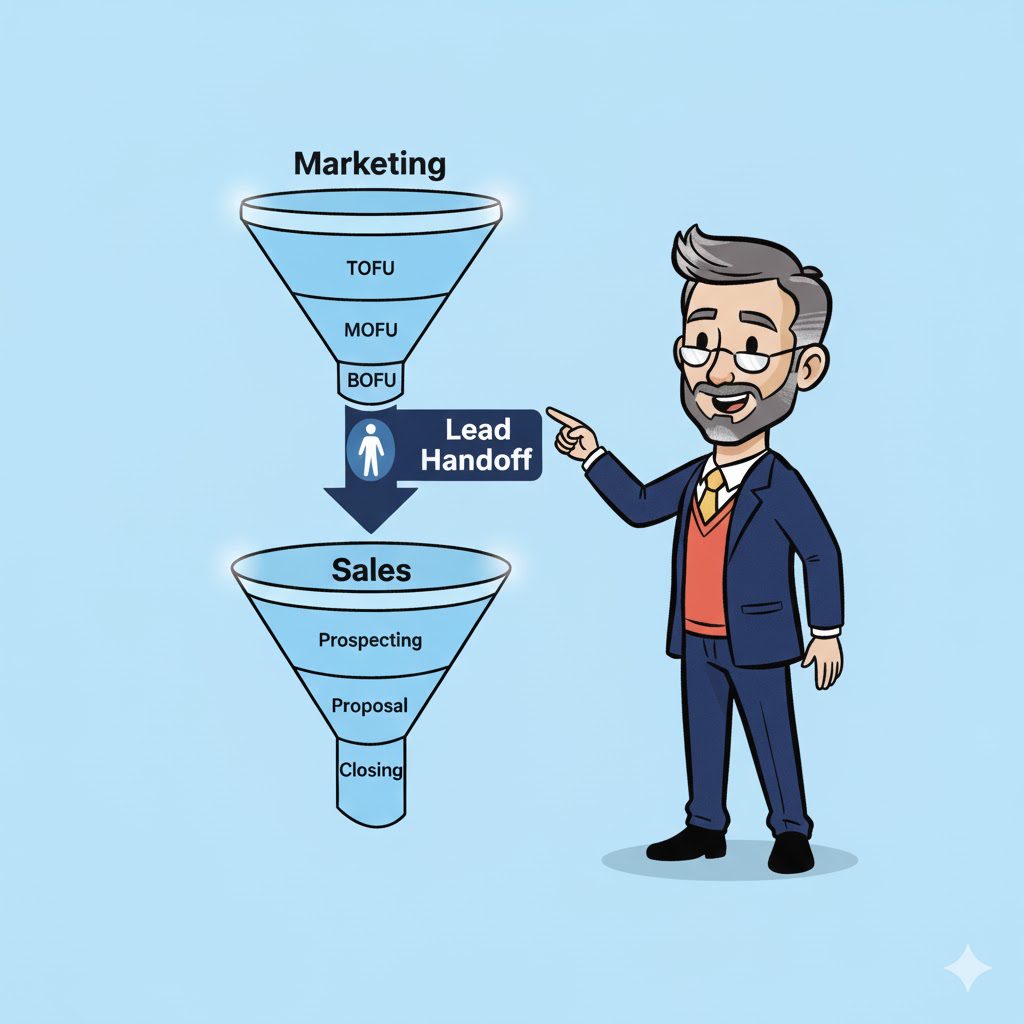
Sales-Qualified Lead (SQL) vs. Marketing-Qualified Lead (MQL): Defining Readiness for Handover
A Marketing-Qualified Lead (MQL) is a prospect who has engaged with marketing efforts (e.g., downloaded an ebook, attended a webinar) and is deemed more likely to become a customer than other leads, based on lead scoring criteria. They show interest but are not necessarily ready for a sales conversation. A Sales-Qualified Lead (SQL), in contrast, is an MQL that has been vetted by sales (or a pre-sales team) and determined to be ready for direct sales engagement, meeting specific criteria for budget, authority, need, and timeline (BANT).
A common misinterpretation occurs when marketing passes over MQLs that are not truly sales-ready, leading to high rejection rates from sales and wasted effort. Conversely, sales might not adequately follow up on MQLs because they have not bought into the agreed-upon qualification criteria. This disconnect directly impacts conversion rates and creates internal friction, highlighting the need for a shared marketing glossary.
Service Level Agreement (SLA): Formalizing Sales and Marketing Commitments
A Service Level Agreement (SLA), in the context of sales and marketing alignment, is a formal agreement between the two departments that defines the expectations, responsibilities, and deliverables of each team regarding lead qualification, handover, and follow-up. For instance, it might stipulate the number of MQLs marketing commits to delivering each month, and the speed and thoroughness with which sales will follow up on SQLs.
SLAs are powerful tools for driving accountability and streamlining the lead handoff process. They create a clear framework for collaboration, minimize finger-pointing, and ensure both teams are jointly committed to the pipeline management process and overall revenue growth.
Navigating the Customer Journey: Essential Terms for Pipeline & Conversion
Understanding the customer journey from a shared perspective is fundamental to building an integrated strategy that maximizes lead generation and conversion rate at every stage.
Unpacking the Customer Lifecycle: From Prospect to Advocate
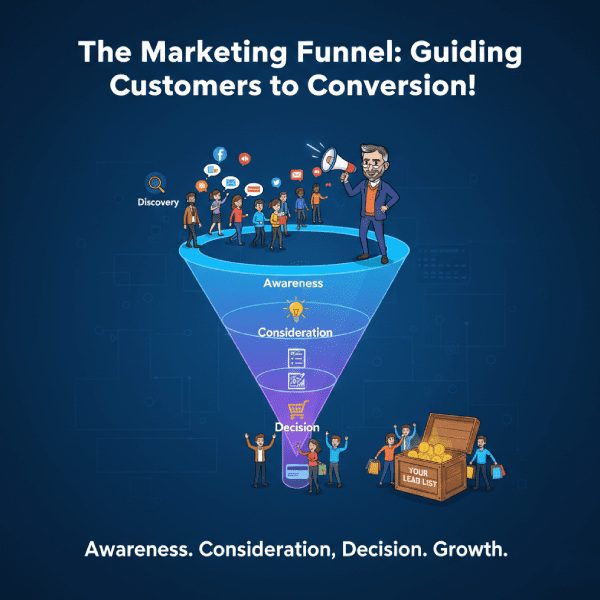
The customer lifecycle outlines the stages a customer goes through when interacting with your company, from initial awareness to becoming a loyal advocate.
Awareness Stage: Generating Initial Interest
This is the very top of the sales funnel, where potential customers first become aware of your brand, product, or service. The goal here is broad reach and visibility.
- Impressions: The number of times your content (e.g., an ad, a social media post) is displayed, regardless of whether it is clicked.
- Reach: The total number of unique individuals who saw your content.
- Earned Media: Publicity gained through promotional efforts other than paid advertising, such as media coverage, social media shares, or word-of-mouth.
This stage aims for top-of-funnel visibility, brand recognition, and generating initial interest to pull prospects into your sales pipeline.
Consideration Stage: Educating and Nurturing Leads
Once aware, prospects move into the consideration stage, where they actively research solutions to their problems, including yours. Marketing’s role here is to educate and build trust, transforming initial interest into genuine intent.
- Lead Nurturing: The process of building relationships with prospects, typically through a series of automated communications (e.g., email sequences) that provide value and guide them towards a purchase decision.
- Content Marketing: The creation and distribution of valuable, relevant, and consistent content (e.g., blog posts, whitepapers, webinars, videos) to attract and retain a clearly defined audience, and ultimately, to drive profitable customer action.
- Marketing Automation: Software platforms and technologies designed to automate marketing actions such as email marketing, social media posting, and other website actions.
- Engagement Rate: A metric that measures the level of interaction users have with your content (e.g., likes, comments, shares on social media; clicks, time on page for web content).
These activities are crucial for building trust, establishing your authority, and effectively qualifying prospects before they are handed off to sales. Effective lead nurturing shortens sales cycles and improves conversion rates, leading to higher quality revenue growth.
Decision Stage: Converting Prospects Into Customers
At this critical stage, prospects are evaluating their final options and are ready to make a purchase. Sales takes the lead, aiming to close the deal.
- Conversion Rate: The percentage of visitors or leads who complete a desired action (e.g., making a purchase, filling out a form, signing up for a demo). This is a critical business metric for measuring efficiency.
- Call-to-Action (CTA): A prompt on a website or piece of content that tells the user what to do next (e.g., “Buy Now,” “Download Our Guide,” “Schedule a Demo”).
- Sales Funnel / Pipeline Stages: The visual representation of the journey a potential customer takes from initial contact to becoming a paying customer. Common stages include:
- Prospecting: Identifying potential customers.
- Qualification: Determining if a prospect is a good fit and has a need.
- Proposal: Presenting a tailored solution and offer.
- Negotiation: Discussing terms and objections.
- Closed-Won/Lost: The final outcome of a deal.
This stage directly impacts revenue generation. Optimizing this stage improves sales efficiency and predictability, directly impacting your bottom line.
Retention and Advocacy Stage: Maximizing Customer Lifetime Value
The customer journey does not end with a sale. Retaining customers and transforming them into advocates is crucial for sustainable, long-term growth and contributes significantly to your overall revenue growth.
- Customer Relationship Management (CRM): A technology system for managing all your company’s relationships and interactions with customers and potential customers. It helps improve business relationships to grow your business.
- Customer Lifetime Value (CLV or LTV): The total revenue a business can reasonably expect from a single customer account over the duration of their relationship.
- Churn Rate: The rate at which customers stop doing business with an entity. High churn indicates a problem with retention.
- Upselling: A sales technique where a seller induces the customer to purchase more expensive items, upgrades, or other add-ons in order to make a more profitable sale.
- Cross-selling: The practice of selling an additional product or service to an existing customer.
- Net Promoter Score (NPS): A widely used market research metric that typically takes the form of a single survey question asking customers how likely they are to recommend a company’s product or service to others.
The strategic importance of post-sale engagement cannot be overstated. Retaining existing customers is often far more cost-effective than acquiring new ones. Focus on CLV, churn rate, upselling, and cross-selling to ensure sustained growth and maximize the profitability of your customer base.
Lead Generation and Management: Fueling Your Pipeline
The lifeblood of your business is a consistent flow of qualified leads. Understanding the mechanisms of lead generation and effective management is crucial for every CEO.
Inbound vs. Outbound Marketing: Attracting vs. Pursuing Customers
These are two fundamental approaches to lead generation. Inbound Marketing focuses on attracting customers by creating valuable content and experiences tailored to them. Customers come to you. Outbound Marketing involves proactively reaching out to prospects. You go to the customers.
- Inbound Terms:
- SEO (Search Engine Optimization): The process of optimizing your website and content to rank higher in search engine results, driving organic (unpaid) traffic.
- SEM (Search Engine Marketing): A broader term that includes SEO but also paid search advertising (e.g., Google Ads) to gain visibility in search engine results pages.
- Content Marketing: The creation and distribution of valuable, relevant, and consistent content to attract and retain a clearly defined audience, and ultimately, to drive profitable customer action.
- Social Media Marketing: Using social media platforms to connect with your audience, build your brand, and drive traffic or sales.
- Outbound Terms:
- Cold Calling: Directly contacting potential customers who have not expressed prior interest.
- Email Outreach: Sending unsolicited emails to prospects.
These represent different strategies for filling the pipeline. A balanced, integrated strategy often combines both to maximize reach and efficiency.
Lead Scoring and Grading: Prioritizing Your Best Opportunities
Lead Scoring is a methodology used to rank prospects based on their perceived value to the organization. Points are assigned based on actions (e.g., website visits, email opens, content downloads) and demographic information (e.g., job title, company size). Lead Grading assesses how well a lead matches your Ideal Customer Profile (ICP). Together, these help prioritize which leads sales should pursue.
A significant pitfall occurs when lead scoring and grading are misapplied or not aligned between sales and marketing. For instance, if marketing scores “website visits” too highly without considering the type of page visited (e.g., a careers page versus a pricing page), sales can be overwhelmed with unqualified leads. This leads to wasted sales effort, a breakdown in trust, and a missed opportunity to focus on truly valuable prospects. Accurate lead scoring is fundamental to effective pipeline management.
Customer Acquisition Cost (CAC): The Price of a New Customer
Customer Acquisition Cost (CAC) is the total cost associated with acquiring a new customer. This includes all marketing and sales expenses (e.g., advertising spend, salaries, commissions, software) divided by the number of new customers acquired over a specific period.
CAC is a critical business metric for understanding the profitability and scalability of your marketing and sales efforts. If your CAC is higher than your Customer Lifetime Value (CLV), your business model is unsustainable. Monitoring CAC allows you to optimize campaign spend, refine your target audience, and ensure your growth is profitable. It is a key performance metric for revenue operations.
Decoding Performance: Key Metrics & KPIs for Strategic Decision-Making
As CEO, you need more than just activity reports. You need clarity on performance. These essential metrics and KPIs, framed within a comprehensive marketing glossary and sales terminology explained, are your navigational tools.
Essential Marketing Metrics Demystified
It is easy to get lost in a sea of marketing jargon. What truly matters are the metrics that directly impact your strategic goals and bottom line.
Marketing Jargon Demystified: Beyond Vanity Metrics
Many marketing reports can be padded with “vanity metrics” – numbers that look good but do not translate to business results (e.g., social media likes with no engagement). For a CEO, the focus must be on metrics that demonstrate tangible business outcomes, contributing to revenue growth and profitability.
Return on Marketing Investment (ROMI): Measuring Marketing’s Financial Impact
Return on Marketing Investment (ROMI) is a metric that measures the profitability of marketing expenditures. It assesses how much revenue or profit is generated for every dollar spent on marketing. While variations exist, a common calculation is (Revenue Attributable to Marketing – Marketing Spend) / Marketing Spend.
ROMI is a key indicator for budget allocation and efficiency. It allows you to identify which marketing channels and campaigns are most profitable, helping you make data-driven decisions about where to invest for maximum impact and how marketing contributes to overall business metrics.
Website Traffic and Sources: Understanding Visitor Behavior
Website Traffic refers to the number of visitors to your website and the number of pages they view. Understanding Traffic Sources helps identify where your visitors are coming from.
- Organic Traffic: Visitors who find your site through unpaid search engine results (e.g., Google).
- Referral Traffic: Visitors who come from other websites linking to yours.
- Direct Traffic: Visitors who type your URL directly into their browser or use a bookmark.
- Paid Traffic: Visitors who come from paid advertisements (e.g., pay-per-click ads).
- Bounce Rate: The percentage of visitors who leave your website after viewing only one page.
While high website traffic sounds good, context is crucial. A high bounce rate combined with low conversion rates could indicate that you are attracting the wrong audience, or your site is not engaging enough. Simply having a lot of visitors does not automatically equal success. What matters is the quality of that traffic and its conversion potential, making these key KPI definitions.
Cost Per Lead (CPL) and Cost Per Acquisition (CPA): Efficiency of Your Lead Generation
Cost Per Lead (CPL) is the total cost incurred to generate one lead through a marketing campaign or channel. Cost Per Acquisition (CPA) is often used interchangeably with CAC but can also refer specifically to the cost of acquiring a single customer through a particular advertising campaign, rather than the overall business cost.
These metrics are essential for benchmarking and optimizing your campaign spend. By tracking CPL and CPA across different channels, you can identify the most cost-effective ways to generate leads and acquire customers, ensuring your marketing budget is yielding the best possible return.
Marketing Qualified Lead (MQL) to Sales Qualified Lead (SQL) Conversion Rate: The Health of Your Lead Handoff
This metric measures the percentage of MQLs that successfully convert into SQLs. It is a critical indicator of the alignment between your sales and marketing teams.
This conversion rate reveals the effectiveness of marketing in delivering sales-ready leads and the efficiency of your lead qualification process. A low conversion rate here signals a disconnect in lead definitions or qualification criteria, hindering pipeline management.
Brand Awareness Metrics: Measuring Market Presence
These metrics help gauge the extent to which your target audience is familiar with your brand.
- Share of Voice: The percentage of conversations or mentions about your brand compared to your competitors in relevant channels (e.g., social media, news).
- Brand Mentions: The number of times your brand is mentioned across various online platforms.
- Sentiment Analysis: The process of computationally determining whether a piece of writing is positive, negative, or neutral, often applied to brand mentions.
While not directly tied to immediate revenue, brand awareness contributes to long-term brand equity and market positioning. A strong, recognized brand can reduce CAC, increase customer trust, and make sales cycles shorter, proving its value over time.
Critical Sales Terminology Explained
Sales performance is not just about raw numbers. It is about understanding the underlying efficiency and predictability. This segment clarifies key sales terminology essential for strategic leadership.
Sales Pipeline Stages and Velocity: Understanding the Flow of Deals
The Sales Pipeline Stages are the defined steps a sales opportunity progresses through from initial contact to a closed deal, as outlined in the customer journey. Pipeline Velocity measures how quickly deals move through these stages.
- Pipeline Coverage: The ratio of your current pipeline value to your sales quota, indicating if you have enough opportunities to hit your targets.
- Win Rate: The percentage of proposals or opportunities that result in a closed-won deal.
- Sales Cycle Length: The average time it takes for a sales opportunity to move from initial contact to a closed deal.
Understanding these metrics is vital for predicting revenue, identifying bottlenecks in the sales process, and forecasting future performance. They inform strategic planning around hiring, training, and resource allocation within your sales team.
Average Deal Size (ADS): The Typical Value of a Closed Deal
Average Deal Size (ADS) is the average revenue generated per closed-won deal over a specific period.
ADS significantly influences your sales strategy and target market selection. If your ADS is too low to cover CAC and still provide profit, you may need to target larger clients or increase your offering’s value. It is a critical business metric when assessing the overall health and profitability of your sales efforts.
Quota Attainment and Forecast Accuracy: Measuring Sales Team Performance and Predictability
Quota Attainment measures how much revenue a salesperson or team achieved relative to their set sales target (quota). Forecast Accuracy measures how closely actual sales results match the predictions made by the sales team.
The importance of reliable forecasting for overall business planning cannot be overstated. Inaccurate forecasts can lead to production issues, inventory problems, or missed revenue targets. CEOs must demand transparency and precision in these metrics to ensure that strategic decisions are based on realistic sales projections.
Sales Productivity Metrics: How Efficient Are Your Sales Reps?
These metrics assess the efficiency and activity levels of individual sales representatives or the sales team as a whole.
- Dials/Emails Per Day: The number of outbound calls or emails made by a sales rep in a day.
- Meetings Booked: The number of initial meetings or demonstrations scheduled.
- Demo-to-Close Rate: The percentage of demos given that result in a closed-won deal.
Analyzing these metrics helps identify areas for sales training, process improvement, and leveraging sales technology to boost efficiency. They highlight where sales reps might be struggling or where processes can be streamlined, ultimately impacting overall revenue growth.
Overarching Business Metrics & Revenue Growth
Ultimately, all sales and marketing efforts must contribute to the holistic financial health of the business. These overarching business metrics provide the CEO’s critical lens.
Annual Recurring Revenue (ARR) / Monthly Recurring Revenue (MRR): For Subscription-Based Models
Annual Recurring Revenue (ARR) is the value of the recurring revenue of a business’s subscriptions normalized for a single year. Monthly Recurring Revenue (MRR) is the predictable recurring revenue a company expects to receive every month. These are typically used for subscription or SaaS businesses.
ARR and MRR are fundamental for understanding predictable revenue streams, valuation, and the health of your subscription business. They directly impact investor confidence and long-term strategic planning.
Gross Margin and Profit Margin: The Ultimate Financial Health Indicators
Gross Margin is the revenue from sales minus the cost of goods sold (COGS). It represents the profit a company makes after deducting the costs associated with producing its goods or services. Profit Margin (or Net Profit Margin) is the percentage of revenue that remains after all expenses, including operating costs, interest, and taxes, have been deducted.
These are the ultimate financial health indicators. Sales and marketing efforts directly contribute to profitability by generating revenue efficiently and at a cost that allows for healthy margins. Understanding how your sales and marketing spend impacts these margins is crucial for sustainable growth.
Customer Retention Rate and Churn Rate: Key to Sustainable Growth
Customer Retention Rate is the percentage of customers who continue to do business with a company over a given period. Churn Rate is its inverse.
The compounding effect of customer loyalty on revenue is immense. High retention significantly reduces CAC over time and leads to higher CLV. Focusing on improving these metrics through strong customer success and ongoing engagement is a cornerstone of sustainable revenue growth.
Sales & Marketing ROI: The Holistic View of Investment Return
Sales & Marketing ROI is a holistic measure that assesses the overall financial return generated by combined sales and marketing investments. It goes beyond individual campaign ROMI to look at the total contribution of these departments to the company’s financial success.
This is the ultimate metric for justifying departmental budgets and proving the combined value of your sales and marketing functions. It demonstrates how these investments directly translate into profitable growth, reinforcing the need for an integrated strategy and precise business metrics.
Professor’s Note
A report full of impressions, reach, and engagement rate can look like momentum while pipeline stays completely flat. These numbers aren’t meaningless — they matter early in the funnel — but they should never be presented as proof of revenue impact. Ask what metric sits between the one you’re looking at and an actual closed deal.
Beyond Definitions: Fostering Strategic Alignment and Collaboration
Mastering these terms is merely the first step. The true power lies in how you leverage this shared understanding to foster unparalleled strategic alignment and collaboration across your organization.
The Power of a Shared Language: Unifying Sales and Marketing Teams
When sales and marketing speak the same language, assumptions vanish, and genuine partnership emerges.
Eliminating Assumptions and Internal “Silos”
Without shared definitions, assumptions run rampant. Marketing assumes sales understands “MQL” to mean one thing, while sales interprets it differently, leading to frustration. A shared language eliminates these dangerous assumptions, breaking down the internal “silos” that hinder cross-functional efficiency and revenue operations.
Creating a Common Ground for Strategic Planning
Imagine a strategic planning session where every participant, from the CRO to the CMO, uses the exact same definition for “pipeline velocity” or “customer acquisition cost.” This common ground allows for truly productive discussions, data-driven insights, and the formulation of an integrated strategy that everyone understands and commits to.
Improving Cross-Functional Project Execution
When a new product launch is planned, both sales and marketing can execute with precision if they are aligned on the target audience, value proposition, and lead qualification criteria. A shared language streamlines project execution, reducing rework, improving efficiency, and accelerating time to market.
Professor’s Note
Most internal glossaries die within a year — not because the definitions were wrong, but because nobody was responsible for updating them. A glossary without an owner quietly becomes outdated documentation nobody trusts. Assign it to someone by name, not by department, or it will drift back into the same ambiguity it was built to fix.
Implementing a Sales Marketing Glossary as a Living Document
A one-time read of this article is a great start, but true mastery requires ongoing commitment. Consider formally adopting a comprehensive sales marketing glossary within your organization.
Regular Reviews and Updates for Evolving Business Needs
The market changes, your product evolves, and your strategy shifts. Your internal glossary must be a living document, regularly reviewed and updated to reflect new terminology, refined processes, and evolving business metrics. This ensures its continued relevance and utility as a C-suite resource.
Training New Hires on Core Terminology
Integrate this glossary into your onboarding process. New hires in sales and marketing should be trained not just on their departmental jargon but on the shared language that bridges the two. This sets a foundation of clarity from day one, preventing future miscommunications.
Encouraging Internal Discussions for Clarification
Foster a culture where it is encouraged, not feared, to ask for clarification on terms. If a report uses a phrase someone does not understand, or if there is a perceived inconsistency, prompt a discussion. This reinforces the importance of clear communication and continuous learning within the organization.
Leading from the Top: How CEOs Drive Clarity and Accountability
Your role as CEO is paramount in championing this shift. Clarity and accountability must be modeled from the executive suite down.
Demanding Precise Language in Reports and Meetings
Insist on precise language in all sales and marketing reports, presentations, and internal meetings. Challenge vague terms or inconsistent definitions. By demanding clarity, you signal its importance across the organization, making it a critical aspect of your strategic communication.
Mediating Conflicts Arising From Terminological Misunderstandings
When finger-pointing or miscommunication arises, intervene to identify if the root cause is a terminological misunderstanding. Use your position to mediate, clarify, and establish the correct, agreed-upon definition, turning potential conflicts into opportunities for alignment.
Setting the Tone for Data-Driven, Unified Decision-Making
By prioritizing a shared language, you set the tone for a truly data-driven organization where decisions are made based on unified data interpretation, not departmental biases. This empowers your teams to act as a cohesive revenue engine, united by a common understanding of their contributions to the overall business metrics and revenue growth.
Empowering Growth: How Clarity Fuels Revenue and Unifies Teams
You are no longer drowning in disconnected tactics. You are armed with clarity, a clear-thinking translator for your entire organization. This strategic advantage will fuel your revenue growth and transform your teams.
From Jargon to Action: Making Strategic Decisions with Confidence
The ultimate benefit of this newfound clarity is the ability to move from indecision to confident, impactful action.
Optimizing Resource Allocation Based on Clear Metric Understanding
With a crystal-clear understanding of performance metrics and their definitions, you can optimize resource allocation with confidence. You know precisely where your marketing spend is generating the most profitable leads and where your sales efforts are most effective, ensuring maximum return on every investment.
Identifying Growth Opportunities and Untapped Markets
When your teams speak the same language about customer segments, market penetration, and sales pipeline stages, it becomes far easier to identify true growth opportunities and pinpoint untapped markets. Misinterpretation no longer clouds your strategic vision.
Proactive Problem-Solving Through Unified Data Interpretation
Instead of reacting to problems after they have spiraled, you can proactively identify challenges within your sales funnel or marketing campaigns. Unified data interpretation, based on shared terminology, allows for earlier detection and faster, more effective problem-solving, preventing costly communication breakdowns.
Cultivating a Culture of Accountability and Collaboration
Clarity fosters trust and empowers your teams to collaborate effectively, transforming them into a high-performing revenue engine.
Sales and Marketing Working as a Cohesive Revenue Engine
Imagine a future where your sales and marketing teams are not just co-existing but truly operating as a single, cohesive revenue engine. This is the power of shared language and unified goals, driving an integrated strategy that propels your business forward.
Shared Responsibility for Customer Success and Business Growth
When everyone understands the full customer lifecycle and how their piece contributes to it, responsibility becomes shared. Marketing is not just generating leads; they are contributing to customer lifetime value. Sales is not just closing deals; they are ensuring customer satisfaction and retention. This fosters a collective commitment to overall business growth.
Leveraging Clear Communication to Accelerate Innovation
A culture of clarity and open communication accelerates innovation. Teams can openly discuss challenges, propose solutions, and collaborate on new strategies without the drag of misunderstandings or misaligned expectations. This agility is a significant competitive advantage.
Your Path to Unstoppable Revenue Growth: The Definitive Advantage
Mastering the terminology outlined in this guide, Cutting Through the Jargon: Your Guide to Essential Sales & Marketing Terms for CEOs, is not just about avoiding frustration. It is about unlocking your company’s full potential for growth. It translates directly into business value by improving efficiency, fostering collaboration, and empowering more precise strategic decision-making. The long-term impact of this strategic clarity is undeniable, positioning your organization for market leadership and sustained success.
Now, take the next step. Empower your leadership team and frontline staff with this foundational understanding. Bookmark our Comprehensive Sales & Marketing Glossary for C-Suite Leaders and champion its adoption within your organization. The path to unstoppable revenue growth begins with clarity.
Frequently Asked Questions
Where can you find the definition of sales & marketing terms for strategic decision-making?
Most online glossaries offer dictionary-style definitions with little business context. A CEO-focused resource, like the one in this guide, explains not just what a term means but why it matters for revenue operations, budget allocation, and cross-team alignment — turning definitions into actionable insight.
What’s the difference between an MQL and an SQL?
A Marketing-Qualified Lead (MQL) has engaged with marketing content and shows interest but isn’t necessarily ready for a sales conversation. A Sales-Qualified Lead (SQL) is an MQL that’s been vetted by sales and meets criteria like budget, authority, need, and timeline, making them ready for direct outreach.
Why does shared sales and marketing terminology matter for a CEO?
When sales and marketing use different definitions for terms like “lead” or “conversion,” it leads to finger-pointing, wasted budget, and unreliable reporting. A shared glossary eliminates these assumptions, creating common ground for strategic planning and accurate performance measurement.
What are the most important business metrics a CEO should understand?
Beyond vanity metrics like impressions or likes, CEOs should prioritize CAC, Customer Lifetime Value (CLV), Return on Marketing Investment (ROMI), MQL-to-SQL conversion rate, and Sales & Marketing ROI, since these directly connect activity to profitability and sustainable growth.
How can a company keep its sales and marketing definitions consistent over time?
Treat your glossary as a living document: review and update it regularly as your market and product evolve, include it in new-hire onboarding for both teams, and encourage open discussion whenever a term is used inconsistently in reports or meetings.