Table of Contents
Why Do Most Sales Funnels Fail Today?
Let’s Talk About LinkedIn Funnel Reality
Here’s How to Select Effective Funnels
Let’s Build Your Brand Foundation
Master Your Funnel Implementation
Transform Your Sales Funnel Strategy
Every business wants more revenue, but too many are chasing the wrong things to get there. They’re investing in automated outreach that feels robotic, measuring success with vanity metrics, and following funnel templates that no longer reflect how people actually buy.
The truth is that sustainable revenue growth isn’t built on shortcuts. It’s built on understanding your audience, creating meaningful customer experiences, and refining the systems that move prospects from curiosity to confidence. The companies seeing consistent growth today aren’t necessarily the loudest—they’re the ones with the clearest strategy.
In this guide, we’ll cut through the noise and explore the revenue growth tactics that continue to deliver results. From fixing broken sales funnels and rethinking LinkedIn outreach to strengthening your brand foundation and optimizing every stage of the customer journey, you’ll learn practical strategies that help turn more prospects into long-term customers.
Why Do Most Sales Funnels Fail Today?
Feeling stuck? You’ve got sales and marketing teams, maybe even agencies, but revenue is flatlining or, worse, dipping. It’s a common headache for founders and CEOs. Often, the culprit isn’t a lack of effort, but a reliance on flawed, outdated, or downright spammy approaches masquerading as ‘modern’ sales funnels.
Let’s dissect why so many funnels fizzle out instead of firing up growth.
Spot common automation mistakes
Automation is a powerful tool, but it’s not a strategy in itself. Many companies fall into the trap of ‘set it and forget it,’ blasting generic messages without personalization or context. This isn’t efficiency; it’s digital noise pollution. True automation supports a human-centric strategy, enhancing personalized interactions rather than replacing them entirely. Think of it like using a calculator – helpful for speed, but useless if you don’t understand the math problem you’re trying to solve.
Avoid spray-and-pray tactics
Remember junk mail? The digital version is alive and well in many sales funnels. Sending mass, untargeted emails or connection requests, hoping something sticks, is incredibly inefficient and damages your brand reputation. It screams, “We don’t know who you are, but please buy our stuff!”
Effective funnels rely on precise audience targeting and value propositions that resonate specifically with that group. Anything less is just expensive guesswork.
Recognize outdated funnel models
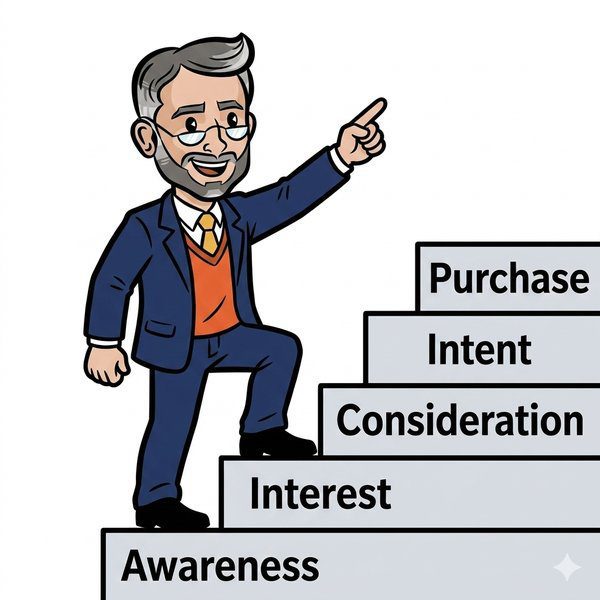
The traditional linear funnel (Awareness > Interest > Decision > Action) is often too simplistic for today’s complex buyer journeys. Customers bounce between stages, research across multiple channels, and interact with brands non-sequentially. Relying solely on a rigid, linear model means missing crucial touchpoints and opportunities. Modern funnels need flexibility, acknowledging diverse paths to purchase and integrating various online and offline interactions.
Fix broken conversion paths
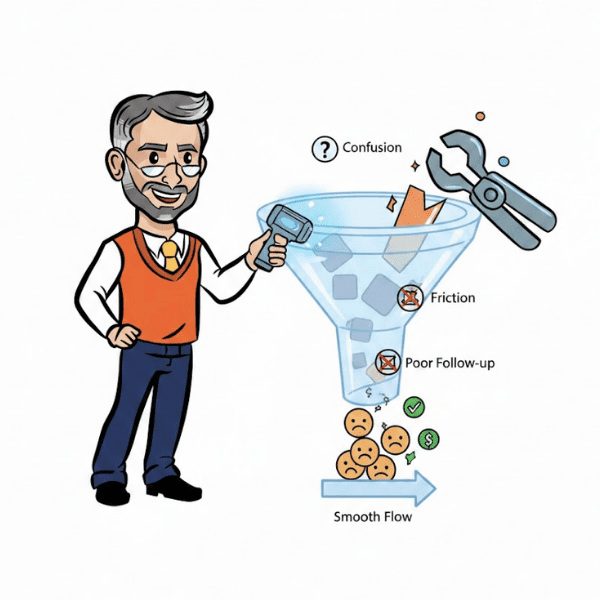
Even well-intentioned funnels leak potential revenue if conversion paths are clunky or unclear. Common issues include:
- Landing pages that don’t match ad messaging
- Confusing calls-to-action (CTAs)
- Excessive form fields creating friction
- Slow loading times
- Poor handoffs between marketing automation and sales CRM
- Lack of follow-up or nurturing sequences
Identifying and smoothing out these friction points is critical for maximizing conversions. It requires a meticulous audit of the entire process, from first touch to final sale (and beyond).
Pro tip: Regularly mystery shop your own sales funnel from a potential customer’s perspective. You’ll quickly spot confusing steps, broken links, or awkward transitions that internal teams might overlook.
Let’s Talk About LinkedIn Funnel Reality
Ah, LinkedIn. The land of opportunity… and endless, often automated, connection requests followed by immediate sales pitches. While it can be a powerful B2B funnel component, many approaches are ineffective, focusing on vanity metrics and spammy tactics rather than genuine relationship-building and lead generation.
Let’s cut through the noise and talk about what actually works (and what definitely doesn’t).
Analyze engagement metrics truth
Likes, views, and comments can feel good, but do they translate to revenue? Often, not directly. Viral posts might get eyeballs, but if they aren’t attracting your ideal customer profile or sparking meaningful conversations, they’re just digital distractions.
Focus on metrics that indicate genuine interest from qualified prospects: profile views from target titles/companies, connection requests with personalized messages, and conversations moving towards discovery calls.
Be wary of engagement pods or tactics designed solely to game the algorithm – they rarely lead to real business.
Spot fake viral tactics
You’ve seen them: the polls about trivial topics, the feel-good stories tenuously linked to business, the posts begging for engagement (‘Agree? Comment below!’). While these might boost visibility temporarily, they often lack substance and fail to position you as a credible authority. Genuine thought leadership and content that addresses your audience’s specific pain points will attract the right connections, even if the ‘like’ count isn’t astronomical. Building a real reputation takes time and consistent value delivery, not cheap tricks.
Break through connection noise
How many generic connection requests do you ignore daily? Exactly.
Stand out by:
- Personalizing: Reference a shared connection, recent post, or common interest.
- Offering Value: Briefly explain why connecting would be mutually beneficial (without immediately pitching).
- Being Patient: Don’t pitch in the connection request or the first message after connecting. Build rapport first.
- Taking it Offline (Eventually): The goal isn’t just connections; it’s conversations. Aim to move promising interactions to a call or meeting.
The key is treating LinkedIn like a real-world networking event, not a cold-calling database.
Pro tip: Before sending a connection request, engage with the person’s recent content (thoughtfully!). This shows genuine interest and makes your request warmer and more likely to be accepted.
Here’s How to Select Effective Funnels
Map your customer journey
Match funnels to objectives
- Lead Generation: Focus on capturing contact information via valuable content offers (webinars, ebooks, checklists).
- Sales Conversion: Designed for warmer leads, often involving demos, consultations, or direct purchase CTAs.
- Customer Onboarding: Guides new customers to success, reducing churn and increasing lifetime value.
- Upsell/Cross-sell: Targets existing customers with complementary offers. Choosing the right type of funnel ensures your efforts align directly with desired business outcomes.
Test conversion assumptions
- Headlines and copy
- Button colors and text
- Form lengths
- Images and videos
- Offer variations
Optimize funnel flow
Let’s Build Your Brand Foundation
Craft compelling value propositions
- What specific problem do you solve?
- What are the tangible benefits of your solution?
- Why should customers choose you over competitors?
Define audience personas
- Job titles and responsibilities
- Goals and aspirations
- Challenges and pain points
- Information sources they trust
- Buying motivations and objections
Align messaging frameworks
Design conversion touchpoints
- Each touchpoint should:
- Reflect your brand identity visually and tonally.
- Reinforce your value proposition.
- Guide the user clearly to the next step.
- Be optimized for conversion (clear CTAs, minimal friction). Think of each touchpoint as a mini-representation of your brand promise.
Master Your Funnel Implementation
Deploy strategic content
- Top of Funnel (Awareness): Blog posts, infographics, social media updates, educational videos.
- Middle of Funnel (Consideration): Case studies, webinars, white papers, comparison guides, expert guides.
- Bottom of Funnel (Decision): Demos, free trials, consultations, testimonials, pricing pages.
Map your content assets to specific funnel stages and audience personas to guide prospects effectively.
Monitor key metrics
- Conversion rates between funnel stages.
- Customer Acquisition Cost (CAC).
- Customer Lifetime Value (CLTV) [6].
- Sales cycle length.
- Lead-to-opportunity ratio.
- Funnel velocity (how quickly leads move through).
Adjust tactical approach
- Tweaking ad targeting or copy.
- Refining email sequences.
- Updating landing page designs.
- Experimenting with different offers or pricing strategies [8].
- Shifting budget between channels.
Transform Your Sales Funnel Strategy
Frequently Asked Questions
Isn’t sales funnel automation supposed to save time and effort?
Automation saves time on tasks, but it doesn’t replace strategy. Over-automating without personalization or strategic oversight leads to spammy, ineffective communication that alienates prospects rather than engaging them.
My team gets lots of likes on LinkedIn posts. Isn’t that a good sign?
While engagement is nice, likes and views are often vanity metrics. Focus on metrics that correlate with actual business outcomes, like qualified leads generated, discovery calls booked, and conversion rates from LinkedIn activities.
Can I just use a standard sales funnel template?
Templates can be starting points, but effective funnels must be tailored to your specific customer journey, value proposition, and business objectives. A one-size-fits-all approach rarely yields optimal results.
How often should I be optimizing my sales funnels?
Funnel optimization should be an ongoing process. Regularly monitor key metrics (weekly or monthly) and conduct A/B tests continuously to identify areas for improvement. Don’t wait for performance to drop significantly before making adjustments.
What’s more important: the brand or the funnel?
They are equally critical and deeply interconnected. A strong brand provides the foundation of trust and clarity, while an effective funnel provides the pathway for converting interest into revenue. You need both working together seamlessly.
References
[5] Gartner. Revenue Growth: Three Steps to Improve Go-to-Market Strategy. https://www.gartner.com/en/articles/revenue-growth
[6] Stripe. The revenue growth formula and strategies explained – Stripe. https://stripe.com/resources/more/revenue-growth-101-a-guide-for-businesses
[8] Wikipedia. Yield management. https://en.wikipedia.org/wiki/Yield_management