
Table of Contents
Debunking the ‘Is SEO Dead?’ Myth for Enterprise Growth
The Evolution, Not the Demise: Understanding the Modern Search Landscape
Unlocking 7-9 Figure Revenue: The Undeniable ROI of Strategic SEO
Beyond Tactics: Reconciling Sales and Marketing Through an Integrated SEO Strategy
Navigating the Future: Traditional SEO’s Resilience in the Age of AI Search
Building Your Growth Engine: A Strategic Framework for Enterprise SEO Integration
The CEO’s Mandate: Leading Your Enterprise Back to Unstoppable Growth
As a CEO, you have likely heard the whispers, perhaps even the shouts: “SEO is dead.” It’s a recurring refrain in the ever-shifting landscape of digital marketing. These claims often accompany pronouncements of a new “silver bullet” or the latest algorithm shift rendering old strategies obsolete. If your company’s growth has stalled, if your marketing efforts feel like a fragmented collection of tactics with unclear ROI, and if the familiar sales-marketing blame game has become an unwelcome soundtrack in your executive meetings, you are precisely the leader this message is for.
This article is not about technical jargon or chasing the latest fads. It is about cutting through the noise to deliver a strategic, evidence-based perspective on SEO’s enduring, even expanding, power. We will directly challenge the misconception that SEO is irrelevant. We will demonstrate how, for companies with established product-market fit and genuine demand, traditional SEO—reimagined and strategically integrated—remains a powerful, often overlooked 7-9 figure revenue channel. Moreover, we will reveal how a truly strategic SEO approach can be the lynchpin that finally solves your sales-marketing disconnect, aligning your teams toward shared, quantifiable growth.
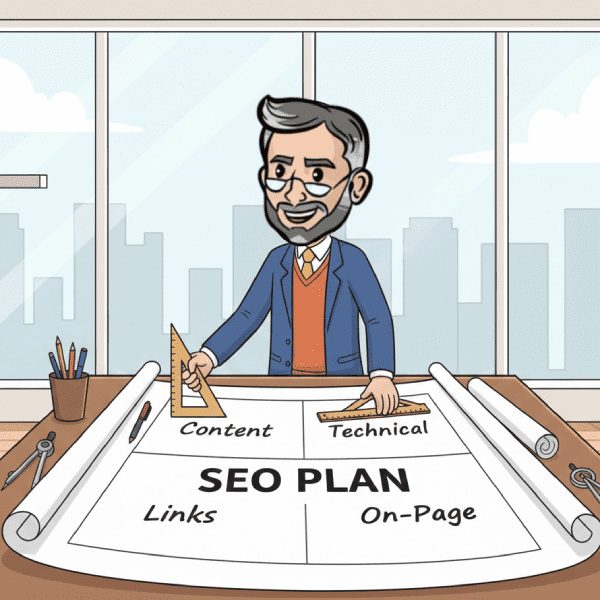
Debunking the ‘Is SEO Dead?’ Myth for Enterprise Growth
The notion that search engine optimization has passed its prime is not new. It resurfaces with every significant algorithm update, every splashy new technology, and every industry pundit vying for attention. It is a myth that, despite overwhelming evidence to the contrary, continues to persist.
The Persistent Myth: Why “Is SEO Dead?” Keeps Resurfacing
The misconception that SEO is dead continues to circulate among executives and general marketers for several understandable reasons.
Rapid Pace of Change
The digital landscape evolves at a breakneck speed. New platforms emerge, algorithms shift, and what worked yesterday might seem less effective today. This constant flux fosters a sense of instability, leading some to conclude that fundamental strategies are no longer viable.
Focus on Tactical Noise Over Strategic Depth
Many interpret SEO purely as a set of technical tactics. Keyword stuffing and link schemes were indeed deprecated by search engines long ago. They miss its evolution into a sophisticated discipline rooted in understanding user intent and building genuine authority.
The Lure of Instant Gratification
Paid advertising, social media virality, and influencer marketing can often deliver quicker results. These results are often more expensive and less sustainable. This immediate gratification can overshadow the long-term, compounding benefits of traditional SEO, which require patience and strategic investment.
Misinterpretation of Search Engine Evolution
The rise of AI and rich snippets, like “People Also Ask” or featured snippets, leads some to believe users no longer click through to websites, thus rendering traditional SEO obsolete. This perspective misunderstands how high-value purchase intent still drives deep engagement.
This environment of rapidly shifting digital marketing trends often leaves leaders bewildered. For many companies, this confusion contributes to a growth plateau. Initial traction might have come from early market fit or tactical wins. However, without a robust, adaptable strategy, that growth hits a wall. Leads become scarcer, customer acquisition cost spirals upwards, and sales teams lament the quality of incoming prospects.
The CEO’s Dilemma: Drowning in Tactics, Starving for Strategy
Perhaps this scenario sounds familiar. You are investing heavily in marketing, yet the returns are murky. Your teams are busy—launching campaigns, creating content, managing social media—but the ROI measurement feels elusive. This often manifests as a deep-seated frustration with disconnected tactics. You have a website, a blog, a social media presence, email campaigns, and paid ads. However, they operate in silos. Each team focuses on its own metrics, and the overarching contribution to revenue growth remains unclear.
This strategic void inevitably leads to the dreaded sales-marketing alignment challenge, or more accurately, the sales-marketing blame game. Marketing complains sales is not closing the “qualified leads” they deliver. Sales fires back that marketing’s leads are “unqualified” or that the content does not address buyer needs. It is a symptom of a deeper strategic disconnect. Marketing is seen as a cost center for generating “activity” rather than a strategic partner in driving predictable, profitable sales.
Consider this scenario: Your B2B SaaS company has seen steady growth for years. Now, new customer acquisition has slowed. Your marketing department is churning out blog posts and running LinkedIn ads. However, the sales team reports that leads are either low quality or prospects have already researched your competitors extensively before engaging. Your sales cycles are lengthening, and the cost to acquire a new customer is climbing. You are constantly asking, “What are we actually getting for all this marketing spend?” This is not a problem of effort. It is a problem of strategy.
Setting the Record Straight: A Strategic Perspective on SEO’s Enduring Power
It is time to put the “Is SEO Dead?” myth to rest for good, especially within the context of high-value enterprise growth. The narrative of SEO’s demise fundamentally misunderstands its evolution. Strategic SEO today is not about technical trickery. It is about deeply understanding your target market’s needs, their pain points, and their purchase intent at every stage of their complex buying journey.
It is about establishing your enterprise as the authoritative, trustworthy, and experienced solution provider in your niche. When executed strategically, SEO transcends being a mere marketing tactic. It becomes a foundational pillar of your entire digital marketing strategy, seamlessly integrating with sales efforts to drive tangible, significant revenue growth. This is not about chasing minor Google algorithm updates. It is about building a sustainable, defensible organic search performance that attracts and converts your most valuable customers.
The Evolution, Not the Demise: Understanding the Modern Search Landscape
To appreciate SEO’s continued strategic importance, we must first understand how search itself has evolved. It is no longer the rudimentary keyword-matching engine of two decades ago. It is a sophisticated, intelligent system designed to comprehend user needs with unprecedented depth.
The Shifting Sands of Search: From Keywords to Intent
Modern Google Search has moved far beyond simple keyword matching. The days of stuffing a page with keywords to rank are long gone. Search engines now employ advanced AI and machine learning to understand the intent behind a user’s query. This is the essence of semantic search. It involves understanding the context, nuances, and relationships between words, rather than just their literal presence.
For instance, searching for “best CRM for small business” is not just about finding pages with those exact words. Google understands you are looking for reviews, comparisons, features relevant to small businesses, and pricing information. It strives to answer the underlying question and satisfy the ultimate goal of your search. Features like “People Also Ask” boxes and featured snippets are direct manifestations of this intent-driven evolution. They aim to provide immediate answers or deeper context directly on the search results page. While these zero-click searches might seem to reduce website traffic for some informational queries, they underscore the critical need for content that directly and authoritatively addresses user intent. For high-value purchases, these snippets often serve as the entry point to further, deeper exploration on your site.
Dispelling the AI Search Fallacy: Why AI Augments, Not Replaces, Traditional SEO
The recent surge in AI search capabilities, such as Google’s Search Generative Experience (SGE) or the growing prevalence of conversational AI, has fueled another wave of “SEO is dead” prophecies. These technologies undoubtedly represent a significant search engine evolution. AI can synthesize information, answer complex questions directly, and even generate content. However, this is where the fallacy lies: AI augments; it does not replace the need for foundational, traditional SEO. This highlights the crucial difference in traditional SEO vs AI search.
AI as a Summarizer, Not a Creator of Original Truth
AI models like those powering SGE learn by ingesting vast amounts of existing web content. They are summarizers and synthesizers of information that already exists and is trusted. If your authoritative, expert-driven content is not discoverable through traditional SEO principles, AI has nothing to learn from, nothing to summarize, and nothing to recommend. In essence, AI relies on the quality and accessibility of human-created information.
The Enduring Need for Experience, Expertise, Authoritativeness, and Trustworthiness
Google’s persistent emphasis on Experience, Expertise, Authoritativeness, and Trustworthiness has never been more critical. In an AI-driven world, where information can be easily fabricated or hallucinated, the need for verifiable, credible sources intensifies. Your content strategy must reflect genuine experience and deep expertise. This means having real people, with real credentials and real-world experience, behind your content. AI cannot replicate genuine experience or establish trust on its own. It can only reference sources that have it.
User Behavior and Validation for High-Stakes Decisions
While AI can provide quick answers for simple queries, for high-value leads and complex B2B sales decisions, human users still crave depth, validation, and direct engagement with authoritative sources. They will click through to whitepapers, case studies, and detailed solution pages. They want to verify information, explore nuances, and connect with a brand they trust. This fundamental human search behavior, especially for critical business decisions, ensures that traditional SEO remains paramount.

The Critical Distinction: Consumer Search vs. High-Value B2B Purchase Intent
One of the most significant misunderstandings fueling the “SEO is dead” narrative is the failure to distinguish between broad consumer search and highly targeted B2B/enterprise purchase intent.
Consumer Search: Breadth and Impulse
Consumer search is often characterized by high volume, transactional queries, and a shorter customer journey. Think “best smart speaker” or “restaurants near me.” While still important, the nuances of zero-click searches or quick AI-generated answers might impact this segment more significantly. Many B2C brands rely on volume, and a small percentage conversion on high traffic suffices.
B2B/Enterprise Search: Depth and Deliberation
B2B sales cycles are fundamentally different. They are characterized by:
- High Value: Average contract values are significantly higher.
- Longer Cycles: Decisions can take months, even years.
- Multiple Stakeholders: Diverse roles are involved, including IT, finance, operations, and executive leadership.
- Extensive Research: Buyers perform thorough due diligence, comparing solutions, assessing risks, and building internal consensus.
- Problem-Solution Focus: Buyers are typically searching for solutions to complex business challenges, not just products.
For a CEO searching for “enterprise cloud migration strategy” or “ERP implementation pitfalls,” an AI summary, while helpful as a starting point, will never suffice. They need detailed guides, expert insights, comparative analyses, and case studies. This is precisely the kind of deep, authoritative content that traditional SEO excels at bringing to the forefront. Your content strategy must be meticulously mapped to these stages, ensuring your business emerges as the go-to resource for specific, high-intent queries. This focus on capturing high-value leads at crucial decision-making stages is where SEO truly shines as a demand generation engine.
Unlocking 7-9 Figure Revenue: The Undeniable ROI of Strategic SEO
Let us move beyond the theoretical and into the tangible. For growth-stalled companies, the financial upside of a well-executed SEO strategy for revenue growth is not just substantial. It can be transformative, shifting your top-line revenue by multiple figures.
Quantifying the Impact: Hard Data on SEO’s Revenue Contribution
While it is crucial to avoid fabricating specific client data, the aggregate ROI statistics proving SEO’s effectiveness for high-value leads are compelling and widely reported by reputable industry sources.
Superior Customer Acquisition Cost
Industry reports consistently highlight that organic traffic often boasts a significantly lower customer acquisition cost compared to paid channels over the long term. While paid advertising offers immediate visibility, its cost scales directly with volume. Organic visibility, once earned, continues to deliver traffic and leads without a direct per-click cost, making its marginal customer acquisition cost approach zero over time. For example, a recent study by BrightEdge found that organic search drives 53% of all website traffic, underscoring its foundational role. While immediate spend is required, the compounding effect means your content assets continue to work for you long after initial investment.
Illustrative Revenue Impact for Enterprise
Consider an enterprise in the cybersecurity space. They sell a solution with an average contract value of $75,000. Through a dedicated SEO strategy for revenue growth, they increase their monthly organic qualified leads from 10 to 50 over an 18-month period. If their sales team maintains a conservative 8% MQL-to-customer conversion rate, this translates to 4 new customers per month. This means 48 new customers annually, solely from organic channels. At an average contract value of $75,000, this is an additional $3.6 million in new Annual Recurring Revenue per year. Scale that over several years, or across multiple product lines, and 7-9 figure revenue growth attributed to SEO is not just plausible but demonstrable. For a larger enterprise with an average contract value of $250,000, just 10 additional organic conversions a month would equate to $30 million in new Annual Recurring Revenue annually. This is not theoretical; it is what happens when strategic intent meets execution.
Beyond Traffic: Driving Qualified Leads and Pipeline Growth
The common mistake is to focus on organic traffic as a vanity metric. A million visitors mean nothing if they do not convert. Strategic SEO shifts the focus from mere clicks to high-quality, pre-qualified leads that fill your sales funnel optimization pipeline with genuine opportunities.
Priming the Sales Funnel
By optimizing content for specific stages of the customer journey—from initial problem awareness to final decision-making—SEO pre-educates prospects. When an organically sourced lead finally engages with your sales team, they often arrive with a deeper understanding of their problem and your solution. This significantly reduces sales cycle length, allows sales representatives to focus on closing rather than educating, and improves conversion rates. SEO, therefore, acts as a powerful demand generation engine, delivering leads that are warmer, more informed, and closer to a buying decision.
The Compounding Effect of SEO
Unlike paid campaigns, which cease to deliver once the budget runs out, a strong SEO presence acts as a compounding asset. Every piece of high-quality, optimized content, every earned backlink, and every improvement in technical SEO health contributes to a growing digital footprint that continues to attract traffic and leads over time. This long-term sustainability makes SEO an investment, not an expense, building an evergreen resource that constantly works to generate revenue.
Building Competitive Advantage and Market Share Through Organic Dominance
In today’s competitive landscape, visibility is market share. Dominating organic search for your industry’s most valuable keywords is not just about traffic. It is about establishing undeniable authority.
Capturing Market Share
When your brand consistently ranks at the top for high-intent queries, you capture a disproportionate share of the available demand. This is not merely about direct conversions; it is about mindshare. Prospects, often unaware of specific brands, encounter your solutions first, repeatedly. This consistent visibility builds brand recognition and credibility that directly translates into market share.
The Halo Effect of Authority and Trust
Google’s rankings are, in effect, a vote of confidence. Consistently appearing at the top for relevant, complex queries signals to potential customers that your business is an authority in its field. This implied endorsement builds trust and credibility, which are invaluable assets in B2B sales where decisions are often risk-averse. This competitive advantage is difficult for rivals to replicate quickly.
SEO as a Strategic Moat
Once established, a dominant organic presence becomes a powerful moat against competitors. Building high domain authority, a comprehensive content library, and a robust backlink profile takes significant time and investment. Competitors seeking to dislodge your position face an uphill battle, often requiring far greater resources and patience. This makes strategic SEO a long-term defensible asset, securing your position as an industry leader.
Beyond Tactics: Reconciling Sales and Marketing Through an Integrated SEO Strategy
Perhaps one of the most significant, yet often overlooked, benefits of a strategic SEO approach is its unique ability to bridge the persistent chasm between sales and marketing. It can transform them from warring factions into a cohesive revenue growth engine.
The CEO’s Mandate: Bridging the Sales-Marketing Divide
As a CEO, you have likely navigated the sales and marketing alignment challenge firsthand. The finger-pointing, the differing KPIs, the disconnected tactics—these are not merely frustrating; they actively hinder revenue growth. The root cause is often a lack of shared strategic objectives and a unified understanding of the customer journey.
Fostering Collaboration Through Shared Goals
A digital marketing strategy with SEO at its core provides powerful common ground. Both sales and marketing are ultimately concerned with attracting and converting customers. SEO, focused on understanding customer intent, naturally unifies these goals. Marketing’s SEO efforts, such as keyword research and content creation, directly inform sales’ understanding of buyer pain points and questions. Sales feedback on lead quality and common objections, in turn, fuels SEO content refinement. When both teams realize that SEO is not “marketing’s job” but a critical component of the revenue engine, collaboration flourishes.
Overcoming Disconnected Tactics
Instead of disparate campaigns, an integrated SEO strategy for revenue growth ensures every marketing activity serves a clear, quantifiable purpose aligned with sales objectives. Paid advertisements can drive traffic to SEO-optimized landing pages. Social media can amplify SEO content. Email campaigns can nurture leads identified through organic search. The objective becomes singular: accelerate the sales funnel optimization through highly relevant, intent-driven engagement.
SEO as the Foundation of a Cohesive Revenue Growth Engine
Strategic SEO provides an unparalleled framework for building a truly cohesive revenue growth engine because it forces a deep, data-driven understanding of your customer.
Keyword Research as a Cross-Departmental Blueprint
Keyword research is far more than just finding phrases for Google. It is an unfiltered window into the minds of your potential customers. What are their burning questions? What problems are they trying to solve? What solutions are they evaluating?
- For Marketing: It directly informs your content marketing strategy, ensuring every piece of content addresses genuine customer needs and search intent.
- For Sales: It provides invaluable insights into common objections, questions asked pre-sale, and the language prospects use, enabling more effective sales enablement materials and objection handling.
- For Product Development: Understanding search demand can even highlight unmet market needs or inform feature prioritization for your product roadmap.
Content That Fuels Both Demand and Sales
Content marketing, when driven by SEO insights, becomes a dual-purpose asset. A whitepaper optimized for a mid-funnel keyword not only attracts new prospects for marketing demand generation but also serves as a critical resource for sales to educate, persuade, and differentiate during closing conversations. Case studies, product comparisons, and detailed solution guides become shared tools that move prospects through the customer journey.
Implementing Feedback Loops for Continuous Improvement
A critical element of this integration is the creation of seamless feedback loops. Sales teams should routinely provide insights to marketing and SEO teams regarding the quality of organic leads, common questions asked during calls, and competitive intelligence gleaned from customer interactions. In turn, marketing and SEO should share performance data, including organic traffic, keyword rankings, and lead conversions, directly tied to revenue outcomes. This continuous dialogue refines the digital marketing strategy, optimizing content and targeting for maximum sales impact.
Developing a Holistic SEO Strategy for Revenue Growth
A truly impactful SEO strategy for revenue growth is not a standalone project. It is interwoven with every aspect of your customer acquisition efforts.
Mapping to the Buyer Journey
A holistic strategy meticulously maps SEO efforts to specific stages of the customer journey:
- Awareness: Broad, problem-focused keywords, such as “how to reduce cloud spending.” Content includes blog posts and explainers.
- Consideration: Solution-focused keywords and comparisons, such as “cloud cost optimization tools” or “vendor X vs. vendor Y.” Content includes whitepapers, e-books, comparison guides, and webinars.
- Decision: Brand-specific, high-intent keywords, such as “your brand name pricing” or “your brand name reviews.” Content includes case studies, demos, pricing pages, and testimonials.
Creating Shared Content Assets
This strategic mapping ensures that the content marketing team develops assets that serve both marketing’s demand generation goals and sales’ closing efforts. Every piece of content, from a top-of-funnel blog post to a bottom-of-funnel case study, is designed to progressively educate and qualify the prospect. This moves them closer to a purchase decision.
Cross-Departmental Collaboration
The success of this strategy hinges on robust sales and marketing alignment. Regular, integrated meetings involving sales, marketing, and the SEO lead ensure that insights flow freely. Sales informs content needs. Marketing updates sales on content performance and new organic lead sources. The SEO team optimizes based on real-world customer interactions and evolving search trends.
Navigating the Future: Traditional SEO’s Resilience in the Age of AI Search
The future of search will undoubtedly be shaped by AI search. However, this does not spell the end of traditional SEO. Rather, it elevates the importance of its core tenets, especially for high-value enterprise markets. This defines the future of SEO in enterprise.
The Enduring Power of Purchase Intent in an AI-Driven World
Even with the most sophisticated AI search capabilities, the fundamental human need for reliable, in-depth information remains constant, particularly for high-stakes business decisions.
Humans Still Make Big Decisions
AI can summarize, but it does not make the ultimate buying decision for an enterprise CRM, a multi-million-dollar infrastructure project, or a complex legal service. Humans do. Those humans need to trust their information sources. They will still seek deep dives, case studies, specific data points, and expert opinions that go beyond what an AI summary can provide. The customer journey for high-value B2B sales is inherently a journey of extensive research and validation, which often ends with direct engagement with a perceived authority.
AI Augments, It Doesn’t Replace The Need for Depth
AI overviews, like SGE, will undoubtedly provide quick answers. However, for truly complex, nuanced queries that lead to purchase intent, these AI-generated summaries often link back to their source material for further exploration. This means your authoritative, comprehensive content, optimized for specific user intent, becomes even more valuable as a primary data source for both AI and human users. The goal is to be the authoritative source AI draws from, ensuring your brand’s experience, expertise, authoritativeness, and trustworthiness are indisputable.
Experience, Expertise, Authoritativeness, and Trustworthiness as the Ultimate Differentiator
In an AI-driven world, where generic content can be easily churned out, a brand’s experience, expertise, authoritativeness, and trustworthiness become the ultimate differentiator. Google’s algorithms are increasingly adept at identifying content created by real experts with genuine experience. This is not just about having a name attached to an article. It is about demonstrating verifiable expertise, building a reputation for authority, and fostering a trustworthy brand presence across your entire digital marketing strategy. This is the future of SEO in enterprise: authentic credibility at scale.
Adapting to Algorithm Shifts: What the Future of SEO in Enterprise Looks Like
Chasing every Google algorithm update is a fool’s errand. The future of SEO in enterprise lies in building adaptable strategies rooted in enduring principles.
Focus on Foundational Principles
Rather than reacting to every tremor, enterprises must invest in foundational SEO principles that are impervious to minor algorithm shifts:
- Site Health: A technically sound website that is fast loading, mobile-friendly, secure, and crawlable is non-negotiable. Technical SEO is the bedrock.
- User Experience: Google prioritizes sites that offer a superior experience. Intuitive navigation, clear calls to action, and engaging content keep users on your site longer, sending positive signals.
- Authoritative Content: Consistently producing high-quality, in-depth content that genuinely solves user problems and demonstrates expertise.
The Power of Brand Building and Thought Leadership
In a complex search ecosystem, a strong brand presence and established thought leadership amplify SEO efforts. When your brand is recognized as a leader, it inherently signals experience, expertise, authoritativeness, and trustworthiness to both users and search engines. Link building becomes more natural, social signals strengthen, and direct traffic increases. This integrated approach elevates your organic search performance beyond mere keyword rankings.
Strategic Considerations for CEOs: Where to Double Down
For CEOs grappling with CEO challenges and stalled growth, the strategic implications are clear. This is where to focus your investment:
Prioritize Problem-Solving Content
Double down on creating content that answers complex questions and addresses specific pain points your ideal customers face. This means going beyond basic product descriptions to create comprehensive guides, research papers, and comparative analyses that position your company as the definitive solution provider. This content often targets long-tail keywords with high commercial intent.
The Continued Necessity of Commercial Intent Keywords
While informational queries are crucial for awareness, the continued necessity of traditional SEO targeting commercial intent keywords cannot be overstated. These are the keywords users type when they are close to a purchase decision, such as “best enterprise accounting software reviews,” “vendor X vs. vendor Y comparison,” or “pricing for your solution.” This organic traffic is your highest-value traffic, primed for conversion, and directly contributes to the ROI of SEO.
Building a Resilient Organic Acquisition Model
Your goal should be to build a resilient organic traffic acquisition model that is less susceptible to individual algorithm shifts or competitive pressures. This involves diversifying your content strategy, which includes text, video, and interactive tools. It also means continuously improving technical SEO and fostering an environment of experience, expertise, authoritativeness, and trustworthiness across all digital touchpoints. This long-term view transforms SEO from a tactical line item into a strategic asset for market share and profitable growth.
Building Your Growth Engine: A Strategic Framework for Enterprise SEO Integration
Moving from understanding to action requires a clear, strategic framework. As a CEO, your role in championing this integration is paramount.
Auditing Your Current State: Identifying Opportunities for Strategic Planning
Before charting a new course, a thorough assessment of your existing digital footprint is essential.
Comprehensive Digital Asset Assessment
This involves a detailed audit of your website’s technical SEO health. It identifies issues like crawl errors, site speed bottlenecks, and mobile responsiveness. It also includes an exhaustive content inventory to pinpoint gaps where your competitors are dominating relevant search queries, or where your existing content lacks the depth or authority required to rank for high-value leads.
Understanding Growth Bottlenecks
Analyze your current customer acquisition cost across all channels. Where is money being wasted? Where are leads falling out of the funnel? What are the primary revenue growth bottlenecks? This diagnostic phase should uncover where strategic SEO can have the most immediate and significant impact on improving funnel optimization.
Competitive Benchmarking for Market Share
A deep dive into your competitors’ organic search performance will reveal their strengths and weaknesses. What keywords are they ranking for? What kind of content are they producing? Where are their backlink sources? This benchmarking exercise highlights opportunities to seize market share and establish competitive advantage through a superior SEO approach.
Crafting a CEO-Led SEO Blueprint
This is not an SEO manager’s job; it is a CEO’s mandate. A CEO-led SEO blueprint defines the strategic direction and ensures alignment across the organization.
Establishing Measurable ROI Objectives
The blueprint must establish clear, measurable ROI of SEO objectives directly tied to revenue targets. Examples include:
- Achieve X% increase in organic qualified leads within 12 months.
- Reduce customer acquisition cost for organic channels by Y%.
- Increase organic search performance share of voice for top 10 commercial intent keywords by Z%.
- Generate W million in new Annual Recurring Revenue attributed to organic channels annually. These objectives move beyond traffic metrics to focus on tangible business outcomes.
Strategic Resource Allocation
Decide where to allocate resources strategically. Will you build an internal future of SEO in enterprise team, partner with an external expert advisor, or a hybrid approach? This decision hinges on your internal capabilities, the complexity of your market, and the urgency of your growth imperative. The key is to commit adequate resources to this long-term investment.
Integrating SEO into Cross-Functional Roadmaps
Crucially, SEO must be integrated into your product development, sales enablement, and overall marketing roadmaps. SEO insights should inform what products or features to build, based on search demand. They should also inform what sales collateral is needed, and how marketing campaigns are structured. This transforms SEO strategy for revenue growth from an isolated function into a central pillar of your strategic planning.
The Execution Imperative: From Strategy to Sustainable Growth
Strategy without execution is merely aspiration. Bringing your SEO blueprint to life requires consistent effort and robust operational processes.
A Data-Driven Content Marketing Strategy
Implement a content marketing strategy meticulously driven by keyword research and a deep understanding of search intent. Every piece of content, whether a comprehensive guide, a case study, or a solution brief, should serve a clear purpose within the customer journey and target specific high-value leads.
Fortifying Technical SEO Health
Ongoing technical SEO audits and optimizations are non-negotiable. Ensure your website is fast, mobile-friendly, secure, and easily crawlable by search engines. This foundational work directly impacts your organic search performance and user experience, which Google prioritizes.
Fostering Cross-Departmental Collaboration
Break down the silos. Establish regular, structured communication channels and feedback loops between sales, marketing, and the SEO team. When sales provides insights on customer pain points and objections, and marketing shares organic traffic and conversion data, the entire revenue engine becomes more intelligent and effective. This leads to seamless sales and marketing alignment.
Continuous Measurement, Analysis, and Adaptation
SEO is not a “set it and forget it” endeavor. Implement robust tracking and analytics to continuously measure ROI of SEO against your defined objectives. Analyze what is working, what is not, and why. Be prepared to adapt your digital marketing strategy based on performance data, evolving search engine evolution patterns, and competitive shifts. This iterative approach is key to achieving long-term sustainability and profitable growth.
The CEO’s Mandate: Leading Your Enterprise Back to Unstoppable Growth
The narrative of SEO’s demise is a dangerous one, particularly for a CEO facing CEO challenges like stalled growth and disconnected internal teams. It is a distraction from a powerful, proven solution.
SEO is not dead. It has evolved. It has matured from a tactical bag of tricks into a sophisticated, strategic discipline that, when integrated properly, can be the most powerful, cost-effective engine for attracting high-value leads and driving sustainable, 7-9 figure revenue growth. It is the unifying force that can bridge your sales and marketing alignment gap. It can transform your fragmented efforts into a cohesive, unstoppable force for demand generation.
Your unique position as CEO allows you to champion this shift. You can mandate the strategic planning necessary to integrate SEO into the very fabric of your digital marketing strategy and, by extension, your entire business. Resist the allure of silver bullets and quick fixes. Instead, embrace the long-term, compounding value of a strategic SEO investment. This is not just about rankings; it is about owning your market’s digital conversations, building undeniable authority, and establishing a durable competitive advantage.
It is time to re-evaluate your SEO investment. It is time to see it not as a tactical afterthought, but as the powerful, often overlooked 7-9 figure revenue channel it truly is.
Are you ready to unlock the immense, untapped potential of integrated SEO and steer your enterprise back to unstoppable growth?
Request a Strategic Growth Audit to see how a cohesive, data-driven SEO strategy can transform your stalled revenue into a predictable, high-value growth engine.