Introduction to Outsourced Marketing Leadership in 2027
Outsourcing has long been standard practice for IT support, customer service, and accounting. Companies outsource to reduce overhead costs and increase efficiency. But in 2027, outsourcing involves more than contracting non-core activities to external providers. It now extends to the executive suite, specifically to the chief marketing officer role.
Outsourced marketing leadership means engaging a virtual chief marketing officer, fractional CMO, or interim CMO to provide senior marketing leadership without a full-time hire. If you are a founder, CEO, or head of marketing dealing with stalled growth, chaotic marketing strategies, unclear business goals, or a lack of senior guidance, this model was designed for your situation.
This article is grounded in real-world consulting experience, with examples and practical guidance. You will learn how outsourced CMOs work, when they make sense, what they cost, and how to choose the right model for your business needs.
Table of Contents
What “Outsourced” Means for Marketing Leadership
Virtual CMO, Fractional CMO, Interim CMO: Key Differences and Overlaps
When Hiring a Virtual CMO or Fractional CMO Makes Sense
Core Responsibilities of a Virtual Chief Marketing Officer
8 Business Benefits of Hiring a Virtual CMO in 2027
How Outsourced CMOs Build and Execute Effective Marketing Strategies
How to Decide Which Outsourced CMO Model Fits Your Business
What to Ask Before Hiring a Virtual or Fractional CMO
FAQs About Outsourced CMOs
Why Choose Our Outsourced CMO and Growth Leadership Services
How to Get Started with Outsourced Marketing Leadership
What “Outsourced” Means for Marketing Leadership

When we say “outsourced” marketing leadership, we are not talking about cheap labor or task delegation. We are talking about executive-level marketing leadership delivered outside your payroll or geography. Industries that commonly use outsourcing include IT, healthcare, and finance, but the model now applies directly to the marketing function at the C-suite level.
The outsourcing process includes identifying needs and hiring an external provider. For marketing leadership, that means bringing in a virtual CMO, fractional CMO, or interim CMO who owns strategic planning, positioning, go-to-market strategy and funnel design, and cross-functional coordination with your sales and operations teams. This is different from hiring an agency or freelancer to run campaigns.
An example: a B2B SaaS company in 2027 engages a virtual CMO based in another state to refine their ideal customer profile, rebuild messaging architecture, and redesign their go-to-market process. The work happens through remote workshops, weekly alignment meetings with sales, and shared dashboards visible to the leadership team.
Outsourced does not mean less accountable. These leaders should have clearly defined KPIs, reporting cadence, and decision-making authority.
One valid concern is that outsourcing can create dependency on external providers for critical services. Loss of direct oversight is a significant risk of outsourcing business functions. The solution is designing the engagement with clear authority, scope, and accountability from day one.
Virtual CMO, Fractional CMO, Interim CMO: Key Differences and Overlaps
The distinction in one sentence: a fractional CMO describes time and capacity, a virtual CMO describes delivery method, and an interim CMO describes fixed-term change leadership. How they compare:
- Virtual chief marketing officer: Works remotely on a part-time basis, focusing on strategic planning, leadership, and integration without routine physical presence. A virtual CMO delivers leadership remotely, not requiring physical presence to be effective.
- Fractional CMO: A fractional CMO provides leadership part-time, not full-time, committing a set number of days or hours per month. Fractional CMOs may work on-site, remotely, or in a hybrid arrangement. Fractional CMOs engage with fewer clients than virtual CMOs, often going deeper with each organization.
- Interim CMO: A full-time role for a fixed period (often 6–12 months), typically with heavier physical presence to manage turnaround, post-acquisition integration, or major transitions.
Virtual CMOs provide marketing oversight without full-time commitment, making them ideal for distributed teams and companies operating across time zones.
Some scenarios:
- An interim CMO leads a 9–12 month post-acquisition marketing org integration in 2027, merging tech stacks and standardizing messaging across two companies.
- A fractional CMO supports a $12M ARR B2B services firm 2–3 days per week, building growth infrastructure while the internal team handles execution.
- A virtual CMO guides a globally distributed startup with no central HQ, providing funnel architecture, channel strategy, and board meeting preparation remotely.
Many leaders operate as a virtual fractional CMO in hybrid models, combining part-time capacity with primarily remote delivery plus targeted on-site visits for strategy offsites or key customer events. Labels can become misleading. What matters most is the engagement design: access, authority, scope, and deliverables.
When Hiring a Virtual CMO or Fractional CMO Makes Sense
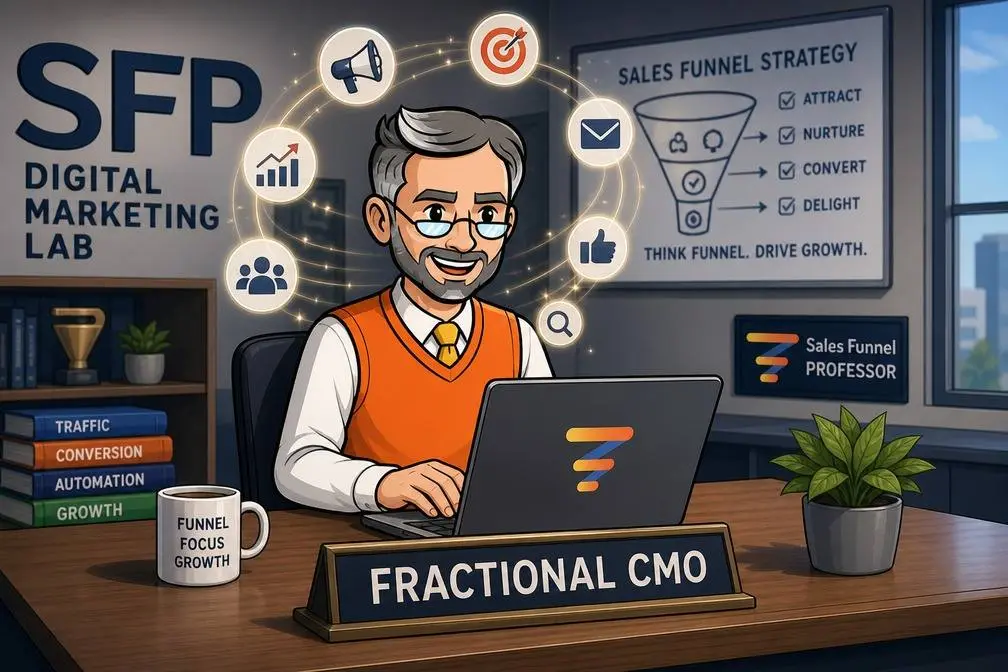
Timing is everything. Here are the inflection points where hiring a virtual CMO can be most effective:
- Founder is still running marketing. Major decisions keep sliding behind operational fires, and nobody owns strategic planning.
- Revenue has plateaued. You are stuck between $2M–$4M or $10M–$25M ARR despite increased spend. One documented case showed a company at $3.2M ARR growing only 12% year-over-year before engaging a fractional CMO, then accelerating to 45% growth within 12 months.
- New market entry. You have expanded into the US market (or other regions) but lack local go-to-market strategy and messaging.
- No strategic ownership. Your marketing team is tactical (social, email, events) but nobody owns alignment with overarching business goals.
- Spend with unclear ROI. Paid media, SEO, or ABM budgets have grown past $50K per month with blurry attribution.
Virtual CMOs can quickly adapt to evolving business priorities, making them especially valuable for remote-first or multi-location teams. Companies can hire virtual CMOs for specific strategic initiatives without committing to a full time role.
Within 90 days of engaging a virtual fractional CMO, one commercial real estate marketplace replaced three underperforming agencies, designed founder-led outreach, achieved 7-figure ARR, and cut customer acquisition cost by roughly 57%.
Core Responsibilities of a Virtual Chief Marketing Officer
A virtual chief marketing officer is a member of the executive team, not an outside adviser who drops in with slide decks. Some of their key responsibilities are:
- Diagnose the current funnel, segment performance, and revenue levers across the full customer journey.
- Lead holistic strategic planning: positioning, messaging, ideal customer profiles, market selection, and channel strategy.
- Translate business challenges (high customer acquisition cost, low lead quality, slow sales cycles) into targeted marketing strategies and marketing initiatives.
- Design and own the marketing roadmap and operating model, including cadence, dashboards, and SLAs with sales for sales enablement.
Virtual CMOs ensure alignment between marketing and business goals, bridging the gap between marketing efforts and company’s goals. They ensure marketing strategies align with business objectives at every stage, much like a head of growth overseeing the entire revenue cycle. Virtual CMOs can adapt their services based on business needs, scaling focus from lead generation to brand positioning as priorities shift.
The “virtual” aspects include running fully remote strategy workshops and team sessions with distributed stakeholders, implementing rhythms of remote leadership (weekly standups, monthly KPI reviews, quarterly planning) via video and collaboration tools, and partnering with sales leadership to align pipeline stages and account-based marketing campaigns.
A virtual chief marketing officer also oversees agencies and freelancers to ensure execution maps back to marketing goals-not vanity metrics.
8 Business Benefits of Hiring a Virtual CMO in 2027
Here are eight practical benefits of hiring a virtual CMO, grounded in real numbers rather than generic promises:
- Cost efficiency. A virtual CMO costs $120,000 to $300,000 annually. Compare that to a full time CMO commanding $300,000–$500,000 in base salary alone, plus benefits, equity, and recruitment costs that push the total first-year investment to $420,000–$700,000. Outsourcing can significantly reduce operating, recruitment, and training expenses. Hiring a virtual CMO can reduce overhead costs significantly, and outsourcing transforms fixed operational costs into variable costs for services used.
- Immediate senior expertise. Virtual CMOs provide immediate impact without lengthy onboarding. They can deliver immediate impact with proven solutions, hitting the ground running with structured 30/60/90-day frameworks. A virtual CMO can provide immediate impact upon hiring because experienced marketing leadership at this level has seen your situation before.
- Global talent pool. Hiring a virtual CMO provides access to a global talent pool. Access to global talent and expertise is a key benefit of outsourcing. Hiring a virtual CMO expands your candidate search globally, so you can match sector experience, business model, and stage more precisely than limiting yourself to local executives. Virtual CMOs offer access to a global talent pool of experts across industries and growth stages.
- Faster impact. Structured onboarding frameworks focused on quick wins and foundational fixes mean you see measurable progress within weeks, not months. Case evidence shows CAC reductions of 20–60% and pipeline growth multiples of 2–5× within 6–12 months.
- Objective perspective. A virtual CMO offers unbiased perspectives on marketing strategies and entrenched assumptions holding rapid growth back. They bring a deep understanding of market challenges without internal politics clouding judgment.
- Flexible engagement. Flexible engagement models allow businesses to scale services as needed. Virtual CMOs offer scalable engagement models based on business needs, and businesses can adjust marketing assistance levels with virtual CMOs as priorities change-product launches, funding rounds, or new region entries. Outsourcing allows businesses to scale operations quickly based on demand.
- Better alignment. Virtual CMOs ensure alignment between marketing strategies and measurable business goals like pipeline velocity, win rate, and lifetime value-not just impressions or clicks.
- Reduced hiring risk. Engagements can be trialed for a fixed period before longer extensions. You can test candidates through a defined initial phase and extend based on marketing performance, rather than committing to an expensive full time hire that takes 6 months to evaluate.
How Outsourced CMOs Build and Execute Effective Marketing Strategies
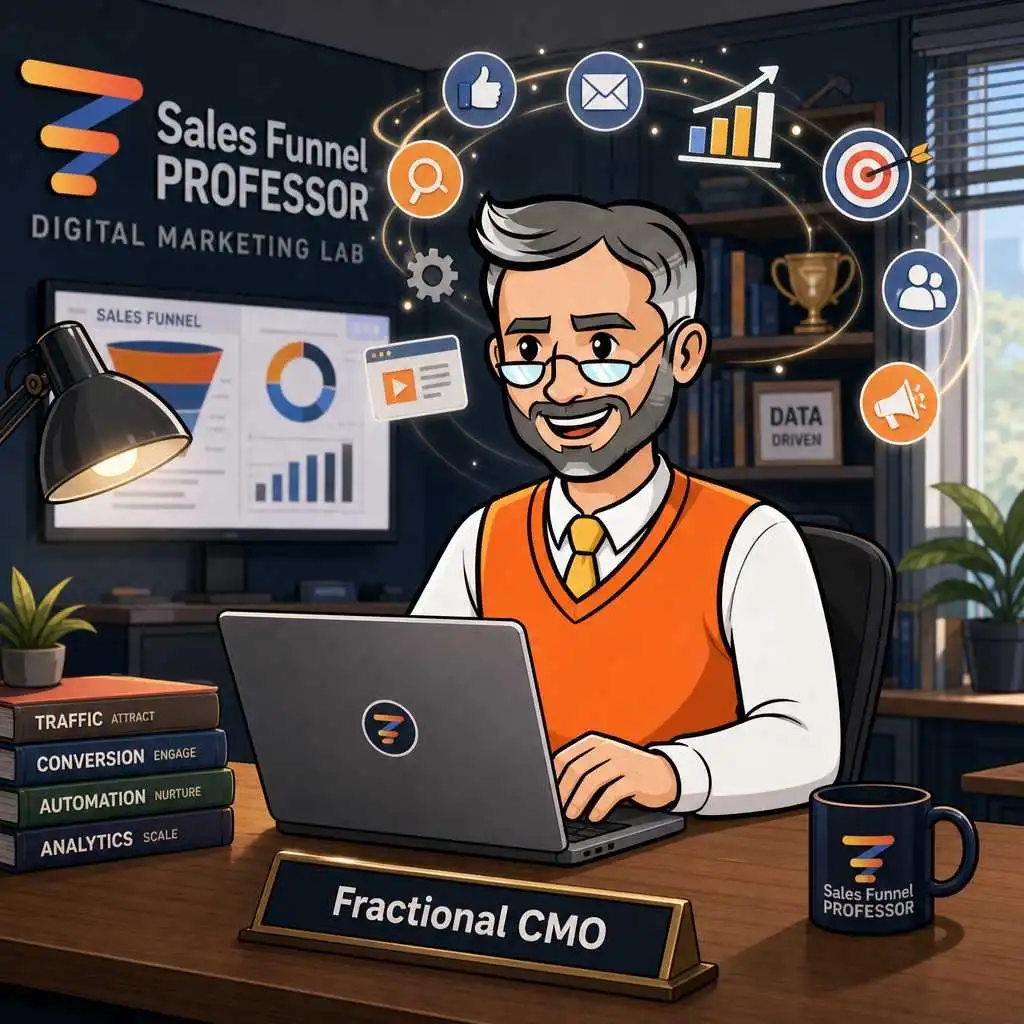
Outsourced CMOs follow a clear process: diagnose, design, implement, and optimize. Virtual CMOs can adapt quickly to evolving business needs at each stage by managing the full campaign lifecycle from planning to optimization.
Discovery and diagnosis:
- Deep dives into existing funnels, analytics, CRM data, marketing tech stack, and customer interviews
- Assessment of team capabilities, agency performance, budget allocation, and the right sales and marketing KPIs to track
- Common finding: 15–30% of ad spend is wasted, attribution is broken, and messaging is inconsistent
Strategic planning:
- Defining target segments, value propositions, messaging hierarchy, and go-to-market motions (inbound, outbound, ABM, product-led, or hybrid), including how to leverage fintech for sales and marketing growth
- Translating business objectives into a prioritized marketing roadmap with quarterly milestones and budgets
Execution and optimization:
- Leading internal teams and agencies to execute marketing campaigns across SEO, SEM, paid social, events, and lifecycle marketing, or partnering with specialists through done-for-you outsourced sales funnel services
- Implementing performance dashboards tracking pipeline contribution, CAC, ROAS, and conversion rate optimization outcomes, often inside a CRM such as HubSpot, which we compare in detail in our Go High Level vs. HubSpot analysis for growing teams
- Running structured experiments (A/B tests, offer tests, messaging variations) and updating the roadmap based on results and performance reviews
Virtual delivery works in practice through remote workshops, async documentation, and recorded walkthroughs. This can actually increase clarity compared to ad-hoc in-person chats, because everything is documented and accessible to the full organization.
How to Decide Which Outsourced CMO Model Fits Your Business
Start from your business context and constraints, not trendy labels. Here is a decision framework:
- If you need deep, ongoing executive ownership but not 5 days per week, lean toward fractional CMO servicesthat include a flexible physical presence.
- If your team is already distributed and works remotely well, a virtual chief marketing officer is often the strongest choice.
- If you are navigating a defined transition (post-acquisition, pre-IPO, major rebrand) with a 6–12 month horizon, an interim CMO model may fit best.
Key questions to guide your decision:
- What are the primary business goals for the next 12–18 months? (e.g., entering the US market, doubling qualified pipeline, launching a new product line)
- What level of physical presence truly adds value versus what is just habit or comfort?
- How mature is your marketing data, reporting, and tech stack? This directly affects a virtual CMO’s ability to lead effectively from day one.
Virtual CMOs typically charge $10,000 to $25,000 monthly, with pricing varying based on scope, seniority, and the same engagement intensity. Many companies in 2027 choose a hybrid virtual fractional CMO engagement that combines remote leadership with targeted in-person strategy sessions. Virtual or fractional CMOs both develop strategies that drive growth-the question is which delivery model fits your organization best.
What to Ask Before Hiring a Virtual or Fractional CMO
Smart questions prevent misalignment and ensure the outsourced leader has the technical expertise and extensive experience to handle your specific business challenges. One inherent challenge is that lack of control over quality can arise from outsourcing tasks to third parties. Communication barriers can arise from cultural differences and time zone issues. And challenges of outsourcing include data security risks and communication barriers. The right questions surface these risks early.
Ask these before you hire:
- “Tell me about a time you helped a company at our stage move from X to Y in 6–12 months. What did you change?”
- “How do you structure the first 90 days as a virtual CMO, and what are the non-negotiable deliverables by day 90?”
- “What operating conditions do you need to be highly effective virtually-data access, tools, meeting cadence, decision-making authority?”
- “How do you align marketing strategies with concrete business goals like sales targets, cash constraints, and investor expectations?”
- “Which marketing tech stacks, channels, and go-to-market models do you know deeply, and where do you bring in specialist partners with strong proficiency?”
- “How do you handle situations where physical presence might be helpful? What does your hybrid or travel model look like?”
Answers should emphasize leadership, accountability, and real outcomes-not just channel tactics or buzzwords.
FAQs About Outsourced CMOs
These FAQs address common concerns about hiring a virtual CMO or fractional CMO for your company.
How much does hiring a virtual CMO cost in 2027?
- Virtual CMOs typically charge between $10,000 and $25,000 monthly, with annualized equivalents ranging from $120,000 to $300,000.
- A full time CMO often exceeds $300,000–$500,000 in salary alone, plus equity and benefits, making the virtual model 35–55% less expensive.
- Factors influencing cost include company size, complexity of marketing strategies, required time commitment, and level of physical presence.
- Focus on value and impact-pipeline created, CAC reduced, revenue growth-rather than hourly rates alone. Case evidence shows ROI of 30× against the cost of a fractional engagement.
What is the difference between a virtual CMO and a fractional CMO?
- Fractional describes part-time capacity; virtual describes remote delivery and limited physical presence.
- Many outsourced CMOs are both: fractional in hours and virtual in how they work with your team.
- A fractional CMO might spend two days per week embedded (on-site or remote) with one company, while a virtual CMO works remotely across multiple engagements with a broader set of executives.
- Do not get stuck on labels. Clarify the operating model, decision authority, and outcomes you expect.
How involved will an outsourced CMO be with my existing marketing team?
- Expect leading weekly standups, setting priorities, reviewing performance, and providing coaching and feedback during team sessions.
- A virtual chief marketing officer should empower internal talent, not displace them, and integrate agencies rather than duplicate their work.
- Communication in remote settings relies on shared dashboards, async updates, and quarterly planning sessions.
- Minimum rhythms: weekly tactical calls, monthly strategy reviews, quarterly planning workshops, and participation in board meetings when needed.
Can an outsourced CMO help if we operate mainly in one local market?
- Outsourced CMOs often mix national or global experience with local insight, especially for companies entering or optimizing for the US market.
- Physical presence may still be helpful for key local events, customer visits, or leadership offsites-but most strategic work can be handled virtually.
- A regional professional services firm, for example, can use a virtual CMO to refine positioning, pricing, and lead generation without needing someone local full-time.
- Local nuances are captured through customer interviews, sales ride-alongs (virtual or in-person), and region-specific search and competitive research.
How long should we plan to work with a virtual or fractional CMO?
- Shorter 3–6 month projects work for diagnostic and roadmap work. Deeper transformation typically requires 9–18 months.
- At least two full quarters are usually needed to design, deploy, and optimize new marketing strategies and see measurable results.
- Start with a clearly defined initial phase (first 90 days) with specific outcomes, then extend based on results and evolving business needs.
- Continuity matters: keeping an outsourced CMO through key growth milestones reduces strategic whiplash for small businesses and larger organizations alike.
What should we expect in the first 90 days with an outsourced CMO?
- Days 1–30: Assessment of marketing strategies, funnel health, tech stack, and team capabilities plus deep understanding of business goals and resources.
- Days 31–60: Co-creation of strategic planning outputs and a prioritized marketing roadmap with clear KPIs and test plans.
- Days 61–90: Execution of initial marketing campaigns and experiments, implementation of reporting dashboards, and first performance review with the leadership team.
- By day 90, leadership should have clear visibility into what is working, what is not, and what will be done next to create sustainable growth.
Why Choose Our Outsourced CMO and Growth Leadership Services
We are a revenue-focused consultancy that offers outsourced CMO, fractional CMO, and head-of-growth support globally. Here is what sets us apart:
- Deep specialization in building and optimizing sales funnels – not just “doing marketing” but engineering the entire revenue engine from a person who understands how funnels convert.
- Proven experience with startups, scale-ups, and established firms entering or growing in the US market, including building a unified bank sales and marketing engine for faster growth.
- A proven process combining audits (funnel, CRO, tech stack), branding and messaging work, bank-specific initiatives like defining your bank marketing strategy, and hands-on execution support.
- Ability to act as virtual chief marketing officer, fractional executive, or interim leader depending on your business needs.
We go beyond what agencies deliver:
- Direct executive-level ownership of strategic planning and marketing strategies with senior marketing leader accountability.
- Training and coaching for internal teams to raise in-house capabilities, not create dependency.
- Global reach and a remote-first approach, with selective physical presence for key milestones when it truly adds value.
How to Get Started with Outsourced Marketing Leadership
You do not need to solve your marketing leadership gap alone. Here is the path forward:
- Step 1: Request a free strategy session to discuss your current business challenges and goals.
- Step 2: Complete a short intake covering revenue stage, target markets, current marketing stack, and leadership expectations.
- Step 3: Receive a proposed engagement model (virtual CMO, fractional CMO, or hybrid) with clear scope, timelines, and investment.
- Step 4: Launch an initial 60–90 day phase focused on diagnosis, strategic planning, and a prioritized roadmap aligned to your business goals.
If your marketing efforts lack experienced marketing leadership and your digital marketing is not generating the pipeline your company needs, the fastest path to clarity is a conversation. Book a free strategy session today and find out what outsourced marketing leadership can do for your growth!