
This article breaks down typical monthly retainers, hourly rates, and the cost difference between a fractional CMO and a full-time executive. The perspective comes from hands-on revenue and funnel consultants who see these numbers inside B2B companies every week, not from a recruiter or job board.
By the end, you’ll know what you should expect to pay, what you’ll get at each price point, and how to avoid the most expensive mistakes.
Table of Contents
What Is a Fractional CMO (and What Are You Buying)?
How Much Does a Fractional CMO Cost in 2027?
The Three Levers That Drive Fractional CMO Cost
Fractional CMO Pricing Models: Monthly Retainer vs Hourly vs Project
Typical Cost Tiers: What You Get at Different Investment Levels
Fractional CMO Cost vs Full-Time CMO Cost
Fractional CMO vs Other Options: Agencies and “Head of Marketing” Roles
How to Budget for a Fractional CMO Engagement
Common Cost Mistakes to Avoid When Hiring a Fractional CMO
Signs It’s Time to Invest in Fractional Marketing Leadership
FAQs
Why Choose Our Fractional Marketing Leadership Approach
Next Steps: Estimate Your Fractional CMO Budget and Book a Strategy Call
Introduction: Why Fractional CMO Cost Matters in 2027
If you’re a founder or CEO searching “how much does a fractional CMO cost,” you’re likely in a specific situation: revenue is growing but marketing efforts feel scattered, customer acquisition cost keeps creeping up, and you need senior marketing leadership without the burden of a full time hire.
In 2027, tighter funding rounds, board-level pressure on CAC and LTV, and the demand for revenue accountability mean this question is more urgent than ever.
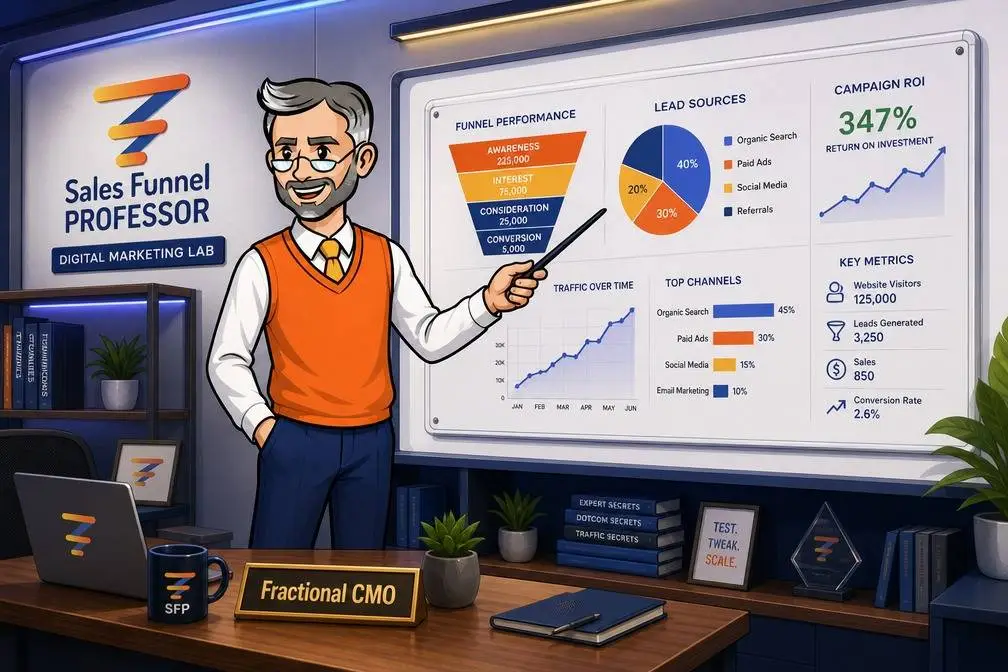
What Is a Fractional CMO (and What Are You Buying)?
A fractional Chief Marketing Officer offers senior executive leadership on a part-time basis, typically serving multiple clients simultaneously. The word “fractional” refers to the time commitment, not skill level or seniority. These are experienced marketing executives who have usually held full-time CMO or VP Marketing roles before.
A fractional CMO leads marketing strategy and team management. Responsibilities include:
- Defining go-to-market strategy, ideal customer profiles, and positioning
- Sales funnel design and optimization, including go-to-market strategy and funnel audits and marketing tech stack evaluations
- Team leadership and agency oversight, managing vendors and internal teams
- Setting customer acquisition cost and pipeline and revenue KPIs targets with executives
- Managing budgets and allocating resources across marketing channels
- Participating in leadership meetings and decision-making alongside the CEO and board
Fractional CMOs often work across multiple clients, bringing diverse insights and strategies that a single-company executive simply cannot accumulate as fast. What you’re buying is pattern recognition, the judgment to diagnose what’s broken in your funnel quickly, and the ability to connect your sales team to your marketing function. This role can be priced via monthly retainer, hourly rate, or project fee, which we’ll unpack next.
How Much Does a Fractional CMO Cost in 2027?
Here’s the direct answer: fractional CMO retainers typically range from $8,000 to $22,000 monthly in the US for 2027. Monthly retainers for most B2B companies fall between $6,000 and $18,000 per month. Most fractional CMO engagements for serious growth work land in the $8,000 to $14,000 range with a defined scope and clear time commitment.
Hourly rates for fractional CMOs range from $200 to $500. The average hourly rate for fractional CMOs ranges from $125 to $450 depending on expertise, though the most common band for a senior marketing leader is $200 to $400 per hour. Specialists in demand generation, enterprise SaaS, or regulated verticals can push toward $450 to $500 per hour.
High-complexity situations, such as PE portfolio work or multi-market expansions, sometimes reach $20,000 to $25,000 per month. Project-based fees for fractional CMOs can exceed $15,000 for well-scoped sprints like GTM launches or rebrands.
A few things to know: location (New York vs Atlanta vs fully remote) has less impact on fractional CMO pricing than company stage, complexity, and scope. Also, execution like copywriting, ads management, and design is usually not included in the base cmo cost and appears as an extra line item.
The Three Levers That Drive Fractional CMO Cost
Three factors determine whether your fractional engagement costs $5,000 per month or $20,000 per month:
Scope of responsibility. Strategy-only work (messaging, positioning, funnel diagnostics) costs less than owning demand generation channels, revenue targets, and agency oversight. A fractional leader reviewing your sales deck quarterly is fundamentally different from one building your growth engine. Scope of work determines the cost of a fractional CMO more than any other variable.
Time commitment. The number of hours per week dedicated by a fractional CMO directly impacts pricing. Light advisory at 8 to 12 hours per month runs $5,000 to $8,000. Embedded leadership at 15 to 25 hours per week runs $10,000 to $20,000 or more. A fractional CMO typically works two to three days a week in most engagements.
Company stage and complexity. A $3M ARR service company with no marketing team needs senior direction and channel priorities set from scratch, a relatively contained scope. A $20M ARR SaaS company with a 12-person internal team, multiple agencies, and a board expecting pipeline dashboards needs a very different level of involvement. Industry complexity can increase the rates charged by fractional CMOs, especially in fintech-driven revenue operations, health, or regulated verticals. Experience level significantly impacts fractional CMO pricing as well.
Fractional CMO Pricing Models: Monthly Retainer vs Hourly vs Project

Engagement models for fractional CMOs include hourly rates, monthly retainers, and project-based fees. There are also hybrid structures combining cash with equity. Engagement structure affects pricing for fractional CMOs in meaningful ways.
Here’s when each model works best:
- Monthly retainer: The norm for ongoing marketing leadership. Budget predictability, clear meeting cadence, and strategic continuity make this the default for most companies. Most fractional CMOs prefer retainer arrangements for strategic continuity. Monthly retainers typically range from $5,000 to $15,000 for core strategic involvement.
- Hourly rates: Best for audits, workshops, or short advisory sessions. Short-term projects often have higher effective day rates because the fractional CMO compresses a lot of judgment into a short window.
- Project-based: Rebrands, GTM launches, or messaging refreshes over 30 to 90 day sprints. Fees typically run $15,000 to $50,000 for well-scoped work.
- Hybrid (cash + equity): Common for early-stage or cash-constrained firms. Light advisory fractional CMOs charge between $2,000 and $5,000 monthly in cash with 0.25% to 1% equity.
Most serious fractional engagement relationships in 2027 use a retainer model tied to clearly defined outcomes and a weekly or bi-weekly meeting cadence. The fractional model works best when scope, deliverables, and accountability are locked down before ink hits paper.
Typical Cost Tiers: What You Get at Different Investment Levels
Not all fractional CMO work is the same. Here’s what each investment level typically buys:
$3,000–$5,000/month – Light advisory. One or two calls per month. Review of existing plans, feedback on marketing initiatives, mentorship for a junior team. No ownership of results, no revenue accountability. Often suited to early-stage companies or founders who just need periodic senior direction.
$5,000–$10,000/month – Core marketing strategy. Funnel diagnostics, quarterly planning, positioning work, and leadership for a small marketing team. Roughly one to two days per month of live time, plus async communication. This is where most companies at the growth stage start. You get a senior marketing leader setting channel priorities, reviewing your sales deck, and aligning your marketing efforts to revenue targets.
$10,000–$18,000+/month – Embedded marketing leadership. Budget ownership, sales alignment, pipeline dashboards, and accountability for metrics. Multiple touchpoints each week, participation in leadership meetings, oversight of agencies and execution capacity. A company mid-scale ($5M to $20M revenue) with a growing internal team typically lands here. Most fractional CMOs charge $5,000 to $15,000 per month for strategic involvement, and fractional CMOs charge $12,000 to $15,000 per month at this embedded tier.
The real cost difference between tiers is not just hours. It’s the level of ownership over revenue, team size management, and growth performance. Higher tiers integrate the fractional CMO into the company’s senior leadership layer, not just its marketing meetings.
Fractional CMO Cost vs Full-Time CMO Cost
Here’s the financial case laid out clearly:
| Cost Element | Full-Time CMO | Fractional CMO |
|---|---|---|
| Base salary | $250,000–$400,000/year | N/A (contract basis) |
| Loaded cost (benefits, payroll taxes, bonuses, equity) | $350,000–$600,000+/year | $0 |
| Annual cash cost | $350,000–$600,000+ | $72,000–$216,000 ($6K–$18K/month) |
| Recruiter fees | 20–30% of base salary | $0 |
| Ramp up time | 4–7 months hiring + 3–6 months onboarding | 2–4 weeks |
| Risk of mis-hire | High (costly to unwind) | Low (contract-based, easy off-ramp) |
| The average full-time CMO salary is $225,908 in the US, and a full-time CMO costs $270,000 to $320,000 annually including benefits. The average salary only part of the picture: once you add payroll taxes, equity dilution, recruiter fees, and severance risk, the full time cmo cost can exceed $500,000. Costs associated with fractional CMOs typically do not include employee benefits or overhead, which is why hiring a fractional CMO can save companies 40-70% on costs. |
A fractional CMO does not replace every advantage of a full time executive. But when your marketing team is still small and your company stage is below roughly $20M in revenue, the fractional hiring approach often makes sense. You get the same level of strategic leadership without a learning curve that lasts half a year. Fractional CMOs provide strategic leadership without the full-time cost of a permanent executive, and fractional CRO services can extend that same flexibility across the entire revenue engine. Hiring a fractional CMO can significantly lower overall executive leadership costs.
Quick rule of thumb: most companies under $20M revenue get more value from a fractional CMO vs a full-time CMO hired too early.
Fractional CMO vs Other Options: Agencies and “Head of Marketing” Roles
A marketing agency focuses on execution: ads, SEO, content production. But agencies usually don’t own revenue strategy. A fractional CMO sits in a leadership seat aligning all vendors, internal teams, and marketing initiatives to one cohesive marketing strategy.
Here’s a common expensive mistake: paying agency retainers of $12,000 or more per month without anyone accountable for holistic marketing leadership. The agency delivers impressions and clicks. Nobody connects those outputs to pipeline and revenue. That’s a marketing problem, not an execution problem.
A mid-level Head of Marketing hired full time (base salary $150,000 to $250,000 plus benefits) gives you daily presence but often less cross-company experience than an experienced marketing executive or Head of Growth who has led the marketing function across multiple industries and company stages.
When each option makes sense:
- Fractional CMO alone: You have an in-house team or operators handling execution and need strategic leadership and team leadership above them.
- Fractional CMO + agency combo: You need both senior direction and execution capacity in channels like organic social and other top-of-funnel channels, SEO, or content. The fractional CMO oversees agency relationships and vendor management.
- Agency without fractional leadership: Your marketing strategy is already clear and documented. You only need tactical execution. This is rare but it exists.
How to Budget for a Fractional CMO Engagement
Start by mapping your current annual marketing spend: ads, tools, team salaries, agency fees. Compare that to your revenue targets and current CAC. The engagement of a fractional CMO is flexible and can be tailored to business needs, so your budget should reflect your actual gaps.
A practical guideline: if you currently have no senior marketing leadership, consider dedicating 10 to 25 percent of your total marketing budget toward it. Most companies find that adding a fractional leader at $8,000 to $12,000 per month pays for itself through reduced waste and improved conversion when you apply rigorous conversion rate benchmarking.
Here’s a simple ROI example: if you generate 1,000 leads per month and your funnel converts at 2%, that’s 20 deals. Improving conversion from 2% to 3% (a realistic outcome of better messaging, weighted funnel architecture, and channel priorities) yields 30 deals per month from the same spend. If your average deal is worth $5,000, that’s $50,000 in additional monthly revenue against a $10,000 retainer. Conversion rate optimization is a critical area of focus for many firms engaging fractional CMOs, and it’s where the math gets compelling fast.
Start with a 90 to 180 day initial window. That’s enough time for discovery, strategy, and early implementation without overcommitting budget before you see pipeline impact.
Common Cost Mistakes to Avoid When Hiring a Fractional CMO
Hiring a fractional CMO goes wrong in predictable ways. Avoid these:
- Choosing purely on lowest hourly rate instead of proven track record. Benchmark pricing for fractional CMO services varies across industry and market standards. The cheapest option often delivers the most expensive outcome.
- Vague scope where “strategy” means different things to each side. Define exactly what the fractional CMO owns versus what stays with you.
- Expecting execution without paying for it. A fractional CMO builds the plan. Ads management, content creation, and design require separate execution capacity or budget.
- Overloading with non-strategic tasks. If you’re asking your part time executive to update your CRM and format your sales deck, you’re wasting their expertise on work a coordinator should handle.
- No success metrics agreed upfront. Always define pipeline growth, CAC targets, conversion rates, and sales velocity benchmarks before signing. Avoid vanity metrics.
- Assuming the fractional CMO can fix product-market fit. A fractional CMO can diagnose your funnel, but if your product doesn’t solve a real problem, no amount of marketing leadership fixes that without buy-in from the whole leadership team.
Use a 90-day test with clear priorities and milestones. That gives you enough data to evaluate the relationship without locking into an open-ended engagement with fuzzy goals.
Signs It’s Time to Invest in Fractional Marketing Leadership
Here are concrete triggers that signal you need a fractional leader:
- The founder or CEO is still running campaigns and writing copy at $10M or more in revenue
- Paid acquisition spend is climbing but nobody can explain why CAC keeps rising
- Multiple agencies are running disconnected marketing efforts with no unified strategy
- Your sales team is complaining about lead quality, but there’s no shared funnel dashboard
- You’re entering new markets or going through a growth phase and need someone who can work closely with both sales and marketing
A fractional CMO can help companies scale revenue without the commitment of a full-time hire. Fractional CMOs can be particularly useful during times of transition or growth phases, and fractional leadership allows firms to test executive-level strategies with reduced risk.
The cost isn’t only the monthly retainer. It’s also the price of delayed growth and wasted ad spend. Calculate the revenue impact of even a three to six month delay in fixing funnel gaps. That number usually dwarfs what a fractional CMO costs.
FAQs About Fractional CMO Cost and Engagements
How much does a fractional CMO usually cost per month?
In 2027, most fractional CMO engagements run between $6,000 and $18,000 per month. Early-stage companies generally sit at the lower-middle of this range, while complex, multi-market businesses land at the higher end. Fractional CMO costs can vary based on engagement scope and industry specialization. Some boutique practices or PE-specialist fractional CMOs may charge above $20,000, but they are the exception.
What is a typical fractional CMO hourly rate in 2027?
Hourly rates for senior fractional CMOs range from $200 to $450. Highly specialized or VC-focused talent can push to $300 to $500 per hour. Hourly pricing is now used mainly for audits, workshops, or short advisory sessions, not for long-term fractional CMO work. Most serious growth work converts into a monthly retainer once scope and cadence are clear.
What does a fractional CMO salary look like from their side?
There’s a difference between a fractional CMO salary (W-2 employee concept) and consulting income. A fractional CMO with three to four clients at $8,000 to $12,000 per month can gross $250,000 to $450,000 per year before taxes and expenses. Clients don’t pay for benefits, payroll taxes, or equity. Those costs are baked into the higher retainer and hourly rates, which is why the fractional work model works financially for both sides.
How many hours per month does a fractional CMO typically work for one client?
Common patterns: light advisory around 6 to 10 hours per month, core leadership 16 to 32 hours per month, and embedded leadership 40 to 60 or more hours per month. Engagements typically involve two to three days of work per week for most retainer-based relationships. Don’t fixate on hours alone. Impact is driven by decisions and focus, not just time on Zoom.
Is a fractional CMO cheaper than a full-time hire when you factor everything in?
In most sub-$25M revenue situations, the fractional option is significantly cheaper. A full time CMO’s salary plus benefits, equity, and hiring risk can total $350,000 to $600,000 annually. The fractional equivalent runs $72,000 to $216,000 per year with no overhead. The choice between a fractional and full-time CMO depends on business size and marketing complexity. That cost advantage shrinks once you need daily hands-on leadership for a 10 to 20 person marketing org.
How long should an initial fractional CMO engagement last to be worth the cost?
A minimum 90-day engagement gives enough time to diagnose funnels, set strategy, and start implementing early wins. Most companies see clearer pipeline shifts between months three and six once campaigns and messaging changes have time to impact revenue. Start with a three to six month contract with clear off-ramps and performance checkpoints. This model works better than purely month-to-month fractional work with no defined focus.
Why Choose Our Fractional Marketing Leadership Approach
We’re a revenue-focused consultancy that blends fractional CMO leadership with deep expertise in sales funnels, conversion rate optimization, and go-to-market strategy. Founded by Eddie Davis and based in Atlanta, we work with startups, scale-ups, and established firms entering or growing in the US market.
Our engagements are structured around measurable outcomes, whether you’re building a fresh go-to-market motion or defining a sector-specific plan like a bank marketing strategy:
- Strategy-first audits: Funnel diagnostics, marketing tech stack evaluations, and growth assessments before any spend recommendations — plus optional done-for-you funnel implementation when you need execution
- Ongoing fractional CMO or Head of Growth support on a monthly retainer, with clear pipeline and revenue targets
- Sales-marketing alignment: We work closely with your sales team to fix handoff gaps, improve lead quality, and tighten the feedback loop, especially for firms that need a unified sales and marketing engine
- Optional execution support through training, coaching, and packaged services for teams that need both senior leadership and hands-on help
Our recommendations come from real-world funnel data, not generic playbooks. The aim is to optimize CAC, LTV, close rates, and the profitability of your backend sales funnel together, because fractional CMO worth is measured in revenue impact, not slide decks.
Next Steps: Estimate Your Fractional CMO Budget and Book a Strategy Call
Start by sketching your situation: current revenue, annual marketing spend, team size for marketing and sales, and your biggest growth bottleneck. That simple exercise will tell you a lot about whether fractional hiring, a full time hire, or a hybrid model fits your company stage.
We offer a free strategy session where we walk through:
- Whether a fractional CMO, a full-time executive, or a combined approach makes sense for your business
- What level of monthly retainer or hourly involvement is financially justified
- How to phase work across 90 days so costs are tied to specific funnel outcomes
The goal of the first conversation is clarity on your marketing leadership options, not a high-pressure pitch. Come to the call with your latest funnel metrics: leads, SQLs, win rates, and CAC. That way we can give you grounded advice on where a fractional CMO can create the fastest ROI for one company at your specific stage.