
The heavy construction equipment market shapes how the world builds roads, bridges, cities, and energy systems. In 2026, this market matters to an unusually wide range of stakeholders: OEMs designing next-generation machines, dealers managing inventory, rental companies scaling fleets, investors evaluating capex-heavy industries, and B2B service providers selling into the construction sector.
The global heavy construction equipment market size reached approximately USD 215.46 billion in 2025, and projections place it between USD 289 billion and USD 343 billion by 2030–2035 depending on scope and methodology. This steady growth reflects converging forces: massive infrastructure spending through programs like the U.S. Bipartisan Infrastructure Law and EU Green Deal, rapid urbanization across Asia-Pacific and Africa, expanding mining and renewable energy projects, and the accelerating adoption of advanced technologies such as telematics, automation, and electric machinery.
This market analysis covers definitions, market size and forecast period projections, segmentation by equipment type, application, region, and sales channel, plus the trends, challenges, and opportunities that will shape the construction equipment industry through the next decade.
At Sales Funnel Professor, we help OEMs, dealers, rental firms, and technology providers in the global heavy construction equipment and construction equipment market translate these macro shifts into pipeline, revenue, and long-term customer relationships through focused go-to-market strategy and sales funnel optimization.
Table of Contents
What Is the Heavy Construction Equipment Market?
How Large Is the Heavy Construction Equipment Market?
What Is Driving Growth in the Heavy Construction Equipment Market?
Major Heavy Construction Equipment Market Trends
Heavy Construction Equipment Market Segmentation by Equipment Type
Heavy Construction Equipment Market Segmentation by Application
Heavy Construction Equipment Market Segmentation by Sales Channel
Heavy Construction Equipment Market by Region
Leading Companies in the Heavy Construction Equipment Market
How Technology Is Changing the Heavy Construction Equipment Market
The Growing Role of Heavy Construction Equipment Rental
Challenges Facing the Heavy Construction Equipment Market
Opportunities in the Heavy Construction Equipment Market
Heavy Construction Equipment Market Outlook
Understanding the Future of the Heavy Construction Equipment Market
FAQ: Heavy Construction Equipment Market
Why Heavy Construction Equipment Companies Partner With Sales Funnel Professor
How to Take Action: Next Steps for Heavy Construction Equipment Leaders
What Is the Heavy Construction Equipment Market?
Heavy construction equipment refers to large-scale machinery-typically machines over 12 tons or with high power output-used for excavation, earthmoving, lifting, road building, and major infrastructure work. This distinguishes it from the broader construction equipment market, which also includes compact construction equipment, hand-held power tools, and lighter-duty machines.
The categories within this market include:
- Earthmoving equipment: excavators, bulldozers, wheel loaders, motor graders
- Material handling equipment: cranes, telehandlers, forklifts
- Heavy construction vehicles: dump trucks, articulated haulers, mixers
- Concrete and road construction machinery: pavers, rollers, batching and asphalt plants
- Specialized equipment: tunneling machines, drilling rigs, pile drivers, crushers
Heavy construction equipment is used for earthmoving, material handling, road construction, and mining across virtually every large-scale construction and extraction project worldwide. End users range from infrastructure contractors and mining firms to energy developers and industrial operators.

The market operates through three commercial segments: new equipment sales (OEM to end user via dealers), used equipment (trade-ins, fleet disposals, certified pre-owned), and equipment rental and leasing. Market values reported by different research firms vary because some measure factory-gate OEM sales while others combine sales, rental revenue, used transactions, and aftermarket service income-which is why construction equipment market size figures differ across a construction equipment market report from one analyst versus another.
How Large Is the Heavy Construction Equipment Market?
The global heavy construction equipment market was valued at approximately USD 205–218 billion in 2024, depending on scope and methodology. By 2025, the heavy construction equipment market size reached $215.46 billion. North America’s heavy construction equipment market is valued at $73.35 billion in 2024, making it one of the largest regional contributors.
Historical context: From 2018 through 2024, the market grew through a turbulent cycle. Pre-COVID demand was powered by Chinese and Indian infrastructure expansion and stable commodity prices. The pandemic disrupted supply chains, delayed projects, and constrained OEM production. Post-2020 stimulus in the U.S., EU, and China accelerated recovery, though semiconductor shortages and steel price inflation increased lead times and input costs.
Forecast ranges:
| Timeframe | Estimated Market Size | CAGR |
|---|---|---|
| 2024 | ~USD 205–218 billion | – |
| 2030 | ~USD 289–315 billion | ~5.0–6.5% |
| 2035 | ~USD 342–343 billion | ~4.72% (2025–2035) |
The market is projected to grow to over USD 289 billion by 2030. Looking further out, the heavy construction equipment market is projected to reach $343.3 billion by 2035, while another estimate places it at $342.2 billion by 2035. The market is expected to grow at a CAGR of 4.72% from 2025 to 2035, with faster growth possible if electrification and automation adoption accelerate beyond current baselines.
The compound annual growth rate varies across sources because of methodological differences: top-down models using macro construction spending versus bottom-up OEM revenue aggregation, and whether rental revenue and aftermarket services are included. Strategic decision-makers should use the range, not a single number, for planning.
What Is Driving Growth in the Heavy Construction Equipment Market?
Multiple structural and cyclical factors are simultaneously boosting heavy construction equipment demand. Infrastructure mega-programs, urban population growth, mining expansion, and the shift toward renting rather than owning are all pushing the market forward at the same time.
Understanding these drivers helps manufacturers, dealers, rental companies, and investors align production, inventory, and go-to-market strategies with real demand rather than lagging indicators.
Global Infrastructure Investment
Large-scale infrastructure programs create multi-year pipelines for earthmoving equipment, heavy construction vehicles, and lifting machinery. The U.S. Bipartisan Infrastructure Law channels over USD 1.2 trillion into roads, bridges, rail, broadband, and water systems through the late 2020s. The US requires an estimated $4.5 trillion investment by 2025 for infrastructure-a figure that underscores the sheer scale of deferred maintenance and new builds needed.
Significant government investments in infrastructure projects are generating high demand for heavy equipment across continents. China invested about USD 679 billion in infrastructure from 2013 to 2022, while India’s National Infrastructure Pipeline and African transport corridor programs underpin long-term equipment demand beyond short economic cycles. Infrastructure development initiatives are driving demand for heavy construction equipment in every region where governments are committing sustained capital.
Government funding for infrastructure is expected to continue driving market growth well into the 2030s, because these programs typically operate on 5–10+ year timelines that give OEMs and large dealers visibility to plan capacity and product development.
Urbanization and Population Growth
Urbanization drives demand for heavy construction equipment at a fundamental level. By 2050, approximately 68% of the world’s population will live in urban areas, with the fastest growth in Asia-Pacific, Africa, and Latin America. Rapid urbanization increases the need for residential and infrastructure projects-everything from metro systems to water treatment plants.
The Asia Pacific region leads in heavy construction equipment demand due to urbanization, with cities in India, Indonesia, and Vietnam requiring massive investment in housing, roads, and utilities. Emerging markets are witnessing strong demand for heavy construction equipment as urbanization increases and per-capita equipment ownership remains low.
In mature markets like North America and Western Europe, infill and brownfield redevelopment still require substantial earthmoving and material handling equipment, even on tighter urban job sites. Urbanization and population growth drive the need for new infrastructure regardless of whether a market is “emerging” or “developed.”
Residential and Commercial Construction Activity
Cyclical but robust demand comes from residential housing, logistics warehouses, data centers, healthcare facilities, and office complexes. Each building type uses a different mix of cranes, concrete equipment, and heavy construction vehicles-data centers, for example, are far more foundation- and utility-intensive per square meter than standard office buildings.
The surge in data center and logistics construction supporting e-commerce and AI infrastructure sustains the construction equipment market even when traditional office development slows. There is also an increasing demand for machinery replacement due to aging infrastructure in developed economies, where bridges, utilities, and public buildings need rehabilitation or replacement.
Real estate growth in India, Southeast Asia, and the Gulf Cooperation Council countries supports long-term equipment purchases and rentals, adding to global demand.
Government Infrastructure Programs
Government-backed stimulus shapes the forecast period for the heavy construction equipment industry. In the U.S., the bipartisan infrastructure law and CHIPS and Science Act are driving large-scale facility construction. EU recovery funds and national plans in China and India create similar multi-year pipelines. Governments are heavily investing in transportation and urban development projects across all major economies.
These funding horizons allow OEMs to plan capacity, localize production, and develop equipment tailored to specific project types-road construction equipment for highway expansion, or specialized heavy equipment for rail tunnels and bridges.
Critically, government procurement standards now increasingly include emissions, safety, and digital capability requirements. This accelerates adoption of advanced technologies and cleaner construction equipment, influencing what OEMs bring to market.
Expansion of Mining and Energy Projects
Rising demand for minerals critical to the energy transition-copper, lithium, nickel, and rare earths-drives investment in open-pit mines, quarries, and associated infrastructure. The quarry and aggregates sector alone requires very large excavators, haul trucks, and drilling equipment. The mining sector broadly is a major demand driver for the heaviest classes of equipment.
Traditional oil, gas, and petrochemical projects persist alongside large renewable energy projects. Onshore and offshore wind farms, solar installations, and hydroelectric builds need cranes, piling rigs, road construction equipment, and material handling equipment for installation and site preparation.
Regional hotspots include Latin America for copper and lithium, Australia for iron ore and critical minerals, and the Middle East for energy and industrial megaprojects—all tying back to regional equipment market growth.
Growth of Equipment Rental Markets
The global shift from owning to renting heavy construction equipment is one of the most significant structural changes in the market. High capital costs, volatile project pipelines, and tighter balance sheets push contractors toward rental and leasing. The global construction equipment rental market was valued at approximately USD 132.35 billion in 2025, with projections to USD 229 billion by 2034 at roughly 6.4% CAGR.
There is a growing demand for equipment rental services due to cost efficiencies and shorter project timelines. The heavy construction equipment rental market is gaining traction globally, with contractors prioritizing capital flexibility by renting equipment rather than tying up balance sheet capacity. Rental services help companies avoid high ownership costs, and the flexibility in rental services appeals to project-based work with variable equipment needs.
This growth changes demand patterns: fewer outright purchases replaced by higher recurring rental revenue and faster fleet renewal cycles that benefit OEMs designing machines for high utilization.
Major Heavy Construction Equipment Market Trends
Beyond basic demand growth, structural trends in technology, sustainability, and business models are reshaping the global heavy construction equipment market through 2030 and beyond. These trends matter not only for OEMs and contractors, but also for marketing and sales leaders designing go-to-market strategies and sales funnels in the construction equipment industry.
Electrification of Heavy Equipment
The industry is experiencing a shift toward electrified and sustainable machinery. Electric and hybrid models are becoming more prevalent in construction equipment, starting with compact and mid-size excavators, wheel loaders, and articulated haulers where duty cycles fit current battery technology.
Electric heavy construction equipment is projected to grow rapidly-from approximately USD 16.3 billion in 2025 to USD 106.9 billion by 2034, representing a roughly 23.3% CAGR. Real-world pilots confirm viability: the Volvo EC230 electric excavator was trialed on a major Los Angeles transit project, achieving comparable performance to diesel with 3-hour charges from 10–20% to 80% battery and dramatically reduced noise and emissions.
Drivers include emissions regulations, low-noise requirements in urban areas, total cost of ownership advantages in continuous-duty applications, and corporate ESG targets among contractors.
Autonomous and Semi-Autonomous Machinery
Automation trends include the use of telematics and autonomous machinery for improved efficiency. The industry has progressed from basic operator-assist features to semi-autonomous and fully autonomous dozers, haul trucks, and excavators on controlled sites like mines and large infrastructure projects.
Commercial deployments are growing: Komatsu’s FrontRunner autonomous haul truck fleet exceeded 700 units by early 2024, and multiple OEMs offer retrofitted autonomous kits for existing bulldozers and loaders. Productivity and safety benefits are measurable-autonomous systems eliminate operator fatigue and maintain consistent cycle times.
Autonomy is changing procurement decisions. Some contractors now evaluate autonomy-readiness as a key buying criterion, and specialized heavy equipment with autonomous capability commands premium pricing.
Telematics and Connected Equipment
Telematics systems improve equipment monitoring and reduce downtime by transmitting GPS tracking, sensor data, fuel consumption, idle time, and utilization metrics in real time. OEM-native platforms like Caterpillar’s Cat Connect and Komatsu’s KOMTRAX serve as the backbone for connected fleets.
Automation and telematics enhance efficiency in heavy construction equipment by giving contractors and rental firms better visibility into equipment location, uptime, and productivity. Third-party fleet management solutions extend this connectivity across mixed-brand fleets.
Connectivity supports data-driven decision-making-right-sizing fleets, optimizing maintenance intervals, and underpinning newer business models like usage-based billing.
Predictive Maintenance and Equipment Analytics
Digital fleet management and predictive maintenance are becoming crucial for contractors managing expensive fleets. The evolution from time-based and reactive maintenance toward predictive approaches uses sensor data, machine learning, and historical failure patterns on components like engines, hydraulics, and undercarriages.

AI-driven predictive maintenance solutions are being developed for construction equipment that automatically alert operators when vibration patterns exceed thresholds or oil condition degrades. Benefits include reduced unplanned downtime, extended component life, and more accurate lifecycle cost models for both owners and rental fleets.
AI and Automation on Construction Sites
AI extends beyond machines themselves into site planning, equipment dispatch optimization, safety monitoring via computer vision, and progress tracking using drones and 3D models. AI-enhanced machine control-automatic grading, semi-autonomous digging-shortens project timelines and reduces dependence on scarce expert operators.
OEMs and technology partners increasingly compete on software ecosystems and AI features, not just horsepower and bucket size. This shift is creating new sales channels and partnership opportunities across the construction equipment industry.
Increasing Demand for Equipment Rental
High interest rates, accounting treatment of leases, and project-based work are accelerating the shift to renting instead of owning heavy equipment, including earthmoving and material handling machinery. Rental companies differentiate through fleet age, availability, digital booking platforms, and value-added services like on-site support and telematics-based reporting.
Rising rental demand affects OEM strategies around channel partnerships, financing offers, and the design of equipment optimized for high utilization. OEMs must think about second and third rental cycles when designing machines-durability and ease of maintenance become non-negotiable.
Sustainability and Emissions Regulations
The European Union mandates specific emissions standards for construction machinery, including Stage V requirements that affect engine design and aftertreatment systems. OSHA and the Environmental Protection Agency enforce strict safety and environmental regulations in North America. Governments worldwide impose regulations to ensure equipment meets safety criteria, and compliance with safety standards requires ongoing training for construction workers.
Regulatory compliance costs can significantly impact heavy equipment manufacturers, but they also create competitive opportunities. Customer-driven sustainability requirements in tenders for public works now include carbon reporting and preferences for low- or zero-emission electric equipment on construction sites. Alternative fuels such as HVO and hydrogen are emerging alongside battery-electric powertrains, accelerating sustainable construction practices across the industry.
Heavy Construction Equipment Market Segmentation by Equipment Type
Market segmentation by equipment type helps stakeholders identify which product categories are growing fastest. Understanding demand by category – earthmoving equipment, material handling equipment, heavy construction vehicles, and specialized construction machinery – reveals where to allocate R&D, inventory, and marketing investment during the forecast period.
Earthmoving Equipment
The earthmoving segment includes crawler and wheeled excavators, bulldozers, backhoe loaders, skid-steer loaders, wheel loaders, motor graders, and compact track loaders. Excavators dominate the heavy construction equipment market, and the excavation segment is projected to reach $100 billion by 2035 due to their foundational role in site preparation, foundations, and roadworks.
Compact equipment is becoming more preferred in regions like the U.S. for urban and suburban projects, while large excavators and dozers remain critical for mining and large scale infrastructure projects. Emerging trends include compact and mid-size electric excavators and loaders, machine control systems for grading, and high-productivity models tailored for infrastructure projects.
Material Handling Equipment
Material handling equipment is a major market contributor. This category includes cranes (tower, mobile, crawler), forklifts, telescopic handlers, and specialized material handling machinery used in high-rise construction, ports, and industrial sites.
Material handling has become one of the fastest-growing segments, driven by tall building construction, logistics hubs, and renewable energy installations requiring precision lifting. Safety and automation features-load monitoring, remote operation, anti-sway systems-influence procurement decisions and regulatory compliance.
Heavy Construction Vehicles
Heavy construction vehicles encompass rigid and articulated dump trucks, on-road and off-road trucks for aggregates, mixers, and low-bed trailers. Infrastructure expansion, quarrying, and mining activities drive demand for high-capacity haulage vehicles where fuel efficiency and durability are the primary buying criteria.
Advancements include hybrid drivetrains, autonomous haul trucks in mining, and telemetry for route optimization and fuel management. These vehicles represent a significant portion of the market in resource-heavy regions.
Concrete and Road Construction Equipment
Major concrete equipment and road construction equipment includes pavers, compactors, road rollers, asphalt mixing plants, concrete batching plants, and slipform pavers. Large-scale highway, airport, and urban infrastructure programs underpin demand, especially in Asia-Pacific, North America, and the Middle East.
Technology trends include 3D paving control, improved compaction monitoring, and systems that reduce material waste and emissions—all making road construction more precise and cost-effective.
Cranes and Lifting Equipment
Cranes play a strategic role across construction, shipyards, ports, and energy projects. Heavy lifting applications require specialized cranes and hoists, particularly for onshore and offshore wind energy installations, high-rise construction, and industrial projects.
Innovations include modular cranes for fast assembly, electric and hybrid drivetrains for tower and mobile cranes, and digital tools for lift planning and load-path simulation. Demand hotspots include high-rise construction in Asia and the Middle East, industrial projects in North America and Europe, and wind energy installations globally.
Other Specialized Construction Machinery
Tunneling equipment, trenchers, pile drivers, crushers and screeners, drilling rigs, and demolition robots each represent smaller niches that together make up a significant portion of the global heavy construction equipment market. Growth in underground metros, mining, demolition, and recycling drives demand. Waste management material handling and waste management projects increasingly rely on specialized crushers, screeners, and sorting equipment.
Specialized OEMs and technology providers often innovate faster in automation and remote operation, influencing broader construction technologies and the wider construction equipment market.
Heavy Construction Equipment Market Segmentation by Application
Application-based segmentation reveals where equipment is actually deployed and where margins tend to be higher:
- Infrastructure construction: Roads, bridges, rail, airports, and water systems dominate stable long-term demand, using earthmoving equipment, road construction machinery, and cranes. Large scale infrastructure projects remain the single largest application.
- Residential construction: Housing developments in high-growth urban areas require excavators, loaders, concrete equipment, and cranes. Demand cycles with real estate markets.
- Commercial construction: Offices, retail, hospitals, and logistics/data centers use diverse equipment mixes. Data center construction has become a notable growth driver.
- Industrial construction: Factories, processing plants, and energy facilities require specialized heavy equipment and advanced equipment for installation and site preparation.
- Mining and quarrying: The mining sector and quarry and aggregates sector use the largest machines-haul trucks, large excavators, drilling rigs-with demand tied to commodity price cycles.
- Oil, gas, and energy projects: Pipelines, refineries, and renewable energy projects drive demand for cranes, material handling, and road construction equipment. These urban development projects and industrial installations often span remote locations.
Understanding applications helps marketing and sales leaders tailor industry-specific messaging and account-based marketing campaigns.
Heavy Construction Equipment Market Segmentation by Sales Channel
The main sales channels – new equipment, used equipment, rental and leasing, dealer networks, and online marketplaces – are shifting in 2026. More revenue flows through rental and digital platforms, affecting OEM and dealer strategies, pricing, margins, and customer relationships across the construction equipment industry.
New Equipment Sales
New equipment sales follow the traditional model: OEMs produce machines sold through regional dealers or directly to large accounts, supported by financing, warranties, and service contracts. New sales are strongest among large infrastructure contractors, mining companies, and government fleets where technology differentiation and TCO calculations drive decisions.
Factory customization, telematics bundling, and digital sales tools are modernizing go-to-market strategies for new equipment, making the buying experience faster and more data-driven.
Used Equipment Sales
Used equipment is vital for small and mid-sized contractors and emerging-market buyers. Supply sources include trade-ins, rental fleet disposals, and repossessions. Condition, operating hours, and maintenance records directly affect value.

Certified pre-owned programs, standardized inspection protocols, and online platforms are improving trust and liquidity in the used equipment market, helping OEMs and dealers capture residual value.
Equipment Rental and Leasing
Rental and leasing models – short-term, long-term, operating leases, rent-to-own – give contractors access to heavy equipment without large upfront capital expenditure. Utilization rates, project cycles, and favorable tax treatment make rental attractive.
Major rental companies invest heavily in technology, fleet modernization, and online customer portals. This channel increasingly shapes OEM product specifications and dealer business models, especially in mature markets like North America and Europe.
Dealer and Distributor Networks
Dealers and distributors remain central to the construction equipment industry: sales, service, parts, training, and local relationship-building. Dense dealer networks in North America and Europe contrast with expanding footprints in Asia-Pacific, Latin America, and Africa.
Dealers are modernizing with CRM systems, marketing automation, and digital lead-generation funnels—an area where strategic consulting can accelerate growth and improve close rates.
Online Equipment Marketplaces and Auctions
Digital marketplaces and auction platforms enable buyers to browse, compare, and purchase new and used heavy construction equipment globally. Online transparency compresses price dispersion, speeds up sales cycles, and enables cross-border transactions—while increasing competition for traditional dealers.
Effective digital marketing, SEO, and conversion rate optimization are increasingly critical for OEMs, dealers, and auctioneers seeking visibility in online equipment markets.
Heavy Construction Equipment Market by Region
Regional segmentation reveals distinct demand drivers, regulatory contexts, and competitive dynamics. Asia-Pacific leads in total market share, North America anchors the highest-value segments, Europe sets the pace on regulation, and emerging regions in Latin America, the Middle East, and Africa offer long-term growth potential.
North America
North America’s heavy construction equipment market is substantial and well-supported. The North American heavy construction equipment market is expected to reach USD 114.08 billion by 2033, driven by U.S. infrastructure spending under the bipartisan infrastructure law, Canadian resource projects, and Mexican industrialization.
Key drivers include data center and logistics construction, fleet replacement cycles, and significant investments in transportation. Constraints include high interest rates and skilled labor shortages. The competitive landscape features dominant players like Caterpillar, John Deere, and large rental chains alongside established dealer networks.
Europe
Europe’s heavy construction equipment market is characterized by moderate growth and strong regulatory pressure for low emissions. Leading markets-Germany, France, the UK, and Nordic countries-focus on infrastructure modernization, rail, renewable energy, and urban redevelopment.
Key European OEMs excel in efficient, low-emission, and electric machinery. EU regulations create both compliance costs and export advantages for manufacturers whose products meet the strictest global standards. Pilot programs like the Netherlands’ “Construction Site of Tomorrow” are producing real-world data on battery-electric equipment performance and charging strategies.
Asia-Pacific
Asia-Pacific is the largest regional heavy construction equipment market. The Asia-Pacific region holds roughly 36-42% of the global market share, driven by China, India, Japan, South Korea, and fast-growing Southeast Asian economies. The Asia Pacific market is expected to grow rapidly due to urbanization and massive infrastructure pipelines in roads, rail, ports, airports, housing, and industrial parks.
Powerful regional OEMs-Komatsu, Hitachi, and major Chinese manufacturers-compete alongside Western brands. Rising innovation in electric and hybrid construction equipment is emerging from this region, and urban infrastructure investment continues at scale.
Latin America
Latin America’s market is cyclical but promising, driven by mining, energy, and infrastructure needs in Brazil, Chile, Peru, and Mexico. Commodity price cycles directly influence demand for large earthmoving equipment and haul trucks, while political and economic volatility affect investment timing.
Opportunities exist in infrastructure concessions, logistics corridors, and renewable energy projects. Global OEMs supported by regional dealers and growing rental fleets serve this market, targeting the rising demand created by raw materials extraction and urban development.
Middle East and Africa
Large-scale infrastructure and industrial megaprojects in the Gulf-Saudi Arabia, UAE, Qatar-and resource extraction across Africa drive heavy construction equipment demand in this region. The Middle East has launched ambitious diversification programs requiring cranes, heavy lifting equipment, ports, and road and rail corridors.
Africa offers significant upside through mining operations and urban infrastructure development but faces challenges including financing constraints, political risk, and demanding operating conditions. Chinese, European, and local key players are expanding their regional presence to capture emerging markets opportunities.
Leading Companies in the Heavy Construction Equipment Market
The competitive landscape of the global heavy construction equipment market is moderately consolidated, with the top manufacturers collectively holding approximately 40–45% of global market share. The heavy construction equipment industry is highly consolidated with multinational brands dominating key segments. In 2025, global construction equipment sales reached USD 246.6 billion, up 3.8% year-over-year.
Market leaders and leading companies include:
- Caterpillar – approximately 15–16% global share, the dominant player
- Komatsu – roughly 11% share, strong in earthmoving and mining
- Xuzhou Construction Machinery Group (XCMG) – rapidly growing Chinese OEM
- John Deere – strong in North America, expanding globally
- Liebherr – leader in cranes and heavy lifting
- Sany – major Chinese manufacturer with growing international presence
- Volvo Construction Equipment – strong in Europe, leader in electrification
- Hitachi Construction Machinery (Hitachi Construction Machinery Co) – significant in Asia and Europe
- JCB – widely recognized for backhoe loaders and compact machines
- HD Hyundai Construction Equipment – growing global footprint
- Kobelco Construction Machinery – excavator specialist
- CNH Industrial (which includes Case Construction Equipment) – diversified global OEM
- Terex Corporation – strong in cranes and material handling
- Zoomlion Heavy Industry Science – rapidly expanding Chinese manufacturer
Competition increasingly centers on technology integration, services, financing, and lifecycle value rather than machine hardware alone. Equipment manufacturers are investing in telematics, electrification, and autonomous capabilities to differentiate.
How Technology Is Changing the Heavy Construction Equipment Market
Advanced technologies – IoT, connected equipment, fleet management platforms, digital twins, remote operation, and AI – are transforming productivity, safety, and business models across the construction equipment industry. These are not future concepts; they are shaping procurement decisions and market share today.

Connected equipment data feeds into centralized platforms used by contractors, rental companies, and OEMs to optimize utilization and maintenance. Telematics platforms monitor thousands of machines in real time, providing actionable data on fuel consumption, idle time, location, and component health.
Digital twins-virtual replicas of physical machines or entire construction sites-enable simulation of equipment deployment, wear prediction, and project planning before a single bucket hits the ground. Remote operation allows excavators, loaders, and dozers to be run from control centers for hazardous environments such as mines, demolition sites, and disaster response zones, altering workforce models.
AI-powered monitoring tools detect anomalies, recommend maintenance, and support mixed-fleet management across brands. Technological advancements in AI and analytics are increasingly influencing purchasing decisions, as buyers evaluate not just the machine, but the entire digital ecosystem around it. For companies choosing the right marketing and technology partners, this shift creates both new complexity and competitive opportunity.
The Growing Role of Heavy Construction Equipment Rental
Rental has become a structural growth driver for the heavy construction equipment market. High equipment prices, uncertain project pipelines, preference for asset-light balance sheets, and the need to access advanced equipment without full ownership are accelerating this shift.
Cost and flexibility advantages for contractors are clear: improved cash flow, ability to match fleet size to project load, and shifting maintenance and residual value risk to rental providers. Contractors prioritize capital flexibility by renting equipment, especially for construction tasks on short-duration or variable-scope projects.
National and regional rental companies in North America, Europe, and Asia-Pacific are investing in telematics, digital booking platforms, and fleet analytics to differentiate. Asia Pacific accounted for a large share of rental market revenue, reflecting how the rental model is gaining ground even in traditionally ownership-oriented markets.
Rising rental demand affects OEMs and dealers by placing more emphasis on fleet-optimized models, long-term supply agreements, and co-marketing or white-label rental programs. OEMs designing for rental must prioritize durability, serviceability, and residual value-not just sticker-price competitiveness.
Challenges Facing the Heavy Construction Equipment Market
Strong long-term fundamentals coexist with near-term risks and structural challenges. Rising costs and supply chain disruptions are challenges facing the market that have persisted since the pandemic era.
Key headwinds include:
- Equipment acquisition costs: Electric machines carry higher upfront cost than diesel equivalents. Steel, semiconductors, and electronics inflation raise OEM production costs and push list prices upward.
- Interest rates and financing: Elevated interest rates increase cost of capital for buyers, delaying investment decisions and compressing margins for dealers offering financing.
- Supply chain disruptions: Post-COVID chip shortages, logistics bottlenecks, and freight rate volatility have improved but not fully resolved, extending lead times for some machine categories.
- Skilled labor shortages: Both operators and technicians are in short supply. New technologies (electric equipment, autonomous systems) require new skills and ongoing training investment.
- Maintenance and operating costs: Raw materials costs for parts, fuel, and consumables fluctuate with commodity markets, making lifecycle costing unpredictable.
- Environmental regulations: Strict emissions laws (EU Stage V, EPA rules) force OEMs to redesign powertrains and aftertreatment systems, adding cost and complexity. Regulatory compliance costs can significantly impact heavy equipment manufacturers.
- Economic cycles and construction demand: The market remains cyclical, sensitive to commodity price volatility, government spending changes, and broader economic slowdowns.
Opportunities in the Heavy Construction Equipment Market
Despite challenges, multiple opportunity areas exist for those who combine technical innovation with strategic go-to-market execution:
- Emerging markets: Countries in Asia outside China, parts of Africa, and Latin America offer large latent demand driven by infrastructure development and rapid urbanization. Lower per-capita equipment ownership creates room for rental, used, and cost-effective electric machinery.
- Electric construction equipment: Electric heavy construction equipment is rapidly growing in demand. Urban jobsites with noise and emissions constraints yield the earliest ROI.
- Autonomous equipment: Semi-autonomous and fully autonomous machines reduce labor dependency and improve safety, especially in mining and controlled-site applications.
- Equipment-as-a-Service (EaaS): Emerging models where equipment is rented or leased with maintenance and uptime guarantees, particularly for high-cost electric machines.
- Digital equipment marketplaces: Platforms reducing friction for buyers and sellers of used and new heavy machinery worldwide, expanding addressable markets.
- Fleet management and equipment technology: Construction technologies around telematics, analytics, and remote diagnostics create recurring revenue streams and competitive differentiation.
- Aftermarket parts and services: High-margin, recurring revenue from maintenance, parts, safety upgrades, and telematics retrofits.
Companies that pair innovation with strong B2B sales funnels and data-driven marketing will capture disproportionate value in each of these areas.
Heavy Construction Equipment Market Outlook
Short-term (2026–2028): Continued market growth driven by infrastructure programs in full swing globally. Inflation and interest rates may moderate expansion in some developed markets, but government-backed spending provides a floor. Supply chain constraints continue easing, though input cost volatility remains relevant. The construction sector benefits from sustained public investment.
Long-term (through 2032–2035): The shift toward electrification and autonomous machines accelerates. Ownership models tilt further toward rental, leasing, and EaaS. Markets with stricter emissions and urban constraints adopt zero-emission electric equipment faster, while diesel machines remain dominant in remote and heavy-duty applications.
Technologies most likely to influence demand include battery systems and fast-charging infrastructure, autonomy at limited sites (mines, ports, controlled infrastructure projects), telematics standardization across mixed fleets, and AI-driven analytics.
What to monitor:
- Policy shifts and ESG requirements driving green procurement
- Commodity cycles affecting mining and energy project timelines
- Interest rate trends and their effect on purchase vs. rental decisions
- Labor market conditions and automation adoption rates
- Technology readiness of battery swapping and fast-charging for heavy machinery
The steady growth trajectory means stakeholders who invest now in positioning-both in product and in sales and marketing infrastructure-will benefit from compounding demand through the next decade.
Understanding the Future of the Heavy Construction Equipment Market
The global heavy construction equipment market is on a path of steady growth, underpinned by infrastructure investment, urbanization, and technology integration. Regional divergences will persist-Asia-Pacific will remain the volume leader, North America and Europe will drive technology and regulatory standards, and emerging markets will offer high-growth potential with higher risk.
Evolving ownership and sales models-rental, EaaS, digital marketplaces-mean that the competitive landscape rewards companies with strong customer relationships, data capabilities, and efficient go-to-market systems. Heavy construction equipment driven by advanced technologies like electrification and autonomy will command growing market share over the forecast period.
For OEMs, dealers, rental firms, and technology partners, converting macro insights into actionable pipeline requires disciplined sales and marketing execution. That is where specialized B2B consulting in revenue operations and funnel strategy makes a measurable difference.
FAQ: Heavy Construction Equipment Market
These frequently asked questions address common queries from executives and managers evaluating the heavy construction equipment market or planning investments.
What is the heavy construction equipment market?
The heavy construction equipment market covers the production, sale, rental, and servicing of large-scale machinery used for earthmoving, lifting, road building, mining, and major construction projects. It includes excavators, bulldozers, cranes, dump trucks, pavers, and specialized equipment. It is distinct from the broader construction equipment market, which also encompasses lighter and compact construction equipment used for smaller-scale construction tasks.
How large is the heavy construction equipment market?
The global heavy construction equipment market was approximately USD 205–218 billion in 2024, with the market size reaching $215.46 billion in 2025. Estimates vary across sources due to differences in scope and methodology. By 2030, the market is projected to exceed USD 289 billion, and by 2035 it is expected to reach approximately USD 342–343 billion, implying a CAGR of roughly 4.72%.
Is the heavy construction equipment market growing?
Yes. The market is growing at a mid-single to high-single-digit CAGR over the current forecast period, supported by infrastructure programs, rapid urbanization, and technology upgrades. Infrastructure development projects propel growth in the heavy construction equipment market. While cyclical downturns can slow growth temporarily, structural drivers like urbanization and energy transition provide long-term tailwinds.
What is driving demand for heavy construction equipment?
Key drivers include infrastructure investment (government-funded programs like the U.S. IIJA), housing and commercial development, mining and energy projects, government stimulus, and equipment replacement cycles. Digitalization and sustainability requirements also push upgrades and new purchases beyond simple volume growth, creating increasing demand across the construction industry.
What are the major trends in the construction equipment industry?
Core trends reshaping the industry include:
- Electrification: Rapid growth of electric and hybrid machines
- Automation and autonomy: Semi-autonomous haul trucks, grading, and excavation
- Telematics and connected fleets: Real-time monitoring and data-driven fleet management
- Predictive maintenance: AI-driven analytics reducing downtime
- Rental growth: Structural shift from ownership to rental
- Sustainability: Regulatory and customer-driven push for low-emission equipment
Which region has the largest heavy construction equipment market?
Asia-Pacific currently holds the largest share of the global heavy construction equipment market, accounting for roughly 36–42% of revenue. This is driven by urbanization, infrastructure spending, manufacturing expansion, and mining activity in China, India, Japan, South Korea, and Southeast Asia. North America and Europe follow, with higher technology adoption and stricter regulatory environments.
Who are the leading heavy construction equipment manufacturers?
Leading manufacturers include Caterpillar (approximately 15–16% global share), Komatsu, XCMG, John Deere, Liebherr, Sany, Volvo Construction Equipment, Hitachi Construction Machinery, HD Hyundai Construction Equipment, CNH Industrial, Terex Corporation, and Zoomlion Heavy Industry Science. Rankings vary by region and product category. Competitive advantage increasingly depends on technology platforms, dealer networks, and service capabilities rather than machine specs alone.
Why Heavy Construction Equipment Companies Partner With Sales Funnel Professor
Sales Funnel Professor is a revenue-focused consultancy that helps OEMs, dealers, rental companies, and technology providers in the construction equipment industry convert market demand into predictable pipeline and sales. We work with companies navigating the exact shifts described in this article-electrification launches, regional expansion, digital sales channel buildouts, and rental model transitions.
Our equipment marketing services and consulting are built for complex B2B environments:
- Go-to-market strategy for new product lines (e.g., electric earthmoving equipment entering new regions) or market entry into North America
- Sales funnel audits that identify where leads drop off between initial inquiry and closed deals on high-value equipment
- Conversion rate optimization for dealer and rental websites where a 1% improvement in lead-to-quote conversion can mean millions in incremental revenue
- Fractional CMO and Head of Growth support for equipment companies that need strategic marketing leadership without full-time overhead
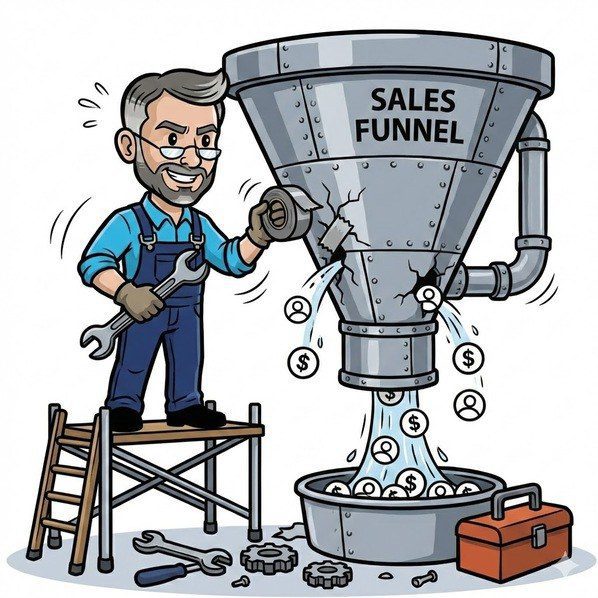
We understand the buying committees typical in heavy construction equipment deals-procurement, operations, finance, and field management all have a voice. Our approach to messaging, content, and funnel design accounts for every stakeholder in that committee, shortening sales cycles and improving win rates.
How to Take Action: Next Steps for Heavy Construction Equipment Leaders
If you lead sales, marketing, or growth for an OEM, dealer, rental company, or technology provider in the construction equipment market, now is the time to assess whether your current funnels and go-to-market strategies match the evolving industry landscape.
Three steps to start:
- Review current demand generation performance. Where are qualified leads coming from? What is your cost per opportunity, and how does your conversion rate compare to benchmarks in the heavy equipment sector?
- Identify gaps in digital lead capture and qualification. Are you capturing and nurturing the increasing share of buyers who research online before contacting a dealer or sales rep?
- Benchmark your messaging against emerging trends. Does your content address electrification, rental flexibility, telematics, and sustainability-the topics your buyers are actively researching?
Ready to move? Book a free strategy session with Sales Funnel Professor to discuss a tailored growth roadmap, U.S. market entry or optimization, or a focused funnel audit for your equipment business.
We bring practical, data-driven execution-not generic advice. The goal is straightforward: help you capture a larger share of the global heavy construction equipment opportunity by building the sales and marketing systems that turn market growth into your revenue growth.