Table of Contents
Marketing Funnel Basics (For Teams Already Past “Zero”)
The 5 Core B2B Funnel Stages (With Benchmarks)
B2B Content-Led Inbound Funnel (SEO + LinkedIn to Demo)
Outbound + Retargeting Funnel (Cold Email/SDR to Warmed With Ads)
Paid Search “Pain to Solution” Funnel (High-Intent Google Ads to Consultation)
Webinar & Virtual Event Funnel (Educational Session to Multi-Touch Nurture to Opportunity)
PLG-Assisted Funnel (Free Tool or Audit to Paid Engagement)
ABM Funnel for Strategic Accounts (1:Few Plays to Multi-Threaded Deals)
Post-Purchase Expansion & Advocacy Funnel (From One Win to a Growth Engine)
How to Choose the Right Funnel Example for Your Business
Common Mistakes When Copying Funnel Examples (And How to Avoid Them)
Turn These Marketing Funnel Examples Into Revenue (Next Steps)
You are at $3M ARR. MQLs are up 40% since 2024. Your marketing team is celebrating, but your pipeline coverage and win rates are flat. Sound familiar?
This is the reality for most B2B companies we talk to at Sales Funnel Professor. The entire marketing funnel looks healthy on paper—website visitors are growing, demo requests are climbing, and your sales team is busier than ever. But the revenue needle barely moves. The problem is rarely a single broken channel. It is almost always leaks at multiple stages of the customer journey that compound into millions in lost revenue.
We wrote this piece to give you something different from theory. What follows are nine concrete B2B marketing funnel examples with benchmarks and steps you can model starting this quarter. These are not hypothetical frameworks. They are patterns we have seen work repeatedly for companies between $500K and $50M ARR.
Sales Funnel Professor is an Atlanta-based revenue consultancy founded by Eddie Davis. We help B2B companies build predictable pipeline through funnel audits, strategy development, and fractional leadership. Everything in this article reflects what we have learned diagnosing funnels across SaaS, services, and hybrid models.
We will use a 5-stage funnel model throughout: Awareness, Consideration, Evaluation, Decision, and Expansion/Advocacy. This framework offers more granularity than the traditional 3-stage TOFU/MOFU/BOFU model, which oversimplifies the complex purchasing process common in B2B deals. Each funnel example includes when to use it, the core assets required, key metrics to track, and common failure points to avoid.
If you want help mapping or diagnosing your own funnel after reading this, you can book a free strategy session with us at the end.
Marketing Funnel Basics (For Teams Already Past “Zero”)
If you have product-market fit and revenue coming in, you do not need a marketing funnel 101 lesson. What you need is a precise framework for measuring the path from first touch to revenue and renewal.
Marketing funnels are visual frameworks representing the customer journey from brand discovery to purchase and beyond. In a B2B context, this path is owned jointly by marketing, sales, and customer success—not marketing alone. The classic 3-stage model (Top of Funnel, Middle of the Funnel, Bottom of Funnel) works for simple consumer purchases but falls apart when you have 60-120 day sales cycles, buying committees with multiple stakeholders, and contract values that require legal and procurement involvement.
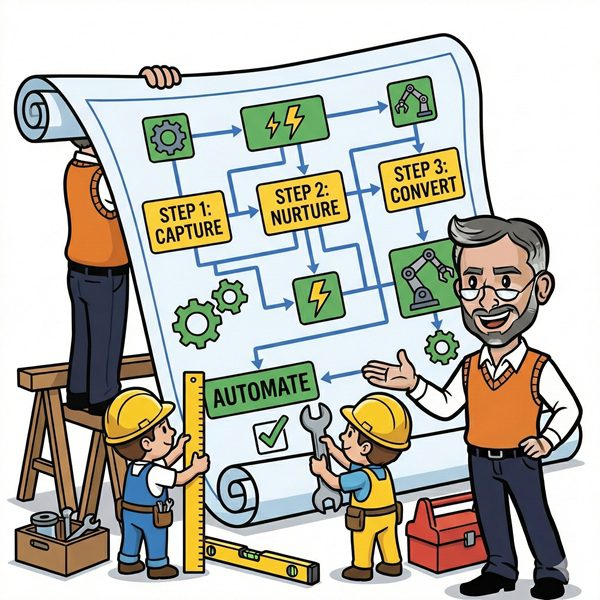
The five stages of a marketing funnel are awareness, consideration, conversion, retention, and advocacy. For B2B, we expand this into Awareness, Consideration, Evaluation, Decision, and Expansion/Advocacy because the conversion stage typically involves sales-led evaluation before any decision is made. Modern B2B funnels are non-linear. Prospects bounce between LinkedIn content, Google searches, SDR outreach, partner referrals, and free trials before they ever talk to your sales team. Your job is to design “paths” rather than a perfect line. Every funnel stage needs a primary offer, one or two core marketing channels, and two or three primary metrics—not twenty vanity KPIs that no one can act on.
The 5 Core B2B Funnel Stages (With Benchmarks)
Before we get to specific funnel examples, you need tight stage definitions and realistic benchmarks. These numbers come from working with B2B companies between $500K and $50M ARR, not enterprise giants with unlimited marketing spend.
| Awareness | is where customers discover your brand for the first time. In the awareness stage, the goal is to capture attention and increase brand visibility through various marketing strategies such as content marketing and social media engagement. First-touch channels include SEO, LinkedIn organic, podcasts, paid social, and events. The goal is relevant reach to your ideal customer profile—not random impressions that inflate vanity metrics. Target CTR on cold ads is 0.7-1.5% on LinkedIn and 1.5-3% on Meta for B2B audiences. Branded search growth should hit 10-20% YoY if your generating awareness efforts are working. Follower growth matters only when tied to ICP engagement. |
| Consideration | is where anonymous attention transforms into engaged demand. During the consideration stage, potential customers evaluate whether a product or service meets their needs, often comparing it to competitors and seeking additional information. This stage captures newsletter opt-ins, webinar registrations, content downloads, and Slack community joins. Effective marketing funnel strategies focus on delivering relevant value at each stage of the customer journey to minimize friction and prevent leads from dropping off. Landing page CVR from cold traffic should hit 2-5%, while warm traffic converts at 10-25%. Email open rates for opt-in lists should reach 30-45%, and lead-to-SQL conversion targets 15-25% with proper qualification. |
| Evaluation | involves sales directly. This stage includes discovery calls, demos, technical deep dives, pilots, and proof-of-concept engagements. The conversion stage is when potential customers take definitive steps to become buyers, such as making a purchase or signing up for a service. Demo-to-opportunity conversion should hit 30-60%, opportunity-to-proposal 60-80%, and time-in-stage 21-45 days for mid-market ACVs. Lead scoring assigns numerical values to leads based on behaviors to help prioritize promising prospects at this stage. |
| Decision | navigates procurement, legal, pricing negotiations, and consensus-building across the buying committee. The focus shifts to risk removal and helping your champion sell internally. Proposal-to-close rates for sales qualified leads should reach 25-45%, with typical B2B win rates of 20-30% overall. Deal cycle targets scale by ACV: sub-$20K deals close in 30-60 days, while $50K-$150K ACVs take 60-120 days. |
| Expansion/Advocacy | drives net revenue retention through onboarding, adoption, upsell, cross-sell, renewals, reviews, and referrals. The retention stage focuses on encouraging repeat purchases and building customer loyalty through personalized communication and engagement strategies. Target NRR of 100-120% for mid-market SaaS and 90-105% for service businesses. Logo churn should stay under 10% annually, with referral-sourced pipeline contributing 10-25% of total in mature GTM motions. |
B2B Content-Led Inbound Funnel (SEO + LinkedIn to Demo)
This funnel is ideal for companies with a clear ICP, ACVs from $10K to $80K, and sales cycles under six months. It works especially well for founders who already post on LinkedIn or have some organic traffic flowing.
The structure pairs SEO blog content and founder-led LinkedIn with a clear conversion path to demo or strategy call. Content marketing and SEO establish brand expertise by addressing customer pain points with various formats like blogs and videos. Unlike common marketing funnel examples that rely on gated content alone, this approach builds brand recognition through ungated value before asking for anything.
| Awareness Stage | Select three to five pillar topics that match your ICP’s problems. Examples include “RevOps for SaaS under $10M ARR,” “US market entry for EU SaaS,” or “Fixing pipeline coverage below 3x.” Turn these into SEO articles, LinkedIn carousels, and short videos. Each article should include specific use cases, benchmarks by ARR band, and practical templates or checklists that get gated later in the funnel. This generates organic traffic from search engines while building trust before any transaction. |
| Consideration Stage | Push readers toward a funnel asset—a downloadable playbook, audit checklist, or benchmark report in exchange for email. Lead Magnet Funnels are designed to capture contact information by offering high-value resources in exchange for email addresses. Examples include “SaaS Funnel Benchmark Sheet for 2025-2026” or “LinkedIn to Demo Funnel Template for B2B Services.” These lead magnets nurture leads toward sales conversations. |
| Evaluation Stage | Deploy a 3-4 email mini-course over 10-14 days that teaches rather than pitches. Each email should deliver actionable insights the reader can use immediately. The sequence ends with a clear CTA to book a strategy session or assessment. Personalized content at this stage dramatically improves conversion rates compared to generic nurture sequences. |
| Decision Stage | Sales uses discovery plus a tailored funnel teardown instead of generic demos. Create 1-2 page custom funnel diagrams as decision assets that show prospects exactly where their current funnel leaks and how you would fix it. This approach engages customers at the moment they are ready to buy and differentiates you from competitors running the same playbook. |
| Expansion/Advocacy Stage | Create case studies and “before/after funnel maps” from successful clients. Push these back into content and sales decks. When satisfied customers become brand advocates, their stories generate further engagement with new prospects evaluating your services. |
Performance benchmarks for this funnel: blog-to-lead CVR of 1-3% for cold organic, exceeding 5% for targeted pieces; lead-to-opportunity conversion of 20-30% when content is tightly ICP-specific. We often start engagements by auditing existing inbound content, mapping it to these stages, and plugging stage gaps.
Outbound + Retargeting Funnel (Cold Email/SDR to Warmed With Ads)
This funnel suits B2B teams selling to defined account lists with contract values from $20K to $250K and multi-stakeholder deals. It combines outbound SDR activity with warm digital touchpoints instead of relying on pure cold outreach.
Retargeting ads are essential for re-engaging visitors who have shown interest in a product but did not complete a purchase, as they remind potential customers of the items they viewed or added to their cart. The same principle applies in B2B—warming outbound prospects with targeted advertising before and after initial contact dramatically improves response rates. According to Dynamic Yield, the average shopping cart abandonment rate globally is around 75.44%, highlighting the importance of retargeting strategies to recover potential sales. Similar dynamics apply to B2B prospects who engage but do not convert.
| Awareness Stage | Build a target account list with firmographic filters: industry, revenue, headcount, tech stack. Use data sources like Apollo or Clearbit. Create problem-led messaging rather than immediate demo requests. Structure cold email sequences as 5-7 emails over 18-24 days, each anchored in a pain point and short “micro-proof” (e.g., “Helped a $12M ARR logistics SaaS cut CAC by 27% in 90 days”). |
| Consideration Stage | Add all opened or engaged contacts to a LinkedIn ad audience and promote a low-friction offer like a 15-minute “funnel teardown” or benchmark call. Marketing funnels can include strategies like retargeting ads, urgency, and personalized nurturing to remove final obstacles to purchase. Personalized retargeting ads that feature products a shopper has previously viewed can significantly increase click-through rates, with some reports indicating increases of up to 300%. Use your founder or Head of Growth as the face in video creative. Keep copy focused on one or two measurable outcomes: pipeline coverage, CAC, or win rate. |
| Evaluation Stage | Run a structured discovery call and send a follow-up email summarizing funnel gaps with two or three quick wins. This asset doubles as a deal accelerator because it demonstrates immediate value before any contract is signed. A browsing abandonment funnel aims to re-engage shoppers who have viewed products but did not add anything to their cart, focusing on building awareness and educating them about product benefits—the B2B equivalent is re-engaging prospects who clicked but did not book. |
| Decision Stage | Send a one-page “engagement roadmap” with clear phases, timelines (e.g., 90-day initial engagement), and KPIs. This becomes the primary BOFU asset that helps your champion sell the deal internally and reduces friction in the purchasing process. |
| Expansion/Advocacy Stage | Loop happy outbound-sourced customers back into outbound by referencing their results in new sequences. Invite them to speak on webinars or podcasts where they can share their experience with new audiences. |
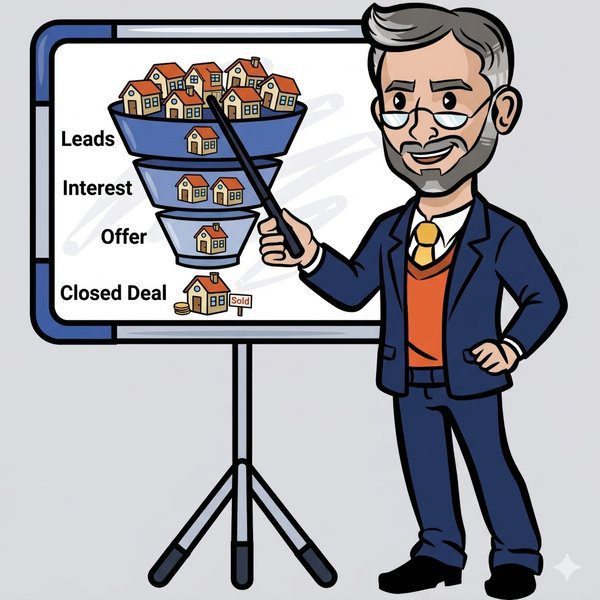
Target metrics: reply rates on cold email of 5-12%, meeting booked rate from positive replies of 50-70%, outbound-sourced opportunity-to-close of 15-25% for well-targeted lists. We audit outbound messaging, sequence structure, and retargeting setup as part of our funnel audit package.
Paid Search “Pain to Solution” Funnel (High-Intent Google Ads to Consultation)
Use this funnel when you are targeting high-intent categories with existing search demand—queries like “fractional CMO for SaaS,” “B2B funnel consultant,” or “US market entry strategy.” It works best for ACVs of $15K or higher and teams with limited sales bandwidth who need to maximize conversion rates from paid advertising.
Behind every high-performing funnel in this list, you will find chief marketing officer services shaping the strategy that connects each stage.
This funnel captures high-intent buyers on Google or Bing and routes them quickly to a focused, low-friction consultation offer. The average eCommerce conversion rate in the United States ranges between 2.5% and 3%, indicating that even small improvements in conversion rates can lead to significant revenue gains. B2B paid search funnels should dramatically exceed these rates because you are capturing intent at the moment prospects evaluate solutions.
| Awareness Stage | Build a keyword strategy mixing “problem keywords” (e.g., “B2B pipeline down,” “SaaS CAC too high”), “solution keywords,” and “category keywords.” Ad copy should emphasize outcomes (“Increase SQLs by 30% in 90 days”) and specificity over generic value props. Use real client stats where possible. Paid ads targeting these queries reach prospects at their moment of highest intent. |
| Consideration Stage | Create a single, tightly aligned landing page per core intent cluster with social proof, short copy, and a primary CTA to book a strategy session. Layout should include a hero section with an outcome statement, two or three bullet results, and two or three logos or mini-case stats. Below, add a “How we work” section in three steps, followed by a brief bio of Eddie Davis and Sales Funnel Professor’s credentials. Your landing page is where prospects evaluate your value proposition. |
| Evaluation Stage | Pre-qualify through form fields: company size, ARR band, main GTM challenge, and timeframe. The immediate “thank you” page should offer a short video explaining what to expect on the call. This reduces no-shows and primes the prospect for a productive conversation. |
| Decision Stage | Send a tailored follow-up deck with a simple ROI model or pipeline model based on the discovery call. Show exactly how the engagement pays for itself based on the prospect’s current numbers. |
| Expansion/Advocacy Stage | Build a “high-intent client spotlight” series on your site or LinkedIn using anonymized results if needed. 90% of consumers read reviews before purchasing, indicating that social proof is a critical factor in the decision-making process. Customer testimonials from paid search-sourced clients reinforce the funnel’s effectiveness. |
Benchmarks: click-to-lead conversion on high-intent search of 10-25%, SQL rate on those leads of 50-80%, close rate of 20-40%. Target blended CAC payback under 9 months for recurring services. We include Google Ads funnel audits, landing page optimization, and tracking/attribution fixes in our engagements.
Webinar & Virtual Event Funnel (Educational Session to Multi-Touch Nurture to Opportunity)
This funnel is ideal for complex solutions with longer cycles of three to nine months, where buyers need education across multiple stakeholders: founders, RevOps, finance, and sales leaders. Webinar Funnels attract participants through educational presentations to establish authority and build trust before guiding them toward an offer.
The key is building webinars around specific outcomes rather than generic product pitches, and running them on a consistent cadence such as monthly. Educational content delivered live creates opportunities for social media engagement before, during, and after the event.
| Awareness Stage | Promote through a mix of LinkedIn organic, targeted email to your existing customers and list, partner list-swaps, and sometimes LinkedIn Ads or Meta retargeting using Meta Ads Manager. Titles should be outcome- and metric-based: “How a $7M ARR SaaS Fixed a 1.3% Demo-to-Close Rate in 90 Days.” This approach keeps brand top of mind while generating awareness among a broad audience. |
| Consideration Stage | Structure the registration page to promise three to five specific takeaways, list speakers with credibility (founder, customer, partner), and include clear time, date, and timezone (e.g., August 14, 2026, 1 p.m. ET). Engaging content in the page copy encourages prospects to commit their time. |
| Evaluation Stage | Run the session as 70% teaching (frameworks, redacted case studies, benchmarks), 20% live teardown or Q&A, and 10% soft CTA. Post-event, deploy a sequence of 3-5 emails over 10 days including replay, slides, and one or two related resources, plus an option for a “1:1 funnel review” call. |
| Decision Stage | Handle high-intent attendees (those who ask questions or click pricing pages) with SDR follow-up within 24-48 hours. Reference their specific questions to personalize the outreach. This is where prospects evaluate whether to engage your sales team for further discussion. |
| Expansion/Advocacy Stage | Invite successful customers back as co-hosts. This turns loyal customers into brand advocates while creating social proof for future events. 61% of shoppers are influenced by user-generated content when making a purchase, highlighting the importance of trust-building through authentic customer content. |
Benchmarks: registration page CVR of 25-45% from email, 15-30% from LinkedIn; live attendance of 30-50% of registrants; SQL rate of 10-25% of attendees with a clear CTA. We help design end-to-end webinar funnels, from topic selection to follow-up scoring and routing.
PLG-Assisted Funnel (Free Tool or Audit to Paid Engagement)
This funnel uses a free, self-serve asset—a tool, calculator, or diagnostic—to replace or complement traditional lead magnets and create higher-intent leads. Tripwire Funnels offer low-cost products to convert leads into customers and build trust for future offers; PLG-style tools operate similarly by providing immediate value.
It works well for B2B SaaS and service firms where prospects already collect data (MQLs, opportunities, close rates, CAC) and can plug it into a tool for immediate results. This approach generates interest and qualifies leads simultaneously.
| Awareness Stage | Create PLG-style assets such as funnel calculators, CAC/LTV calculators, “US Market Readiness Score” assessments, or “Revenue Leak Scanners.” Distribute through SEO landing pages, LinkedIn content from founder and team, partner newsletters, and lightweight paid social targeting specific job titles. Free trials of diagnostic tools pull prospects into the funnel. |
| Consideration Stage | Keep sign-up frictionless—minimal fields (work email, company name, role), then instant access. The tool itself should require under eight input fields, show immediate results with clear visuals (funnel diagram, traffic/lead/pipeline gaps), and include simple text explanations. This is where the customer takes the first step toward engagement. |
| Evaluation Stage | Embed a context-specific CTA near results and in follow-up emails: “Get a 20-minute review of your results with Sales Funnel Professor.” Follow-up email series should reference the user’s actual scores or gaps and include specific stories (“Companies scoring under 50 on Retention added X% NRR after Y changes”). |
| Decision Stage | Sales uses tool outputs directly in the first call and proposal, continuing the diagnostic the prospect started online. This creates continuity and demonstrates that you already understand their situation. The initial purchase of a paid engagement feels like a natural next step. |
| Expansion/Advocacy Stage | Use aggregated, anonymized tool data for annual “State of the Funnel” reports. This turns users into an insights community and positions your brand as a source of industry intelligence. |
Benchmarks: tool signup rate of 15-35% from warm traffic, completion rate of 60-80% once started, meeting booked rate of 10-25% among completed users. We often build or spec these diagnostic tools for clients as part of a broader funnel strategy.
ABM Funnel for Strategic Accounts (1:Few Plays to Multi-Threaded Deals)
Account-Based Marketing funnels focus on a small number of high-value accounts—typically 50 to 200 logos—with multi-threaded outreach and personalized content. This approach is right when each potential customer is worth $100K or more annually or represents strategic logos for credibility.
ABM differs from other marketing campaigns because it treats each account as a market of one. Customer acquisition costs are higher per account, but so is customer lifetime value.
| Awareness Stage | Build a named account list using data sources like Clearbit, Apollo, and LinkedIn Sales Navigator. Map buying committees: CMO, VP Sales, RevOps, Finance, and CEO as needed. Run account-targeted ads on LinkedIn featuring thought leadership, 30-60 second founder videos, and “open letter to CMOs at [industry] companies” style posts. This approach enables targeted advertising to the specific individuals who influence deals. |
| Consideration Stage | Create asset bundles per vertical: one industry-specific case study, one tailored one-pager, one short Loom walkthrough of a relevant play (e.g., “How we rebuilt [industry] company’s funnel for the US market”). Use personalized direct outreach referencing those assets. For top-25 accounts, consider tactile elements like physical mailers or handwritten notes that encourage prospects to engage. |
| Evaluation Stage | Run multi-threaded discovery with individual stakeholder calls followed by a joint working session to map their funnel and quantify leaks. Products with 4+ star ratings sell significantly better than those rated 3 stars or lower, demonstrating the impact of positive reviews on consumer trust and purchasing behavior—the same principle applies to building trust across multiple stakeholders. |
| Decision Stage | Create a custom “Account Growth Plan” deck with visuals of their current versus future funnel, timelines, KPIs, and risk mitigations. This helps your champion sell internally and accelerates the decision. |
| Expansion/Advocacy Stage | Conduct quarterly business reviews (QBRs) focusing on funnel metrics, and publish anonymized case stories co-created with the account. This drives repeat business and positions you for upsell funnel opportunities. |
Benchmarks: account engagement (any interaction) of 30-60% of target list over 3-6 months, meeting penetration of 2-4 stakeholders per target account, close rates of 30-50% among opportunities created. We help design ABM plays including messaging matrices, per-account content, and SDR/marketing alignment.
Post-Purchase Expansion & Advocacy Funnel (From One Win to a Growth Engine)
Most B2B teams overinvest in top of funnel and underbuild systematic expansion and advocacy funnels, leaving 20-40% NRR upside on the table. This upsell funnel covers onboarding, value realization, upsell/cross-sell moments, and turning happy customers into advocates.
Customer relationships do not end at the initial purchase. The best B2B companies generate more revenue from existing customers than from new customer acquisition.
| Onboarding Awareness Stage | Create a 30-60 day onboarding journey with 3-5 emails, internal playbooks, and a kickoff call to align on goals and dashboards. Use a simple “Success Plan” document that spells out target metrics (e.g., “increase demo-to-close from 18% to 30% in 120 days”) and responsibilities. |
| Ongoing Consideration Stage | Run monthly “value check-in” calls focused on metrics rather than project status. Share short Loom videos walking through performance dashboards. Customer satisfaction depends on demonstrating ongoing value, not just delivering on the original scope. |
| Evaluation of Expansion Stage | Introduce upsell ideas—expanding from funnel audit to ongoing fractional CMO, or from one region to global scope—only after specific milestones are met. This ensures you encourage shoppers of additional services at the right moment. |
| Decision to Expand Stage | Use simple, low-friction SOW add-ons framed as 90-day experiments with clear success metrics. This approach maintains customer loyalty while growing average order value. |
| Advocacy Stage | Deploy a structured advocacy program: NPS surveys at key milestones, requests for G2/Capterra reviews for SaaS, testimonial interviews for services, and a formal referral process with incentives where appropriate. Loyalty programs and loyalty rewards can incentivize referrals. According to a report by Statista, nearly 40% of U.S. consumers abandoned online purchases during checkout due to high added costs—customer satisfaction post-purchase directly impacts whether they refer others. |
Benchmarks: NRR exceeding 110% in service/SaaS hybrids, client satisfaction scores above 8/10, referrals contributing 10-20% of new qualified pipeline after 12-18 months. We design post-sale playbooks and shared dashboards so CS, marketing, and sales can see expansion opportunities in one place.
How to Choose the Right Funnel Example for Your Business
Do not try to implement all nine funnels at once. Select one or two that match your current situation and execute them well before expanding.
Decision criteria should include deal size (under or over $20K ACV), sales cycle length, existing traffic volume, outbound capability, and brand maturity. If you are under $3M ARR with low brand recognition, prioritize the content-led inbound funnel plus outbound/retargeting. If you are $5-20M ARR with strong SEO and organic traffic, add webinars and PLG-style tools to capture and convert that attention.
Effective funnel strategies blend various approaches across all stages for a seamless, personalized customer experience. But blending happens after you master individual components—not before.

Map your current funnel on one page: stages, key offers, and stage conversion rates. Identify the weakest funnel stage by data. If you have lots of demos but low closes, that is your leverage point. Improving one stage by 20-30% often beats adding a new channel. Consider the math: raising demo-to-close from 15% to 25% at steady lead volume increases closed revenue by 67% without spending more on marketing campaigns. A well-optimized funnel can increase conversion rates by addressing specific customer needs at every touchpoint.
The influencer ad to landing page funnel leverages social proof by associating a brand’s products with a collaborating influencer, which helps boost awareness and conversion rates among new audiences—but this only matters if your conversion rates are already strong enough to justify the investment.
We position Sales Funnel Professor as a partner that can quickly diagnose which funnel pattern fits and where the biggest leverage points are in 60-90 days. Understanding why marketing funnels are important starts with knowing which stages drive the most revenue in your specific business.
Common Mistakes When Copying Funnel Examples (And How to Avoid Them)
Copying surface tactics from other brands without context usually kills results. We have seen this repeatedly across engagements.
| Misaligned ICP | causes CAC to spike 2x or more. A $7M ARR logistics services company copied a SaaS company’s content-led inbound funnel without adapting for their longer sales cycle and hands-on delivery model. Pipeline coverage worsened because they attracted website visitors who wanted self-serve software, not managed services. |
| Skipping qualification | drops win rates by 15-20 points. Volume feels good until your sales team burns out on unqualified demos. The cart abandonment funnel targets shoppers who have added items to their cart but left without purchasing, using targeted content and promotions to encourage them to complete their purchases—implementing cart abandonment emails can significantly recover lost sales, but only when the original traffic was qualified. Cart abandonment rates in eCommerce typically range from 56% to 81%, averaging around 70%, highlighting the importance of implementing strategies to recover lost sales. |
| Chasing volume over fit | happens when marketing efforts optimize for total leads rather than ICP-fit leads. This is common when teams measure success by MQL count rather than pipeline and revenue. |
| Copying SaaS funnels for service businesses | without adaptation fails because the checkout page dynamics differ completely. Services require more trust-building before the purchasing process advances. |
| Ignoring the sales process in “marketing-only” funnels | creates handoff problems. Your marketing strategy must align with how your sales team actually closes deals. |
Message-market-channel fit matters more than funnel structure. The same funnel framework can work very differently with weak versus strong positioning. Effective marketing strategies succeed because they communicate the right value proposition to the right audience through the right marketing channels.
Take a disciplined approach: pick one funnel, define two or three primary metrics per stage, run for at least one full sales cycle, and only then expand. We focus on end-to-end funnel architecture—messaging, channels, and sales alignment—so clients do not fall into “copycat” traps that waste marketing spend.
Turn These Marketing Funnel Examples Into Revenue (Next Steps)
These nine funnels are battle-tested patterns for B2B companies between $500K and $50M ARR. Each represents a proven path to help paying customers move from initial awareness through decision and into long-term customer loyalty.
The core idea is simple: choose one or two funnels that fit your ACV, cycle length, and resources. Get your key metrics in place. Optimize stage by stage rather than chasing shiny new channels. Different stages require different approaches, and the highest leverage often comes from fixing your weakest link rather than building something new.
Book a free strategy session with Sales Funnel Professor to map your current funnel, benchmark it against these examples, and decide which pattern to implement first. On that call, we will review your current pipeline metrics, sketch your funnel on one page, and give you two or three prioritized recommendations you can use whether or not you work with us.
Sales Funnel Professor build predictable, scalable revenue engines—not disconnected tactics that look good on slides but fail to generate repeat purchases and customer lifetime value. If you are serious about fixing your funnel this quarter, we are ready to help you ship it.