Table of Contents
What Is a Lead Magnet Funnel? (B2B, Not Just “Free Stuff” for Emails)
Core Components of a High-Converting Lead Magnet Funnel
Step 1: Identify the Right Audience and Buying Moment
Step 2: Choose a Lead Magnet That Predicts Buying Intent
Step 3: Build a Lead Magnet Landing Page That Actually Converts
Step 4: Set Up Fast, Frictionless Delivery
Step 5: Design a Nurture Sequence That Moves Leads to Sales Conversations
Step 6: Engineer the Conversion Offer at the Bottom of the Funnel
Step 7: Connect the Tech Stack Without Overcomplicating It
Step 8: Measure, Optimize, and A/B Test Your Lead Magnet Funnel
Real-World B2B Lead Magnet Funnel Examples
Common Lead Magnet Funnel Mistakes We See in Audits
Extending the Funnel: Post-Purchase and Expansion Plays
When to Bring in a Partner Like Sales Funnel Professor
Your Next Step: Get Your Lead Magnet Funnel Diagnosed
If you spent more to acquire customers in 2025 than you did in 2024, you’re not alone. B2B SaaS companies saw CAC inflation of 20–40% over the past eighteen months. Demo show rates dropped. Paid channels got more expensive. And the “post more content, hope for inbound” approach stopped producing predictable results for most growth-stage companies.
Companies fighting rising CAC are turning to chief marketing officer services to architect lead magnet funnels that lower acquisition costs sustainably.
A successful lead magnet funnel is now the lowest-risk way to build pipeline from cold traffic. It works because it exchanges real value for contact information, then systematically moves those contacts toward a sales conversation. Lead magnets help reduce customer acquisition costs and build a high-quality list of interested prospects who actually want to hear from you.
At Sales Funnel Professor, an Atlanta-based B2B revenue consultancy founded by Eddie Davis, we build and fix lead magnet funnels for companies between $500K and $50M ARR. We’ve seen what works and what wastes budget. This article is the playbook we use internally and with clients.
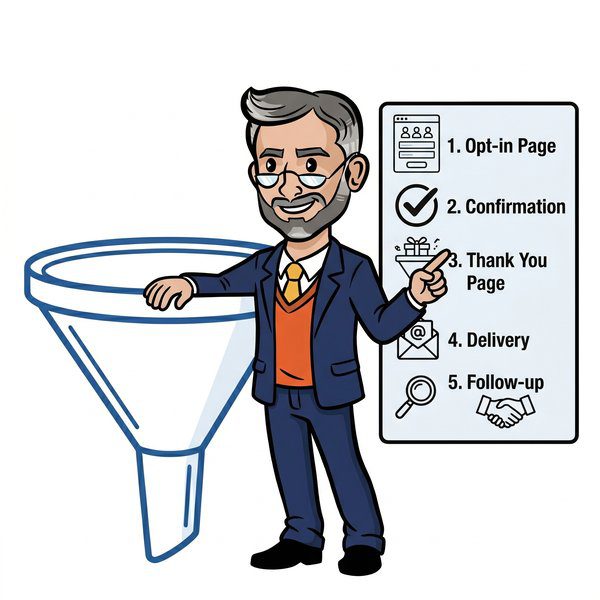
A B2B lead magnet funnel, simply defined, is the sequence from first value exchange (a free resource like “2026 CMO Pipeline Playbook”) to booked sales conversations. It includes the asset, the dedicated landing page, the automated delivery, the email sequence, and the conversion offer. Each piece must work together.
What follows is a practical, step by step guide with benchmarks, B2B examples, and specific funnel metrics. If you want a faster path, you can book a free strategy session with Sales Funnel Professor to review your current or planned lead magnet funnel.
What Is a Lead Magnet Funnel? (B2B, Not Just “Free Stuff” for Emails)
A lead magnet funnel is a structured process that guides website visitors through a customer journey, turning prospects into paying customers by offering something valuable in exchange for their contact information, usually an email address. It is not just a PDF download. It’s a system designed to generate leads, qualify them, and convert them.
Here’s what the components mean in B2B terms:
- A high-intent content asset (the lead magnet itself) that solves one specific problem for your target audience
- A focused landing page with a single call to action and minimal distractions
- Automated delivery that ensures prospects immediately receive the promised value
- A nurture sequence of 5–7 emails that moves leads from problem-aware to solution-aware
- A clear conversion offer such as a demo, strategy call, or trial that turns quality leads into revenue
The lead magnet funnel consists of three main stages: TOFU (top of funnel) where the lead magnet grabs attention, MOFU (middle of funnel) where follow up content keeps leads engaged, and BOFU (bottom of funnel) where targeted offers convert leads into customers. For example, a cybersecurity firm might offer an “Incident Response Checklist” at the top to attract IT leaders, nurture them with case studies and risk assessments in the middle, and convert them to a paid security assessment at the bottom.
The critical distinction: a lead magnet alone rarely converts. The best lead magnets only work when paired with funnel design, relevant follow ups, and offer positioning that create revenue. Download volume is vanity. Pipeline generated is the metric that matters.
For B2B funnels, typical benchmarks look like this: 25–45% opt-in rate on the lead magnet landing page, 40–60% open rate on the first email, and 1–5% of new leads converting to sales conversations within 30 days. These are the targets a successful lead magnet funnel should hit.
Core Components of a High-Converting B2B Lead Magnet Funnel
A successful lead magnet funnel includes essential components: a lead magnet, a dedicated landing page, an opt-in form, an email sequence, a clear call to action, and a conversion offer to turn leads into customers. Let’s break down each.
| Lead Magnet | This is the valuable resource you exchange for contact information. Concrete lead magnet examples for B2B include a “2026 RevOps Diagnostic Scorecard,” a “Board-Ready CAC/LTV Model Template,” or a “US Market Entry Checklist for EU SaaS.” The asset must solve one urgent pain point for your ideal customer. |
| Lead Magnet Landing Page | This is a dedicated landing page with a single CTA, no navigation menu, and a benefit-focused headline. The page exists to collect email addresses and nothing else. A focused lead magnet landing removes the drop off that happens when you bury your offer on a cluttered homepage. |
| Opt-in Form | Keep it simple. Ask for first name and email only. Each additional field can cut conversion by 10–20%. You can gather more information later in the nurture sequence or during the sales conversation. |
| Delivery Mechanism | Website visitors who opt in should immediately receive the asset. High-quality lead magnets offer immediate gratification to users, creating instant trust in the brand’s expertise. Show access on the thank-you page and send a backup email within 60 seconds. |
| Email Sequence | A well-crafted email sequence can turn a one-time lead into a potential customer by continuing the conversation and guiding them toward the next step in the sales process. Plan for 5–7 emails over 10–21 days that move leads through different funnel stages. |
| Conversion Offer | The BOFU offer is where revenue happens. Common B2B endpoints include a “Revenue Strategy Session,” a “30-Day Pilot,” or a “Personalized Benchmark Audit.” This offer must connect directly to the lead magnet topic. |
| Measurement Layer | Track everything via CRM and marketing automation (HubSpot, ActiveCampaign, or similar). Use UTM parameters to separate organic from paid traffic and track performance by campaign and asset. |
Step 1: Identify the Right Audience and Buying Moment
Most lead magnets fail because they target too broad an audience, the wrong buyer, or the wrong moment in the customer journey. Creating lead magnets without clarity on your ideal customer profile is a waste of resources.
The first step in creating a lead magnet funnel is to identify your target audience, understanding their pain points and decision-making processes to create a relevant lead magnet that attracts qualified leads.
Define your ICP with specificity. What role are you targeting (VP Marketing, Head of Sales, RevOps leader)? What firmographics matter (ARR between $3M–$15M, 50–200 employees, US or EU headquarters)? What buying triggers indicate readiness (Series A raise in 2025, entering US market, post-acquisition integration)?
For example, a $3M ARR EU SaaS company targeting US-based RevOps leaders might create a “US GTM Readiness Checklist” as their lead magnet. The asset speaks to a specific role facing a specific challenge at a specific buying moment.
Use real sources to extract pain statements. Review CRM win/loss notes, analyze Gong or Zoom call transcripts, and conduct customer interviews. Look for recurring language: “Our demo no-show rate is 40%,” “We don’t know which campaigns drive pipeline,” or “CAC has doubled but close rates haven’t improved.”
Map your lead magnet to the buyer’s journey. At the awareness stage, your future customers experience symptoms but haven’t diagnosed the problem. At consideration, they’re evaluating funnel tools, consultants, or vendors. At decision, they’re comparing 2–3 options.
Your funnel’s promise must connect to a high-stakes business outcome. “Reduce CAC by 25% in 6 months” beats “grow your business” every time. Specific, narrow topics for lead magnets are more effective than generic offers in attracting initial interest.
One warning: misaligned lead magnets pollute your database. If you offer generic “marketing tips” to attract CFOs, you’ll get signups who never buy. Your marketing team wastes time nurturing leads that will never convert, and sales productivity drops.
Step 2: Choose a Lead Magnet That Predicts Buying Intent
Not all downloads indicate real intent. A prospect who downloads a “2026 Pipeline Benchmarks PDF” is signaling different intent than someone downloading “10 Fun Marketing Facts.” Focus on formats that correlate with pipeline in B2B.
Effective lead magnets should solve a real problem for the audience, be quick and actionable, and lead naturally to the main offer, ensuring they are relevant and valuable to the target audience.
Here are lead magnet ideas that work for B2B services and SaaS:
| Scorecards | Self-assessment tools that help GTM leaders diagnose their own gaps. Example: “Lead Magnet Funnel Health Scorecard” with 15 questions that tee up a paid funnel audit. |
| Calculators | ROI or savings calculators work well for CFO and RevOps buyers who think in numbers. Example: “CAC Payback Calculator” that shows the financial impact of funnel improvements. |
| Templates | Ready-to-use documents that deliver a quick win. Example: “Board-Ready Pipeline Forecast Template” for Series A founders preparing investor updates. |
| Short Playbooks | 3–7 page tactical guides on one particular topic. Example: “7-Day Cold Outreach Sequence for B2B Services.” |
| Mini-workshops | Live or recorded 45-minute sessions that demonstrate expertise. Webinars are an engaging type of lead magnet that provide valuable information to attendees while collecting their contact details for future marketing efforts. |
| 7-Day Email Courses | A mini course delivered over a week that builds trust through valuable insights. Example: “5-Email Crash Course on US Market Entry for EU SaaS.” |
Interactive lead magnets like quizzes and assessments improve engagement by delivering personalized results while collecting valuable lead data. These work well for segmenting leads by maturity or role.
Gated content, such as eBooks, whitepapers, and webinars, is a popular type of lead magnet that requires users to provide their contact information to access valuable resources. However, big 80-page eBooks underperform compared to tight 3–7 page toolkits. Completion rates on lengthy eBooks hover around 10–15%, while focused toolkits see 60–70% completion and significantly higher downstream conversion.
At Sales Funnel Professor, we use a “Funnel Health Check” lead magnet that asks 15 diagnostic questions and naturally leads into our paid Funnel Audit or Fractional CMO engagement.
Selection criteria for choosing the right lead magnet: it solves one urgent problem, can be used in under 20 minutes, and naturally leads into your core paid offer. If your lead magnet doesn’t connect to what you sell, you’re attracting the wrong audience.
Step 3: Build a Lead Magnet Landing Page That Actually Converts
The most common mistake we see: companies put their lead magnet on the homepage, surrounded by navigation links, multiple CTAs, and competing messages. This creates confusion and drop off.
Your lead magnet landing page should follow this structure:
| Hero section | Benefit-driven headline that promises a specific outcome. Supporting sentence that reinforces the value. Example: “Free 2026 Lead Magnet Funnel Blueprint: Add 30–50 Qualified Opportunities per Quarter Without Increasing Ad Spend.” |
| Outcome bullets | 3–5 specific benefits the prospect will gain. What will they know, be able to do, or avoid after consuming this free resource? |
| Signup form | Ask for first name and email only. Each additional field cuts conversion by 10–20%. You can gather more data later. |
| Social proof | Including social proof such as testimonials or user numbers on landing pages builds credibility for lead magnets. Add logos of known clients, 1–2 short testimonials, or a note about Eddie Davis’ track record and Sales Funnel Professor’s Atlanta-based consultancy. |
| Mobile-first design | Majority of paid social traffic is mobile. Keep copy above the fold, use large buttons, and avoid complex layouts that break on small screens. |
Here’s a mini-case: A $6M ARR B2B software company came to us with an 18% landing page conversion rate. We removed the navigation menu, tightened the headline to one promise, cut the form from 5 fields to 2, and added client logos. CVR jumped to 42% within three weeks.
The page should have a clear call to action. One CTA. One form. One purpose. Everything else is a distraction that costs you potential customers.
Step 4: Set Up Fast, Frictionless Delivery
Even senior B2B buyers expect instant access. The moment someone completes your opt in form, they should see a thank-you page with immediate access to the asset.
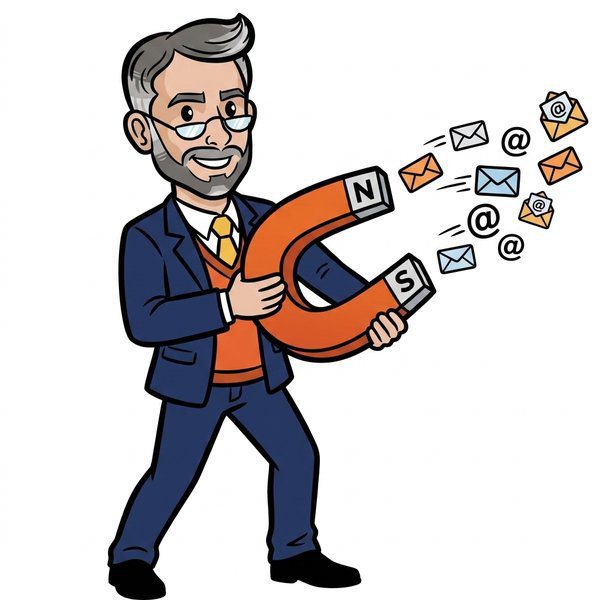
To enhance the effectiveness of a lead magnet funnel, it is essential to automate the delivery of the lead magnet immediately after sign-up, ensuring a seamless user experience. Here’s the entire process:
Form submission triggers contact creation in your CRM or email platform. The contact receives a tag identifying which lead magnet they downloaded. A delivery email fires within 60 seconds. The thank-you page displays an on-page access link as backup.
Example subject line: “Your Lead Magnet Funnel Blueprint is Ready.” Preview text: “3 action steps inside to build pipeline from cold traffic.”
Following up with a thank you email after a lead signs up for a lead magnet is considered best practice, as it reinforces the lead’s value and can lead to further engagement.
Delayed delivery kills conversion. When delivery takes 5–10 minutes (or worse, requires manual intervention), spam complaints increase, unsubscribes spike, and initial engagement drops by 20–30%.
Technical set-up matters. Decide on double opt-in based on your compliance requirements and audience expectations. Use a branded sender domain. Configure SPF and DKIM email authentication to protect deliverability.
At Sales Funnel Professor, we review and test the entire delivery path end-to-end before launch: form, redirect, email, and file access. A broken link or slow delivery can waste thousands in ad spend.
Step 5: Design a Nurture Sequence That Moves Leads to Sales Conversations
One email is not a funnel. A structured 5–7 email cadence is standard for B2B high-ticket offers where the sales cycle extends beyond a single touchpoint.
A high-converting lead magnet funnel should include a clear and compelling call to action (CTA) at every stage, guiding users toward the next step in the process.
Here’s a sample 6-email sequence structure:
| Email 1 (Day 0): Delivery and Quick Win | Deliver the asset. Highlight one insight they can implement immediately. Set expectations for what’s coming. |
| Email 2 (Day 2): Deeper Insights | Expand on one concept from the lead magnet. Provide more value without requiring the full asset to be consumed. |
| Email 3 (Day 5): Case Study | Tell the story of a similar company that solved the problem. Example: “$5M ARR SaaS improved lead-to-opportunity rate by 37% after fixing their magnet funnel.” Nurturing leads involves offering higher-value resources, such as webinars or exclusive events, that demonstrate the value of your business while being relevant to the lead’s interests. |
| Email 4 (Day 8): Myth-Busting | Address common objections or misconceptions. “Why most B2B companies fail at lead generation strategy.” |
| Email 5 (Day 12): Soft Offer | Introduce your conversion offer gently. “If you’re ready to move faster, here’s how we help.” |
| Email 6 (Day 18): Stronger CTA | Direct invitation to book a call or start a pilot. Clear deadline or scarcity if authentic. |
Personalization matters. If they downloaded “CMO’s 2026 Pipeline Planner,” speak to CMO-level concerns like board reporting and marketing efficiency. Reference the specific pain point indicated by their lead magnet choice.
Every email needs a clear CTA: reply for help, view a tactical video, book a funnel review, or self-qualify with a brief questionnaire.
Benchmarks to target: 45–60% open rate on Email 1, 20–35% click rate on at least one email in the sequence, and 3–10% of engaged leads clicking through to a high-intent action.
Step 6: Engineer the Conversion Offer at the Bottom of the Funnel
The funnel’s “net” is not the PDF. It’s the booked call, pilot, or paid engagement. Converting leads to paying customers happens at the bottom of the funnel.
Here are BOFU offers suited to B2B services and SaaS:
| Lead Magnet Funnel Audit | A paid or complimentary deep-dive into the prospect’s current funnel, benchmarked against best practices. This connects directly to a “Lead Magnet Funnel Blueprint” download. |
| 90-Min Pipeline Acceleration Workshop | A working session focused on one specific challenge. Delivers immediate value while demonstrating expertise. |
| 30-Day Paid Pilot | Low-commitment engagement that proves results before a larger contract. |
| Done-With-You Funnel Build Sprint | A time-boxed engagement where you build alongside the client’s team. |
Free consultations are a common lead magnet used by service providers, allowing them to showcase their expertise while building a list of potential clients. The key is ensuring the consultation delivers real value, not just a sales pitch.
Offering discounts or exclusive deals can serve as effective lead magnets, enticing potential customers to provide their email addresses in exchange for savings. For B2B services, this might look like early access to a new methodology or discounted pilot pricing.
The CTA must emphasize outcomes and timeframes: “Walk away with a prioritized 90-day funnel plan and benchmark targets.”
Friction reducers help: share the agenda upfront, clarify time required (45 minutes, not 2 hours), specify who should attend (CMO + Head of Sales), and make clear it’s advisory, not a hard pitch.
Example results: A $7M ARR B2B company converted 6% of nurtured leads into strategy calls. Of those, 30–40% became paid engagements. That conversion rate came from tightening the BOFU offer messaging and adding specific case study content.
For Sales Funnel Professor, our primary BOFU offer is a free strategy session reviewing the reader’s current funnel and revenue goals.
Step 7: Connect the Tech Stack Without Overcomplicating It
Tech should support strategy, not drive it. We’ve seen companies with 12 tools that still can’t tell you which marketing campaigns produce pipeline. Simpler stacks, properly configured, outperform complex ones every time.
Here’s a minimum viable stack for most B2B teams:
| Landing Page Tool | Webflow, WordPress, or a dedicated funnel builder. The page must load fast, work on mobile, and integrate with your email platform. |
| Email Platform/CRM | HubSpot, ActiveCampaign, or Klaviyo (for B2B with ecommerce elements). This handles contact management, tagging, and email sequence automation. |
| Analytics | GA4 plus CRM dashboards. Track visitors, conversions, and downstream pipeline attribution. |
Key integrations to configure: form submission creates CRM contact, tags or list assignments by lead magnet, and triggers that start nurture sequences automatically.
Marketing attribution basics: use UTM parameters on ads, separate organic versus paid traffic, and track performance by campaign and asset.

When does all-in-one versus best-of-breed make sense? Sub-$2M ARR companies typically benefit from an all-in-one platform like HubSpot Starter—easier setup, fewer integration headaches. Companies at $10M+ ARR often need best-of-breed tools that excel at each specific function, even if integration requires more work.
Common pitfalls we uncover in audits: duplicate contacts inflating lead counts, no clear source attribution (so you can’t tell what’s working), unsubscribes not syncing across platforms, and no link tracking in nurture emails.
Sales Funnel Professor offers marketing tech stack audits and can recommend a right-sized setup for companies from $500K to $50M ARR.
Step 8: Measure, Optimize, and A/B Test Your Lead Magnet Funnel
Funnels are living systems. The initial build is version 1.0. Optimization is where multipliers appear.
Optimizing your lead magnet funnel involves continuously testing and tweaking elements such as landing page headlines, email subject lines, and call-to-action buttons to improve conversion rates.
Track these metrics by stage:
| Stage | Metric | Target (Warm Traffic) | Target (Cold Ads) |
|---|---|---|---|
| Landing Page | Visit-to-opt-in rate | 30–50% | 20–35% |
| Email 1 | Open rate | 50–65% | 40–55% |
| Email Sequence | Click-through rate | 20–35% on at least one email | 15–25% |
| Funnel Overall | Lead-to-pipeline | 5–10% | 3–8% |
| Pipeline | Opportunity-to-close | Varies by offer | Track over time |
| Testing priorities: test offer and headline first (these drive conversions), then form length, then visuals and social proof. Run tests until you reach statistical significance—typically 200+ conversions per variant for landing pages. | Before/after example: A $12M ARR B2B company moved from 1.2% to 3.8% demo conversion from lead magnet downloads. The changes: improved BOFU messaging (clearer outcome promise), added a case study to Email 3, and reduced the ask from “60-minute consultation” to “30-minute diagnostic.” | Track lead quality indicators beyond volume: sales feedback on lead quality, SQL rate by source, and average deal size differences between lead sources. High volume from a misaligned lead magnet hurts more than it helps. | At Sales Funnel Professor, we run funnel audits where we benchmark each stage against similar B2B companies and deliver a prioritized optimization roadmap. |
Real-World B2B Lead Magnet Funnel Examples
Theory only goes so far. Here’s how lead magnet funnels perform in the real world.
| HR Tech SaaS (2025) | A Series B HR technology company used a “Headcount Planning Template for 2026” as their lead magnet targeting CHROs and VP People at 200–1,000 employee companies. Landing page CVR hit 38%. Their 6-email nurture sequence achieved a 54% open rate on Email 1. Within 45 days, 4% of new leads converted to demos. The funnel worked because headcount planning is a high-stakes, time-sensitive problem for their exact buyer. |
| Logistics Consultancy | A US-based logistics consulting firm offered a “Freight Cost Reduction Scorecard” targeting COOs at mid-market manufacturers. Email 1 open rate reached 52%. The scorecard naturally led to their paid freight audit service. Result: 3 new six-figure retainers in a single quarter from funnel-sourced leads. |
| Sales Funnel Professor Client | We worked with an $8M ARR B2B services firm that had been using a generic “Growth Marketing eBook” as their primary lead magnet. MQL volume was high, but MQL-to-SQL conversion was poor—sales complained about lead quality constantly. We replaced it with a focused “Lead Magnet Funnel Audit Checklist” targeting VP Marketing and Heads of Growth. MQL-to-SQL rate improved by 32% within 60 days. Fewer leads, but much higher quality. |
Each successful funnel aligned the lead magnet topic, the nurture content, and the BOFU offer around one painful, high-value business problem that decision-makers (CMO, CRO, COO) prioritize.
Common Lead Magnet Funnel Mistakes We See in Audits
Here’s what breaks funnels, based on the audits we conduct for B2B companies:
| Misalignment | The lead magnet topic doesn’t connect to your core service. Result: high download volume but low-intent leads who never speak to sales. Your funnel attracts people who will never buy. |
| Overcomplication | Fourteen-email sequences with no clear CTA, too many tools stitched together, or multiple offers confusing prospects. Simplicity drives conversions. |
| Generic promises | Copy that says “boost your business” instead of “increase qualified pipeline by 25% in 90 days.” Vague claims don’t attract people ready to act. |
| Weak follow up | Delivering the asset but failing to nurture leads, or not segmenting by role/industry despite clear differences in needs. One-size-fits-all nurture underperforms personalized sequences. |
| No lead management system | Contacts sitting in spreadsheets, no tagging by source, no tracking of which assets drive pipeline. You can’t optimize what you don’t measure. |
| Ignoring post-purchase opportunities | No upsell, cross-sell, or advocacy flows built from the same funnel principles. Revenue doesn’t stop at first sale. |
These are exactly the issues Sales Funnel Professor uncovers and fixes during funnel and GTM audits.
Extending the Funnel: Post-Purchase and Expansion Plays
The funnel shouldn’t stop at first sale, especially for recurring revenue models. The same lead magnet logic applies to retention and expansion.
Use exclusive playbooks for existing customers—advanced templates, invite-only strategy sessions, or early access to new methodologies. These targeted lead magnets build loyalty and drive expansion.
Example: A SaaS company offers a “QBR Pipeline Optimization Toolkit” to existing clients 30 days before renewal. The toolkit helps them prepare for quarterly business reviews while positioning additional services. This approach boosted retention rates and increased expansion revenue.
Post-purchase nurture sequences can reduce churn by 10–20% and increase net revenue retention. The principles are identical to top-of-funnel: provide value, nurture leads through content, and make the next offer feel like a natural step.
Sales Funnel Professor helps design these lifecycle funnels, not just top-of-funnel acquisition.
When to Bring in a Partner Like Sales Funnel Professor
When should a founder or CMO stop DIY-ing and involve an external revenue consultant? Here are the triggers:
- Pipeline has plateaued despite more visitors and more content
- CAC from paid channels keeps rising while conversion stays flat
- Poor lead-to-opportunity conversion despite healthy traffic
- Lack of internal bandwidth to architect, build, and test funnels properly
- Need to drive conversions faster than a small business owners’ timeline allows
Sales Funnel Professor specializes in B2B companies from $500K–$50M ARR that need a repeatable, scalable lead magnet funnel and GTM system—not random acts of marketing.
We offer funnel audits, GTM strategy engagements, full lead magnet funnel builds, and fractional CMO/Head of Growth leadership. What makes sense depends on your stage and resources.
We combine strategy, copy, design guidance, and implementation oversight. This isn’t theoretical advice you have to figure out how to implement. We build alongside your team and ensure the funnel actually launches and performs.
We position ourselves as long-term partners in building predictable revenue, not vendors selling a one-time project.
Your Next Step: Get Your Lead Magnet Funnel Diagnosed
An efficient lead magnet funnel ties together: the right audience, a high-intent asset, a focused landing page, timely delivery, smart nurture, and a compelling conversion offer. When these pieces work together, you create a system that turns cold traffic into predictable pipeline.
Book a free strategy session with Sales Funnel Professor to review your current funnel or sketch a new one tailored to your ICP and revenue goals.
In the session, you’ll get a quick diagnostic of your existing funnel, benchmarks against similar B2B companies, and a 90-day action plan outline. No pitch. Just clarity on what’s working, what’s broken, and where to focus.
A well-built lead magnet funnel means predictable pipeline, healthier CAC, and more control over your revenue forecasts. Stop guessing at growth. Start building the system that makes growth repeatable.
B2B Lead Magnet FAQ
What is a lead magnet funnel?
A lead magnet funnel is a system that exchanges valuable content for contact information and then nurtures prospects toward a sales conversation or purchase.
What makes a successful B2B lead magnet funnel?
Successful B2B lead magnet funnels combine a targeted offer, focused landing page, automated follow-up, and a clear conversion path tied to business outcomes.
What types of lead magnets work best for B2B?
High-performing B2B lead magnets include calculators, scorecards, templates, audits, webinars, checklists, and short playbooks focused on solving urgent business problems.
How many emails should be in a lead magnet nurture sequence?
Most B2B lead magnet funnels use 5–7 nurture emails delivered over 10–21 days to educate prospects and move them toward a conversion action.
Why do lead magnet funnels improve lead generation?
Lead magnet funnels improve lead generation by capturing qualified prospects earlier in the buyer journey and nurturing them with targeted follow-up content.