
Table of Contents
What Is a Lead Magnet? (And Why Your B2B Funnel Depends on It)
What Makes a High-Converting B2B Lead Magnet?
Lead Magnet Strategy: Match Offers to Buyer Journey Stages
Quick-Win Lead Magnets You Can Launch This Week
Deep-Dive Educational Lead Magnets (Guides, Reports, & Courses)
Interactive & Tool-Based Lead Magnets That Pre-Qualify Prospects
Live & Recorded Event Lead Magnets (Webinars, Workshops, & Replays)
Bottom-of-Funnel Lead Magnets That Create Sales Conversations
Niche B2B Lead Magnet Ideas by Segment and Use Case
Designing and Packaging Lead Magnets for Maximum Perceived Value
Distribution: Where and How to Promote Your Lead Magnets
Follow-Up: Turning Lead Magnet Downloads into Revenue
Sample 30-Day Plan to Launch Your First (or Next) High-Impact Lead Magnet
When to Bring in Help: How Sales Funnel Professor Builds Lead Magnet Systems
Next Steps: Turn These Lead Magnet Ideas into Predictable Pipeline
You have traffic. You have a product or service that solves real problems. But your pipeline looks anemic, and sales keeps asking why the leads coming through are so hard to close. The issue often sits at one of the most overlooked leverage points in your funnel: what you offer website visitors in exchange for their contact information.
A lead magnet is a free resource businesses use to encourage visitors to exchange their contact information for valuable content or tools. In B2B, this typically means a specific, valuable offer—a guide, calculator, audit, checklist, or similar asset—you give in exchange for an email address and basic firmographic data like company size, role, or industry. The effectiveness of this exchange largely depends on the quality of the resource you provide.
What Is a Lead Magnet? (And Why Your B2B Funnel Depends on It)
The purpose of a lead magnet extends far beyond list growth. In B2B, your real goal is generating qualified leads that align with your ideal customer profile. You want to attract ICP accounts, buying committees, and opportunities your sales team can actually close—not a database full of job seekers and students downloading free stuff for personal use.
B2B lead magnets can include calculators, webinars, checklists, templates, free trials, audits, and ebooks designed to generate qualified leads through immediate value. High-converting lead magnets include interactive tools like calculators and quizzes, specialized templates such as checklists and worksheets, free educational content including webinars and mini-courses, and exclusive offers like free trials. The format matters less than the fit between what you offer and what your target audience genuinely needs.
These offers sit at key funnel points: your homepage, high-intent blog posts, paid landing pages, and outbound sequences on LinkedIn and cold email. B2B sites without clear lead magnets often convert under one percent of visitors. Well-aligned offers consistently hit three to seven percent or higher on targeted pages. That difference represents millions in pipeline for companies at scale. At Sales Funnel Professor, we design lead magnets as part of end-to-end funnel builds, not as isolated tactics that generate volume without regard for quality. When lead generation efforts are integrated into a complete system, the results compound.
What Makes a High-Converting B2B Lead Magnet?
Not all lead magnets are equal. In B2B, misaligned offers create unqualified leads that frustrate sales and waste marketing spend. A generic lead magnet that appeals to everyone actually appeals to no one who matters. A good lead magnet solves a real problem for a real buyer. A great lead magnet does that while naturally positioning your offer as the logical next step.

Lead magnets should provide immediate value, solve a specific problem, and align with the audience’s needs to be effective. The best lead magnets are targeted at a specific problem and audience, offering a perceived quick win to encourage sign-ups. To create an effective lead magnet, it is essential to know your target audience, solve one specific problem, and choose the right format that suits the content and audience needs.
- The first attribute of a high-converting B2B lead magnet is specificity to a narrow, urgent problem. An offer like “Lower your LinkedIn CAC by 30% in 30 days” outperforms a vague ebook about digital marketing because it mirrors exact buyer queries. Targeted magnets see two to three times higher engagement than broad offers because they speak directly to pain points the prospect is already thinking about.
- Second, a great lead magnet example is one that maintains tight ICP alignment. An offer like “SaaS GTM playbook for $2M–$20M ARR HR tech sellers” ensures leads match your sales criteria. This precision reduces disqualification rates by up to forty percent compared to audience-agnostic assets. If your sales team complains about lead quality, this is usually where the breakdown occurs.
- Third, high-converting lead magnets often promise a quick win, providing solutions that are easy to consume and implement. Promise something the user can act on in under thirty to sixty minutes. A checklist, template, or calculator respects executive time constraints. These formats yield twenty-five to forty-five percent conversion on warm traffic compared to five to ten percent for lengthy reads that require hours to consume.
- Fourth, the magnet should create a natural progression to your core offer. A funnel audit that reveals gaps positions your consulting services as the solution. Data shows fifteen to thirty percent of downloaders advance to demos when the magnet properly frames the next step.
- Fifth, deliver instantly with no friction. Automated emails or hosted links prevent drop-off. Manual processes lose twenty to thirty percent of opt-ins. When someone requests valuable resources, they expect immediate access—not an email that arrives forty-eight hours later.
Checklists and calculators often hit twenty to forty percent lead magnet landing page opt-in rates when tightly targeted to a specific ICP. A SaaS firm offering a “Demo Readiness Checklist” converted thirty-two percent of product page visitors. A consultancy offering a “RevOps Toolkit” generated eighteen percent SQLs from blog traffic. These micro-examples illustrate what happens when you match format to audience and problem.
Lead Magnet Strategy: Match Offers to Buyer Journey Stages
Most B2B teams fail because they only deploy bottom-of-funnel magnets. When your primary call to action is “book a demo” and nothing else, you ignore seventy to eighty percent of traffic at problem-awareness and solution-awareness stages. These prospective clients are not ready to talk to sales, so they bounce. Your pipeline stalls while competitors who provide value earlier capture those accounts.
| Funnel Stage | Recommended Lead Magnet Types |
|---|---|
| Top-of-Funnel (Awareness) | Quizzes, checklists, cheat sheets, swipe files, quick-win email sprints |
| Middle-of-Funnel (Consideration) | Comparison guides, implementation playbooks, ROI calculators, benchmark reports, webinars |
| Bottom-of-Funnel (Decision) | Free strategy sessions, funnel audits, assessments, pricing tools, live tear-downs |
A simple decision flow: if traffic is mostly cold from SEO with under one thousand monthly visitors to key pages, start with quick-win checklists. If you are running outbound or LinkedIn sequences, use audits and assessments that personalize the conversation. For paid retargeting, calculators and interactive tools perform well because the audience already knows you. This staged mapping lifts overall funnel velocity by twenty-five to fifty percent.
Quick-Win Lead Magnets You Can Launch This Week
This section gives you fast-build ideas you can stand up in under a week using existing knowledge. These are not theoretical concepts—they are formats proven to generate leads with minimal production time. Ship at least one within seven days.
- The one-page checklist remains one of the best lead magnet ideas for speed and effectiveness. A “2026 SaaS Demo Readiness Checklist” targeting PLG teams at $1M–$10M ARR outlines fifteen to twenty steps for trial-to-paid uplift. Place it on product and pricing pages. Checklists are popular lead magnets due to their simplicity and immediate usability, providing users with actionable steps to achieve a specific goal. One SaaS firm boosted demo requests by twenty-two percent after implementing a targeted checklist.
- A cheat sheet like “Demand Gen KPI Cheatsheet for B2B CMOs” listing ten metrics with industry thresholds works as a blog content upgrade. These hit fifteen to thirty percent opt-ins and filter for growth-focused leads. Cheat sheets deliver quick reference value that executives actually use.
- A resource list such as “Tech Stack Blueprint for $1M–$10M ARR Startups” curates twenty tools under $2k/month. Gate this on your homepage. Companies report eighteen percent lead volume increases from well-targeted resource lists.
- PDF versions of top blog posts function as content upgrades. Add exclusive sections not available in the public post, then gate access via in-article popups. These convert ten to twenty percent of readers who have already demonstrated interest through their reading behavior.
- A five-day email sprint like “5 Days to Fix Your LinkedIn Ads Targeting” delivers daily tactics via email. This works for mid-funnel prospects and achieves twelve to twenty-five percent completion-to-lead rates. Email mini-courses delivered over several days can establish authority and get subscribers accustomed to opening emails.
- A toolkit list documenting “Our Exact RevOps Tool Stack Under $2k/Month” performs well on LinkedIn posts. Agencies see twenty percent or higher opt-ins from this format because it offers transparency and practical utility.
- Short video tutorials under fifteen minutes solving one concrete problem like “ABM Setup Basics” convert fifteen to twenty-eight percent when hosted on YouTube with email gates. A video lead magnet leverages different content consumption preferences.
- Templates serve as a useful lead magnet by providing users with a starting point for their projects, making it easier for them to engage with your brand’s offerings. A swipe file like “17 High-Converting B2B Outreach Emails That Book Meetings” gives sales teams immediately usable marketing materials. Tests show twenty-two percent meeting booking uplift when prospects implement these templates.
Deep-Dive Educational Lead Magnets (Guides, Reports, & Courses)
These magnets take longer to build—typically two to four weeks—but generate higher perceived value and attract senior decision-makers like founders, CMOs, and VPs of Sales. You will attract fewer leads, but they are often two to three times more qualified than quick-freebie downloaders.
- A strategic guide or playbook like “2026 B2B Go-to-Market Playbook for EU SaaS Entering the US” spans twenty to forty pages with frameworks and detailed implementation steps. These achieve twenty-five percent SQL rates when targeting prospects navigating specific transitions. The length signals depth, and the specificity ensures only relevant prospects download.
- Ebooks are a popular lead magnet that can help businesses establish authority and provide valuable insights to potential customers, often leading to increased email sign-ups. A pillar ebook of thirty to sixty pages sharply focused on one revenue problem—“Cutting CAC by 25% Without Increasing Ad Spend”—outperforms generic guides by forty percent in downloads and fifteen percent in progression to sales conversations. The ebook lead magnet format works when the content justifies the length.
- A “State of the Industry” report synthesizes benchmarks or original survey data. “State of B2B Funnels 2026” drives thought leadership positioning with twenty to thirty-five percent opt-ins from LinkedIn promotion. Industry reports position your brand as a research-driven authority.
- Prediction reports like “7 Lead Gen Trends That Will Raise Your CAC in 2027 If You Ignore Them” create urgency and forward-thinking positioning. These convert eighteen to thirty percent on newsletter promotion because they offer valuable insights about future challenges.
- An email course such as “7 Emails to Fix Your Pipeline Velocity” delivers daily lessons over a week. These achieve forty percent completion rates and boost nurture engagement significantly. The drip format builds habit and anticipation.
- A video micro-course of three to five videos totaling under sixty minutes covers a precise topic like “ABM for Sub-50-Person Sales Teams.” These achieve twenty-five to forty-five percent view-through-to-lead rates. Webinars and recorded training sessions can provide deep engagement and demonstrate expertise on complex topics. A free course format signals substantial investment in the prospect’s success.
Deep-dive magnets often see thirty to fifty percent landing page conversion when promoted to warm audiences. The production investment pays off through higher lead quality and stronger positioning.
Interactive & Tool-Based Lead Magnets That Pre-Qualify Prospects
Interactive lead magnets both capture leads and segment them by budget, fit, or urgency. This is ideal for B2B teams that care about quality over volume. The data you collect through these tools enriches your CRM and enables smarter follow-up.
- A ROI calculator like “Pipeline ROI Calculator: Estimate Additional ARR from Fixing Your Demo-to-Close Rate” takes two to five inputs and delivers ARR projections. Gate results behind a form. SaaS examples show thirty-five percent opt-ins and twenty percent demo bookings from calculator users. Calculators are interactive tools that provide immediate, personalized value based on user input, helping to determine ROI, savings, or project costs.
- A CAC/LTV calculator tailored to one industry—B2B SaaS, agencies, or manufacturing—computes ratios with benchmarks. These convert thirty percent or higher and provide enriched CRM data for sales prioritization. The free tool format delivers immediate utility.
- A funnel grader or scorecard like “Score Your Funnel from 0–100 in Under 5 Minutes” evaluates ten metrics and delivers a personalized PDF with recommendations. This format hits forty percent opt-in rates and segments high-scorers for audit conversations.
- A tech stack assessment tool asking “Is Your Marketing Stack US-Market Ready?” evaluates eight to twelve tools against best practices. These achieve twenty-eight percent conversions for companies targeting international expansion.
- A budget planner for “2026 Demand Gen Budget Planner for Companies at $3M–$30M ARR” outputs prioritized spending recommendations. These achieve twenty-five to thirty-five percent opt-ins from prospects actively planning.
- Quizzes are an engaging type of lead magnet that encourages participation by providing personalized results based on user responses, making them effective for lead generation. A strategy selector quiz like “Should You Double Down on ABM, Inbound, or Outbound in 2026?” uses six to ten questions to deliver tailored recommendations. These convert thirty-two percent and route fifteen percent directly to sales conversations. Online quizzes create a compelling lead magnet experience through personalization.
For UX, keep forms short—six to ten questions maximum. Deliver instant results on-screen plus an emailed PDF with soft CTAs to book a strategy call. Interactive content can achieve conversion rates over five percent, significantly outperforming static PDFs. Interactive tools often convert in the twenty-five to forty-five percent range on warm traffic and produce richer firmographic data including company size, current tools, and budget timelines.
Live & Recorded Event Lead Magnets (Webinars, Workshops, & Replays)
Live formats create time-bound urgency, attract high-intent attendees, and allow you to sell naturally through Q&A interaction. Despite video fatigue in 2026, these formats remain potent for B2B when executed well.

- Webinars are highly effective lead magnets because they offer live, interactive value and can generate a significant number of email sign-ups in a short time frame. A live webinar of forty-five to sixty minutes on a needle-moving topic like “How to Take a B2B Funnel from 1% to 4% Visitor-to-Lead Conversion in 90 Days” draws SQLs who self-select based on topic relevance. Webinars are powerful lead magnets because they provide live, interactive value.
- An implementation workshop enables attendees to complete something live—designing a funnel offer or mapping a follow-up sequence. Completion-to-lead rates jump thirty-five percent compared to passive content consumption. Attendees leave with tangible output.
- An “Ask-Me-Anything” session for founders on a focused theme like “Office Hours: Fix My Paid Social Funnel” converts eighteen to thirty percent of attendees. The focused format attracts serious prospects while positioning your team as accessible experts.
- A recorded webinar library gates your archive of past events behind a single email signup. These achieve fifteen to twenty-five percent opt-ins from evergreen promotion. One signup unlocks multiple assets, which increases perceived value.
- Live tear-down sessions reviewing attendee landing pages, LinkedIn profiles, or funnel dashboards deliver personalized feedback publicly. Twenty-five to forty percent of attendees book follow-up calls. This creates a great example of value demonstration.
Typical B2B webinar performance shows twenty to forty percent registration conversion from targeted traffic, thirty to sixty percent attendance from registrants, and ten to twenty-five percent of attendees clicking through to a follow-up offer. The challenge is no-shows—forty to fifty percent is common—but reminder sequences yield fifteen percent attendance uplift.
Establish a repeatable cadence of one event per month, tied to five-email nurture sequences: recap on day zero, implementation help on days two through seven, proof and case studies on day ten, and CTA on day fourteen. This cadence lifts close rates twenty percent.
Bottom-of-Funnel Lead Magnets That Create Sales Conversations
For companies between $500K and $50M ARR, the most valuable lead magnet often leads straight to a qualified conversation with sales or a strategist. These magnets attract fewer visitors, but conversion to revenue is dramatically higher.
- A free strategy session like “30-Min Funnel Strategy Call for B2B Teams at $1M–$25M ARR” includes a clear promise and agenda—gap identification and action plan outline—not a vague chat. Free consultations structured this way book twenty percent of qualified opt-ins. The specificity filters tire-kickers.
- A funnel or website audit delivered as a screen-recorded teardown or written report with concrete recommendations and benchmarks advances twenty-five percent of recipients to paid work. This creates immediate demonstration of expertise.
- A campaign plan or roadmap session like “90-Day Pipeline Acceleration Plan” delivers a documented action plan as the outcome. Eighteen percent of recipients move to implementation engagements. The deliverable itself becomes a selling tool.
- An implementation diagnostic such as “CRM & Marketing Automation Health Check” for HubSpot or Salesforce converts twenty-two percent in tech-stack-specific targeting. Potential customers see immediate relevance.
- A free coaching session or office hours slot dedicated to a specific persona—CMOs entering the US market, for example—yields twenty-eight percent progression to paid engagements.
Use slightly longer forms for BOFU magnets. Ask for company size, current ARR, tech stack, and goals. This keeps quality high and your calendar sane. BOFU magnets may convert fewer website visitors, but often close at fifteen to thirty percent or higher with proper follow-up. The lead capture form serves dual purposes: collecting information and qualifying fit.
Niche B2B Lead Magnet Ideas by Segment and Use Case
The best-performing lead magnets are tailored not only by persona but by business model. SaaS companies face different funnel challenges than agencies or manufacturers. The right lead magnet addresses specific revenue levers.
Lead Magnet Ideas for B2B SaaS
- A “Free Trial Optimization Checklist” aimed at improving trial-to-paid conversion addresses one of SaaS’s core metrics. Companies implementing targeted optimization see conversion lifts of six to twelve percent—for example, moving from twelve percent to eighteen percent trial conversion.
- “Onboarding Email Sequence Templates for PLG SaaS at $1M–$20M ARR” provides ready-to-implement sequences that reduce churn fifteen to twenty percent. Offering a free trial is a common lead magnet strategy, especially for SaaS companies, as it allows potential customers to experience the product’s value firsthand without risk.
- A “Churn Risk Calculator” using inputs like logo count, ACV, and product usage predicts risk with eighty percent accuracy. The tool captures leads while providing immediate diagnostic value.
- A “Pricing Page Tear-Down” submission form with promise of a ten-minute review video books twenty percent of reviewers for deeper conversations.
Place these magnets on product pages, pricing pages, and blog posts about retention or activation where intent aligns with the offer.
Lead Magnet Ideas for Agencies & Consulting Firms
- A “Proposal Template & Win-Rate Checklist” for agencies selling retainers boosts closes twenty-five percent by systematizing the pitch process.
- An “Audit: 15-Point Review of Your Demand Gen Funnel” for CMOs achieves thirty percent progression to paid engagements. Prospects see their gaps clearly.
- A “Capacity & Utilization Planner Spreadsheet” helps agencies struggling with staffing optimize utilization eighteen percent.
- A “Client Retention Playbook for Marketing Agencies Over $1M in Revenue” cuts churn twenty-two percent by addressing a persistent service-business challenge.
Frame these as both educational and diagnostic. Prospective clients see their gaps and naturally want help implementing fixes. This positions you as a peer-level consultant who understands scoped engagements and long sales cycles.
Lead Magnet Ideas for Manufacturers & Industrial B2B
- An “RFQ Response Checklist for Engineering Teams” systematizes response quality and speed.
- A “Payback Calculator” for equipment or software that replaces manual processes shows ROI clearly—for example, twenty-four-month savings projections that justify capital expenditure.
- A “Plant Modernization Roadmap Template” for operations directors provides a starting framework for transformation planning.
- A “US Distributor Readiness Scorecard” for manufacturers entering the US market evaluates channel readiness.
Collect firmographic data like plant count, annual production volume, and current systems to support sales qualification. Even traditional industries respond well to calculators and clear ROI tools when tied to operational savings.
Lead Magnet Ideas for Global Companies Entering the US Market
- A “US Market Messaging Checklist” highlights common positioning mistakes overseas teams make when targeting American buyers.
- A “US GTM Readiness Assessment” scores channels, positioning, and pricing. Teams see twenty-five percent improvement in localization efforts.
- A “Compliance & Data Requirements Cheatsheet” covers selling into US healthcare or finance—critical for regulated verticals.
- “US Buyer Persona Templates” pre-filled with example expectations and buying processes accelerate market understanding.
Sales Funnel Professor helps international teams localize funnels. These magnets flow naturally into strategy sessions that address market entry challenges. Concrete outcomes include reducing US sales cycle length by aligning with local expectations and avoiding costly positioning errors.
Designing and Packaging Lead Magnets for Maximum Perceived Value
Presentation dramatically impacts conversion. The same content packaged as a “2026 Playbook” with a sharp cover and clear promise outperforms a bland “download our PDF.” The design and presentation of lead magnets influence perceived value, with polished and professional formats being more appealing.
Naming matters enormously. Use outcome-based titles with clear time frames and specificity. “30-Day Pipeline Reset Plan for B2B Teams Under 50 Reps” outperforms “Lead Generation Guide.” Tests show the specific version converts two to three times higher. This is how you create a lead magnet that resonates.
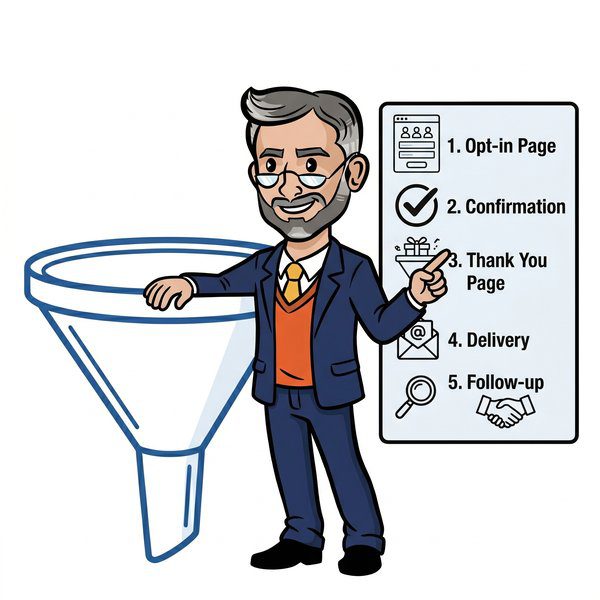
Visuals should be simple but clean—brand-consistent with charts or frameworks that make content feel proprietary. A valuable lead magnet looks like it required investment to create.
Length often works against you. Shorter, sharper assets beat eighty-page ebooks by fifty percent in completion rates. Aim to respect an executive’s twenty to thirty minute window. Most lead magnets fail not because they lack content but because they demand too much time.
Access should be instant. Email delivery plus hosted web versions accommodate mobile users and easy reference. Friction kills conversion.
Consider the A/B example: a generic “Lead Gen Guide” versus “How to Cut CAC by 22% in 90 Days With the Traffic You Already Have.” The latter likely sees higher opt-in and better lead quality because it promises a specific outcome. This is the difference between an effective lead magnet and forgettable content.
Distribution: Where and How to Promote Your Lead Magnets
The perfect lead magnet fails if nobody sees it. Distribution is half the game. Lead magnets should be promoted on multiple channels to maximize reach and engagement.
- On-site placements include hero sections, in-article content upgrades, exit-intent popups, sticky bars, and high-intent page embeds. Using pop-ups to promote lead magnets can significantly increase conversion rates by capturing visitor information before they leave the site. Targeted content-upgrade opt-ins on SEO posts often hit five to fifteen percent conversion, while site-wide popups might achieve one to four percent at higher scale.
- Email distribution means adding magnets into signatures, PS sections, and re-engagement sequences for inactive lists. This drives ten to twenty percent engagement from warm audiences who already know you.
- Paid media uses magnets as primary offers in LinkedIn Ads, Meta campaigns, Google Display, and retargeting sequences. These convert fifteen to thirty percent when targeting is precise. Content marketing through paid channels extends reach to more leads.
- Outbound sequences benefit from tailored magnets. Using industry-specific reports in cold email and LinkedIn outreach warms conversations instead of pushing demos immediately. This approach to attract leads converts twenty to thirty-five percent to meetings.
Map each magnet to two or three primary promotion channels. Avoid set-it-and-forget-it placement. Social media posts can drive awareness, and social media platforms extend reach when content is genuinely valuable. A powerful lead magnet deserves deliberate promotion.
Offering access to exclusive communities like a private Facebook group can foster loyalty and engagement with potential leads, though this requires ongoing investment to maintain value.
Follow-Up: Turning Lead Magnet Downloads into Revenue
The real ROI comes from what happens after the opt-in. A lead magnet is the first micro-commitment, not the finish line. This is how lead magnets work to generate revenue—through systematic follow-up that nurtures leads toward sales conversations.
- Day zero: delivery email plus one extra bonus insight not in the magnet. This immediate overdelivery builds trust.
- Days two through seven: two to three value-heavy emails that help implement the magnet—checklists, examples, Loom walkthroughs. Video walkthroughs boost opens thirty-five percent.
- Days seven through fourteen: transition into case studies and social proof showing how similar companies solved the same problem. Case studies lift clicks twenty-five percent.
Include a clear, direct CTA to a strategy session, audit, or trial at least once in the sequence. The sequence should nurture leads while providing implementation value.
Segmentation matters. Different nurture paths serve people who downloaded a high-level guide versus those who requested a funnel audit or calculator result indicating high urgency. High-urgency calculator users get diagnostics with fifteen to thirty percent close rates.
Example scenario: a CRO Benchmark Report subscriber who clicks on two or more nurture emails gets invited to a diagnostic call with a tailored pitch. Twenty-two percent book the call. This turns your lead generation machine into predictable pipeline.
For small business owners and small businesses with limited resources, even a simple three-email sequence outperforms no follow-up. A free sample of what full implementation looks like—delivered through email—makes the leap to paid work feel natural.
Sample 30-Day Plan to Launch Your First (or Next) High-Impact Lead Magnet
Many teams stall on execution. This roadmap gives you concrete weekly outcomes you can hand to your team.
- Week one: choose one ICP segment, identify one core pain point, and select one magnet type from this article. Audit existing content and data for reuse. Create detailed buyer personas if you have not already. The output is a clear brief: who, what problem, what format.
- Week two: draft and design the magnet. Write lead magnet landing page copy and thank-you page copy. A lead magnet creator on your team—or an external resource—should finalize design. Keep the landing page focused on one promise and one form.
- Week three: build the lead capture form, email automation, and follow-up sequence. Test delivery and tracking: conversion goals, UTM tags, CRM field population. Verify the system works end-to-end before launch.
- Week four: launch on two to three channels. Start with homepage banner, top three SEO posts, and one LinkedIn campaign. Review early numbers after five hundred to one thousand visitors.
Numeric targets: aim for at least twenty percent page opt-in on warm traffic for a specific checklist magnet. If below ten percent after five hundred visitors, revisit offer and headline. The lead magnet content may not match audience expectations, or positioning needs adjustment.
This plan makes lead magnet templates and processes repeatable. The second magnet takes half the time. Your lead magnet game improves with each iteration.
When to Bring in Help: How Sales Funnel Professor Builds Lead Magnet Systems
DIY efforts plateau. These signs indicate when to bring in specialized help.
- Site traffic between five thousand and one hundred thousand visits per month but lead volume is flat. You have attention but are not capturing it effectively.
- Lead quality complaints from sales—too many unqualified downloads. A generic lead magnet attracts generic leads. Most lead magnets fail this test.
- No clear mapping between lead magnets and revenue metrics like pipeline, win rate, and CAC. You cannot optimize what you do not measure.
- Expansion into new markets, especially the US, where existing magnets do not resonate with local buyer expectations.
Sales Funnel Professor, based in Atlanta and led by Eddie Davis, partners with B2B teams at roughly $500K–$50M ARR to audit current funnels, magnets, and conversion paths. We design full portfolios of offers across the buyer journey, build and implement lead magnet landing pages, automations, and nurture sequences, and train internal teams to maintain and expand the system.
Typical outcomes include measurable increases in visitor-to-lead conversion and pipeline quality within sixty to ninety days. We will not promise unrealistic numbers, but we can show you what good looks like for companies at your stage.
Next Steps: Turn These Lead Magnet Ideas into Predictable Pipeline
Effective lead magnets solve one focused problem for a specific ICP. They are mapped deliberately to buyer journey stages—top, middle, and bottom—rather than deployed randomly. They are supported by smart distribution across multiple channels and systematic follow-up that converts downloads into revenue.
Pick one quick-win idea from this article—a checklist, cheat sheet, or swipe file—and one deeper asset like a playbook or calculator. Commit to launching both in the next thirty to forty-five days. Track concrete metrics: opt-in rate, SQL rate, and closed-won revenue attributed to each magnet.
This is a win win: your prospects get immediate value, and you build predictable pipeline.
Book a free strategy session with Sales Funnel Professor. In this forty-five minute call, we will review your current funnel, identify two to three high-impact lead magnet opportunities specific to your business, and outline a practical implementation plan tailored to your ARR range and team capacity. This is not a vague discovery call—you will leave with actionable recommendations.
Request your session via the Book a Strategy Session button on this page. Predictable pipeline is built, not wished for. Lead magnets are one of the highest-leverage starting points you can implement. Let us show you exactly how.
Lead Magnet FAQ
What is a B2B lead magnet?
A B2B lead magnet is a valuable resource offered in exchange for a prospect’s contact information to help generate qualified business leads.
What are the best B2B lead magnet ideas?
High-performing B2B lead magnet ideas include calculators, checklists, webinars, audits, templates, benchmark reports, and case studies focused on solving specific business problems.
Why do lead magnets improve lead generation?
Lead magnets improve lead generation by giving prospects immediate value while helping businesses capture contact information and nurture potential buyers through the sales funnel.
What makes a high-converting lead magnet?
The best lead magnets solve a clear problem quickly, align with buyer intent, and create a natural next step toward a product, service, or sales conversation.
Are quizzes and calculators effective lead magnets?
Yes. Interactive lead magnets like quizzes, calculators, and assessments often improve engagement and generate higher-quality leads because they provide personalized results.