
Table of Contents
Addressing the CEO’s Growth Conundrum: The Stalled Engine of Disconnected Revenue Teams
The Strategic Imperative: Why the Chief Revenue Officer Role Emerged
What Does a Chief Revenue Officer Do? Defining the Role’s Core Mandate
The CRO’s Operational Playbook: Unifying Sales, Marketing, and Revenue Operations
The Transformative Impact: Achieving Predictable Growth with a CRO
Implementing a Chief Revenue Officer: What CEOs Need to Know
The Future of Revenue Leadership: A C-Suite Revenue Strategy for Enduring Success
Are your sales and marketing teams constantly at odds, hindering revenue growth? Perhaps your company’s expansion, once robust, has now hit a frustrating plateau, marked by inconsistent results and internal finger-pointing. For many CEOs, this scenario is painfully familiar: a fragmented approach to revenue generation that drains resources and stifles potential. It might be time to introduce the ultimate unifier, the strategic architect you didn’t know you desperately needed: the Chief Revenue Officer (CRO).
The Chief Revenue Officer Role: Unifying Sales & Marketing for Predictable Growth, is more than just a title; it’s a strategic imperative. A CRO is the architect responsible for integrating and optimizing every revenue-generating function across your organization. They eliminate silos and drive predictable, scalable growth, directly addressing the pervasive pain points of disunity and stalled expansion. This critical C-suite role fundamentally unifies sales and marketing efforts, driving holistic and predictable revenue.
Addressing the CEO’s Growth Conundrum: The Stalled Engine of Disconnected Revenue Teams
As a CEO, you are likely no stranger to the relentless pressure of achieving consistent, predictable growth. Yet, for many, the reality is far more turbulent. You find yourself asking, “Why isn’t growth predictable?” The symptoms are often glaring: inconsistent sales results, leading to unpredictable quarter-ends; significant marketing spend that does not seem to translate into equivalent revenue; and, perhaps most insidious, a pervasive internal friction and blame game between your sales and marketing departments.
This disconnect is a profound pain point. Marketing proudly generates a high volume of leads, only for sales to dismiss them as unqualified or irrelevant. Conversely, sales closes deals and acquires new customers, but marketing struggles to leverage that success into compelling new campaigns or understand the true customer acquisition journey post-conversion. The right hand often does not know what the left hand is doing, leading to a massive drain on resources and a collective sense of frustration that permeates your organization. You are drowning in disconnected tactics and starving for a real, unified strategy.
This challenge goes beyond traditional silos. The limitations of separate sales, marketing, and customer success leadership become glaringly apparent. Each department operates with its own distinct set of key performance indicators (KPIs), often misaligned incentives, and fragmented reporting structures. This creates a natural tendency for departmental self-interest to supersede holistic organizational goals. Poor lead handover processes become the norm, creating a disjointed and often frustrating customer journey. Without a single, unifying leader, it becomes impossible to gain a truly holistic view of your entire revenue pipeline, from initial awareness through customer lifetime value (CLTV). You see snapshots, not the full, dynamic movie of your revenue engine.
The search for a strategic leadership solution then becomes paramount. You are past the point of seeking tactical fixes – another sales training program, a new marketing automation tool, or a different lead generation campaign.

Professor’s Note
What you truly need is fundamental organizational alignment, a shift from disparate efforts to a cohesive, integrated revenue machine. This necessitates a strategic leader who can transcend traditional departmental boundaries and orchestrate a unified vision for growth.
The Strategic Imperative: Why the Chief Revenue Officer Role Emerged
The modern business landscape, characterized by complex, non-linear customer journeys and an abundance of data, has necessitated an evolution of the C-suite. For decades, the traditional organizational structure kept sales, marketing, and often customer service in distinct silos, each with its own leadership. However, as customer expectations shifted towards seamless, integrated experiences across all touchpoints, the limitations of this model became increasingly apparent. The urgent need for a single owner of the entire revenue engine, someone with end-to-end accountability for how the organization generates, nurtures, and retains revenue, became undeniable. This shift responds directly to the modern buyer, who does not differentiate between your sales, marketing, or customer service departments; they simply interact with your company.
The Chief Revenue Officer (CRO) emerged as the definitive answer to the pursuit of predictable growth. This role bridges the critical gap between high-level business strategy and the daily execution across all revenue-generating functions. A CRO shifts the organizational focus from individual departmental performance, such as marketing’s lead volume or sales’ closed deals, to holistic business outcomes: predictable revenue, increased customer lifetime value, and sustainable market penetration. They are tasked with ensuring that every facet of the customer journey, from initial interest to loyal advocacy, is optimized to maximize revenue.
It is crucial to understand how the CRO differs significantly from traditional Sales Leaders or Marketing VPs. While a Head of Sales excels at managing a sales team, optimizing conversion rates, and hitting sales targets, their scope is typically confined to the sales function. A VP of Marketing focuses on brand building, lead generation, and market positioning. The CRO, however, possesses a much broader scope, encompassing the entire end-to-end revenue lifecycle. Their mandate is not merely to optimize one part of the funnel, but to ensure seamless cross-functional synergy and a unified revenue strategy that orchestrates the efforts of marketing, sales, customer success, and even business development. This strategic, holistic view allows them to eliminate the friction points that often exist between departments, ensuring every effort contributes to a singular, predictable revenue stream.

What Does a Chief Revenue Officer Do? Defining the Role’s Core Mandate
At its heart, the Chief Revenue Officer’s overarching mission is to drive sustainable, predictable revenue growth by aligning, optimizing, and leading all revenue-generating functions within an organization. This mandate extends across the entire customer journey, from initial lead generation and engagement through sales conversion, meticulous customer success, and ultimately, long-term retention and expansion. Unlike a sales leader focused solely on bookings, or a marketing leader concerned primarily with top-of-funnel metrics, the CRO holds direct accountability for the entire revenue funnel and its direct profit and loss (P&L) implications. They are the single point of contact responsible for delivering on the company’s revenue targets.
The CRO’s mandate is built upon three critical pillars:
Strategic Alignment
This pillar is about ensuring that sales, marketing, and customer success teams operate not as independent entities, but as a cohesive unit, marching towards unified revenue goals. The CRO defines the overarching C-suite revenue strategy, which dictates how all revenue functions contribute to the company’s growth objectives. This involves creating a shared understanding of ideal customer profiles (ICPs), standardizing messaging, and aligning departmental KPIs so that success for one team inherently supports the success of another. It is about breaking down the silos that lead to internal friction and ensuring every function is pulling in the same direction.
Operational Efficiency
Beyond just strategy, the CRO is deeply involved in streamlining processes, leveraging technology, and proactively removing any roadblocks that hinder revenue velocity. This includes optimizing workflows, improving lead management, and ensuring that the revenue technology stack (CRM, marketing automation, sales enablement platforms) is fully integrated and utilized to its maximum potential. The CRO identifies inefficiencies, automates repeatable tasks, and designs processes that allow revenue teams to focus on high-value activities rather than administrative burdens. This pursuit of operational excellence is critical for predictable, scalable growth.
Performance Measurement and Accountability
A CRO establishes clear, integrated KPIs that provide a holistic view of the entire revenue cycle. They move beyond isolated departmental metrics (e.g., “leads generated” vs. “deals closed”) to unified, pipeline-centric metrics that track customer acquisition cost (CAC), customer lifetime value (CLTV), sales cycle length, and churn rates across all functions. This enables data-driven decision-making, allowing the CRO to identify bottlenecks, forecast revenue accurately, and hold teams accountable for their contributions to the overall revenue target. They transform subjective assumptions into objective, measurable outcomes.
The CRO’s executive positioning is therefore that of a critical C-suite revenue strategy leader. They typically report directly to the CEO, providing comprehensive insights into the entire revenue engine’s health and trajectory. This direct line to the CEO ensures that revenue considerations are at the forefront of all strategic business decisions, from product development to market expansion. The CRO is the CEO’s indispensable partner in charting and achieving the company’s growth ambitions.
The CRO’s Operational Playbook: Unifying Sales, Marketing, and Revenue Operations
The true genius of the Chief Revenue Officer lies in their operational playbook—the concrete strategies and systems they implement to unify disparate functions into a singular, high-performing revenue engine. This involves orchestrating every aspect of the customer journey, underpinned by robust revenue operations leadership.
Orchestrating Go-to-Market (GTM) Strategy
A CRO begins by meticulously developing and refining target customer profiles (ICPs) and precise market segmentation. This is not a marketing-only exercise; it is a cross-functional agreement on who the company serves best and why. Based on this clarity, the CRO designs a comprehensive and agile GTM plan that integrates all customer touchpoints, from initial brand awareness to post-sale support. They ensure consistent messaging and a unified value proposition across all revenue teams, preventing the customer confusion that arises from contradictory marketing claims or sales pitches. This strategic cohesion is the bedrock of predictable revenue.
Driving Sales and Marketing Integration
Perhaps the most critical function of a CRO is their sales and marketing integration role. This is where the notorious “finger-pointing” between departments finally ends, replaced by a collaborative, shared pursuit of revenue.
The CRO institutes rigorous standards for lead qualification frameworks, ensuring that terms like Marketing Qualified Leads (MQLs) and Sales Qualified Leads (SQLs) have clear, agreed-upon definitions across both teams. They then implement seamless, often automated, lead routing and nurturing processes that ensure no qualified lead falls through the cracks. Crucially, they establish closed-loop feedback mechanisms, so sales can inform marketing about lead quality, and marketing can understand sales’ needs for specific content or campaign support. This continuous feedback loop optimizes the entire top of the funnel.
To foster true collaboration, the CRO often aligns incentives and compensation structures to encourage shared ownership of the revenue pipeline. When marketing and sales leaders, and their respective teams, have joint accountability for conversion rates at every stage of the funnel—not just their departmental metrics—it naturally leads to greater synergy and a common purpose. This ensures that success is a shared victory, and challenges are a shared responsibility to be overcome together.
The CRO ensures that marketing-generated content directly supports the sales process and the customer journey, from awareness to decision. This means moving beyond generic blog posts to creating highly specific sales enablement materials, case studies, and battle cards that address common customer objections and empower sales representatives. They equip sales teams with the necessary tools, training, and resources to effectively engage prospects, handle objections, and close deals efficiently, maximizing the impact of marketing efforts.
Leading Revenue Operations (RevOps) Excellence
The modern CRO recognizes that true revenue predictability is underpinned by robust revenue operations leadership. This is not merely about managing software; it is about strategic infrastructure.
The CRO centralizes revenue data, consolidating information from CRM, marketing automation, sales enablement, and customer success platforms into a single, reliable source of truth. They oversee the design and implementation of advanced analytics and reporting capabilities, providing actionable insights into the entire revenue funnel, not just isolated departmental metrics. This foundation dramatically improves forecasting accuracy and pipeline predictability, allowing the CEO to plan with far greater confidence.
Identifying and eliminating bottlenecks and inefficiencies across the sales and marketing workflows is a core RevOps responsibility. Whether it is streamlining the contract approval process or automating post-demo follow-ups, the CRO ensures that processes are as lean and efficient as possible. Leveraging automation frees up valuable time for revenue teams, allowing them to focus on high-value strategic interactions, building relationships, and closing deals, rather than manual administrative tasks.
The CRO champions a culture of data-driven decision-making. They utilize unified metrics and dashboards to track performance against goals, identify emerging trends, and inform strategic adjustments in real-time. This includes ensuring data integrity, making it accessible to all relevant stakeholders, and providing the training necessary for teams to interpret and act upon these insights. Every decision, from campaign spend to sales territory allocation, is grounded in objective data.
Integrating Customer Success for Retention & Expansion
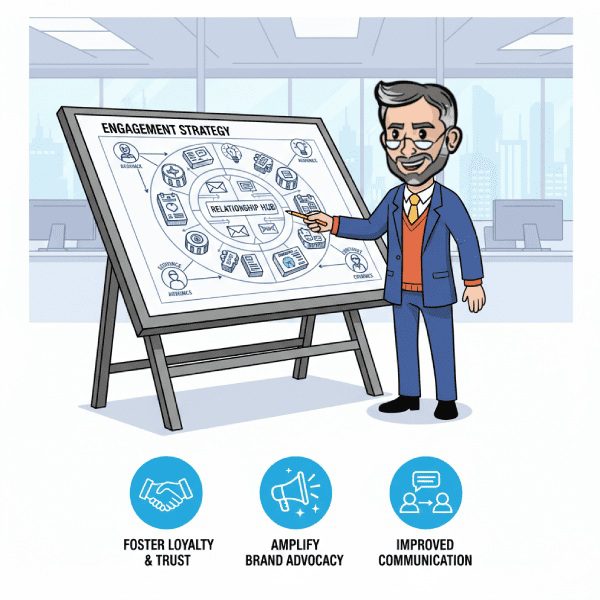
A forward-thinking CRO views customer success not just as a support function, but as a vital revenue-generating engine that drives recurring revenue and expands existing accounts. They ensure a smooth post-sale onboarding process, setting new customers up for success from day one. Proactive customer engagement strategies, designed to foster long-term loyalty and identify opportunities, are a key focus. The CRO leverages customer insights to provide invaluable feedback for product development, and identifies opportunities for cross-sell and upsell, strategically expanding the customer footprint. Their ultimate goal is to maximize customer lifetime value (CLTV) and minimize churn, recognizing that retaining and growing existing customers is often the most cost-effective path to predictable, sustainable revenue.
The Transformative Impact: Achieving Predictable Growth with a CRO
The implementation of a Chief Revenue Officer is not merely an organizational change; it is a strategic transformation that yields tangible, measurable outcomes, directly addressing the frustrations of a CEO struggling with stalled growth and disunity.
Enhanced Organizational Alignment and Collaboration
Perhaps the most immediate and profound impact is the breaking down of traditional departmental silos. A CRO fosters a unified revenue culture where sales, marketing, and customer success teams see themselves as parts of a single, cohesive unit, all working towards common revenue goals. This leads to dramatically improved communication, increased trust, and clear accountability across all revenue functions. The internal friction and “finger-pointing” that once plagued your organization are significantly reduced, freeing up immense energy that can now be redirected towards strategic initiatives and actual revenue generation. Imagine a scenario where your marketing team proactively calls sales to get feedback on lead quality for their next campaign, rather than waiting for a complaint. Or a sales team that champions customer success programs because they know it directly impacts their long-term commission from upsells. This level of intrinsic collaboration is the CRO’s hallmark.
Optimized Revenue Funnel and Customer Journey
With a CRO at the helm, your entire revenue funnel becomes a finely tuned machine. You will observe higher conversion rates at every single stage, from initial lead interest to a loyal, repeat customer. Sales cycle lengths are reduced, and pipeline velocity increases as bottlenecks are systematically identified and eliminated. The customer experience becomes seamless and consistent across all touchpoints, building trust and loyalty from the very first interaction through every subsequent engagement. This holistic optimization ensures that every dollar invested in your revenue-generating activities yields a higher return.
Data-Driven Insights and Strategic Foresight
One of the most powerful outcomes of having a CRO is access to unified, comprehensive data. This enables truly accurate revenue forecasting and far more precise strategic planning. No longer are you guessing about future performance; you have reliable insights into pipeline health, customer churn risks, and expansion opportunities. This enhanced data clarity gives you the ability to quickly identify and capitalize on new market opportunities and, critically, to proactively identify and mitigate potential revenue risks before they escalate into crises. For example, a CRO might identify a consistent drop-off at a specific stage in the sales funnel across different product lines, allowing for a targeted intervention in training or content, rather than blindly increasing lead volume.
Increased Revenue Predictability and Sustainable Growth
Ultimately, the CRO shifts your organization from reactive sales cycles to a proactive, integrated revenue generation machine. By establishing repeatable and scalable revenue processes, they drive consistent, predictable results quarter after quarter. This predictability is invaluable for budgeting, investor relations, and long-term strategic planning. You will see clear, measurable ROI on your sales, marketing, and RevOps investments, as the CRO ensures every expenditure is tied directly to a revenue outcome.
Illustrative Examples of CRO Impact
- Example 1 (SaaS Company): A mid-sized SaaS company was struggling with a high customer acquisition cost (CAC) and inconsistent new logo acquisition. Their sales and marketing teams rarely collaborated, and customer success was viewed purely as a cost center. After hiring a CRO, the organization implemented a unified lead scoring model, shared accountability for customer onboarding metrics, and integrated their CRM with marketing automation. Within 18 months, their CAC dropped by 20%, sales cycle length decreased by 15%, and, critically, their customer lifetime value (CLTV) increased by 30% due to reduced churn and increased upsell revenue driven by customer success efforts.
- Example 2 (Manufacturing B2B): A traditional B2B manufacturing firm found its growth stagnating despite strong product quality, primarily due to misaligned KPIs between their legacy sales team and a newly established digital marketing department. The CRO immediately implemented a revenue operations leadership function, centralizing data and establishing cross-functional dashboards. By identifying that marketing was generating leads for product lines that sales were not incentivized to sell, the CRO realigned compensation plans and created a joint sales-marketing content calendar. This led to a 25% increase in pipeline velocity and a 10% improvement in lead-to-opportunity conversion within a year, unlocking previously untapped revenue streams.
Implementing a Chief Revenue Officer: What CEOs Need to Know
The decision to bring on a Chief Revenue Officer is a strategic one that requires careful consideration and a clear understanding of its implications.
When to Hire a CRO: Identifying the Tipping Point
The timing for hiring a CRO is often dictated by clear indicators that your current revenue structure is insufficient for your growth ambitions. If your growth has stalled, if there is pervasive departmental friction between sales, marketing, and customer success, if you lack a coherent, unified revenue strategy, or if your customer journey is demonstrably inefficient and inconsistent, these are strong signals. Consider your company’s size; while critical for larger enterprises, even fast-growing mid-sized companies can benefit immensely. Your current growth stage—moving from early-stage product-market fit to scaling—and the complexity of your market also play significant roles. A CRO becomes indispensable when ad-hoc solutions no longer suffice and you need systematic, predictable revenue generation.
Building the Ideal CRO Profile: Essential Skills and Experience
Identifying the right CRO means looking beyond a stellar sales record or marketing savvy. The ideal CRO possesses proven strategic leadership and P&L management experience across multiple revenue functions. They need a deep understanding of sales methodologies, modern marketing principles, and, crucially, expertise in revenue operations leadership. This individual must be exceptionally analytical, capable of interpreting complex data sets and translating them into actionable insights.
Professor’s Note
Outstanding communication skills are vital, as they will need to articulate a unified vision and rally diverse teams. Strong change management skills are also critical, as the CRO role inherently involves transforming existing structures and mindsets. Look for a track record of successful C-suite revenue strategy implementation, demonstrating their ability to drive quantifiable, predictable growth.
Integrating the CRO into Your Existing C-suite
Integrating a CRO effectively into your existing leadership team requires intentionality. Their reporting structure is typically directly to the CEO, underscoring their cross-functional mandate and direct accountability for top-line growth. It is essential to foster collaborative relationships with other executive leaders—the CFO will appreciate improved revenue predictability, the COO will benefit from streamlined processes, and the CTO will find a strategic partner in aligning technology to revenue goals. Defining initial priorities, clear objectives, and measurable success metrics for the new CRO role is paramount. This ensures clarity of purpose and allows the CRO to demonstrate early wins that build organizational buy-in.
Navigating Potential Challenges and Ensuring Success
Bringing in a CRO can be transformative, but it is not without its challenges. CEOs must be prepared to address potential resistance from existing sales and marketing leadership who may feel their turf is being encroached upon. This requires transparent communication and a clear articulation of the CRO’s unifying role, emphasizing that the goal is collective success, not departmental replacement. Overcoming technical hurdles such as disparate data silos and legacy systems, and managing the overall technological integration, will also be critical.
Perhaps the most significant challenge lies in managing organizational change and fostering a new, unified revenue culture. This requires patience, consistent communication, and leading by example. The critical role of unwavering CEO sponsorship and a clear mandate for the CRO cannot be overstated. Without your explicit support and empowerment, the CRO’s efforts to break down silos and integrate functions will be severely hampered. Your leadership is the bedrock upon which the CRO’s success will be built, ensuring a smooth transition and rapid acceleration towards predictable revenue.
The Future of Revenue Leadership: A C-Suite Revenue Strategy for Enduring Success
In an increasingly competitive and dynamic market, the Chief Revenue Officer stands as the architect of long-term revenue resilience and sustainable competitive advantage. This role transcends mere growth, focusing on the intricate dance between maximizing profitability, achieving operational efficiency, and maximizing customer lifetime value. The CRO’s work is never truly done; they champion continuous optimization, adapting the revenue engine to market shifts, technological advancements, and evolving customer expectations.
The CRO is, and will increasingly be, an indispensable strategic partner to the CEO. They provide the holistic vision and operational acumen required to navigate complex market landscapes, ensuring not just a growth trajectory, but a predictable one. This strategic imperative makes The Chief Revenue Officer Role: Unifying Sales & Marketing for Predictable Growth, the cornerstone of predictable, sustainable growth in the modern enterprise. As CEOs seek to unify their fragmented growth efforts and transform stalled momentum into dynamic, scalable expansion, the CRO emerges not as a luxury, but as a fundamental necessity.
Considering a CRO for your growth ambitions? Learn how to integrate this role for maximum impact. Talk to our revenue strategy experts.