Table of contents
Introduction: Why Your Value Proposition Matters More in 2026
What is a Value Proposition (and What it’s Not)?
Before You Write: Clarify Your Ideal Customers and Their Jobs
Uncover Customer Pains and Gains with a Value Proposition Canvas
Map Your Product or Service to Jobs, Pains, and Gains
Define Your Differentiation and Unique Selling Proposition
Turn Insights into a Clear Value Proposition Statement
Make Your Value Proposition Specific, Measurable, and Believable
Adapt Your Value Proposition for Different Segments and Channels
Test, Validate, and Refine Your Value Proposition with Real Data
Common Mistakes When Creating a Value Proposition (and How to Avoid Them)
Examples of Strong, Modern Value Propositions (and Why They Work)
How to Keep Your Value Proposition Evolving with Your Customers
Frequently Asked Questions About Creating a Value Proposition
From Theory to Practice: Next Steps to Create Your Own Value Proposition
Introduction: Why Your Value Proposition Matters More in 2026
Imagine a SaaS startup with a genuinely useful product. The tool saves teams hours every week, customers love it, and retention is strong. But the homepage reads: “An innovative platform for modern teams.” Visitors land, squint, and bounce. Leads dry up, not because of the product, but because no one can figure out what it actually does, who it helps, or why they should care.
To create a value proposition, define your ideal customer and the job they need done, uncover their pains and gains with a value proposition canvas, map your product’s features to those needs, identify what makes your offer different, and turn that into a clear statement you can test and refine with real customer data. A value proposition explains why customers choose your product over every alternative, including doing nothing. In 2026, that clarity shapes both conversion and visibility: buyers make fast decisions based on messaging, and Google’s AI Overviews and competitive search results reward specific, believable claims while vague copy gets skimmed, ignored, and beaten by sharper alternatives.
Founders, marketers, product teams, and sales professionals will find a practical Value Proposition Design process here for researching customer needs, shaping messaging that fits, testing it with evidence, and adapting it for websites, sales decks, and social media. The guide walks through customer jobs, pains, and gains, feature-to-need mapping, differentiation and unique selling points, common mistakes to avoid, examples from B2B SaaS, ecommerce, and local services like locksmiths and accounting firms, and how to keep your proposition accurate as your market changes.
What is a Value Proposition (and What it’s Not)?
A value proposition is a concise statement that explains who your ideal customer is, what job you help them do, what pains you remove and customer gains you create, and why your product or service is the best option right now. It communicates the unique benefits a company offers customers in language they actually understand.
It’s not a tagline like “Just do it.” It’s not a mission statement like “We exist to empower teams.” And it’s not a generic slogan. Those tools serve branding. A value proposition is more concrete, used internally to guide messaging and externally on key touchpoints where people decide whether to stay or leave.

Professor’s Note
A value proposition is the complete promise of value. A unique selling proposition is the sharpest differentiator within that promise.
Differentiation can be achieved through unique selling propositions, but the value proposition wraps that USP in context: who it’s for, what problem it solves, and what proof backs it up. A strong value proposition clarifies unique benefits to customers, not just what makes you different but why that difference matters. Value propositions must be concise and easily understood by customers, and they should clearly outline those unique benefits.
For example, an AI bookkeeping tool for small UK agencies might say: “For UK creative agencies billing £50K–500K/month, AutoBooks closes your month-end in 2 hours instead of 2 days, with built-in HMRC compliance so you never miss a filing deadline.” That’s specific, it names the audience, the pain, the gain, and the differentiator.
Before You Write: Clarify Your Ideal Customers and Their Jobs
Every effective value proposition starts with a clear decision about who it’s for. Customer research is essential for crafting a value proposition that resonates, and it begins by picking one primary segment rather than “anyone who needs our product.”
Define your target customers using concrete details, similar to how you would define ideal customer profiles in account-based marketing (ABM) for complex B2B deals:
- Demographics or firmographics: industry, company size, revenue band, location, team structure
- Behavior: how they currently solve the problem, what tools they use, buying behaviors, and how they evaluate alternatives
- Context: what’s changing in their world that makes the status quo painful right now
This is where customer jobs from Jobs-to-Be-Done theory become useful. Every customer hires a product or service to get a job done, and those jobs have three layers:
| Job type | Example |
|---|---|
| Functional | “Close enterprise deals faster without adding headcount” |
| Emotional | “Feel in control of my pipeline, not overwhelmed” |
| Social | “Look competent to my board when presenting forecasts” |
| Customer centric value propositions resonate more with target audiences because they mirror the exact words and priorities that real people express and reflect the customer value that segment actually cares about. Value propositions help align consumers with a business’s offerings when those offerings clearly map to jobs that matter. |
Consider building 2–3 short personas to anchor your language. A growth-focused marketing director at a €20M DTC brand in Berlin has different customer needs than a solo consultant in New York juggling 10 clients. Name them, note their customer jobs, and reference them when you draft messaging later.
Uncover Customer Pains and Gains with a Value Proposition Canvas
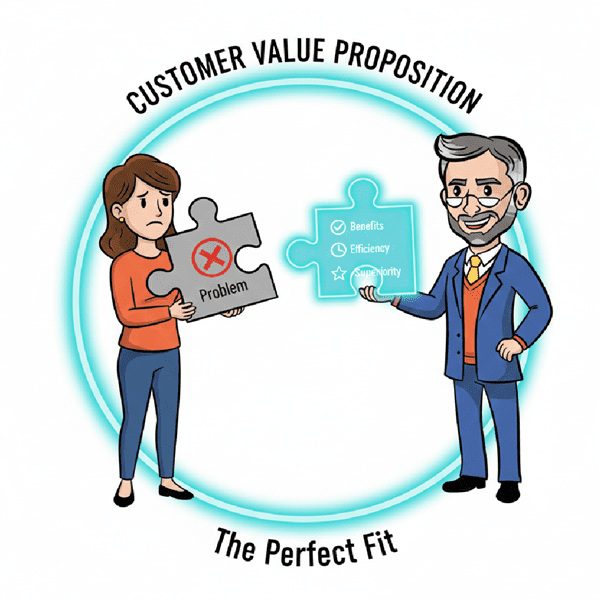
The value proposition canvas is a practical visual tool with two sides. On the right, the customer profile maps jobs, pains, and gains. On the left, the value map lists your products or services, pain relievers, and gain creators. A compelling value proposition includes all three dimensions: customer jobs, pains, and gains.
Customer pains are the frustrations, risks, and obstacles your target audience deals with. These aren’t abstract; they’re specific challenges like:
- Wasting 6 hours per week on manual reporting that nobody reads
- Fear of making compliance mistakes that trigger fines
- Budget pressure from leadership demanding “more with less”
- Poor support from current vendors who take 48 hours to respond
Customer gains are the positive outcomes and desires your customers want. Again, be concrete:
- Cutting project turnaround from 5 days to 2 days
- Reducing error rates by 30% so the team stops firefighting
- Feeling confident walking into a client presentation
- Getting praised by a manager for hitting targets early
A compelling value proposition addresses customer pain points directly by connecting what you offer to those real frustrations. A strong value proposition addresses customer pain points directly, not vaguely.
To populate the proposition canvas with real language, conduct customer interviews. Run 5–10 quick conversations via Zoom or async video tools like Loom, asking open-ended questions: “What’s the most frustrating part of your current process?” and “What would a perfect outcome look like?” Use the Value Proposition Canvas to structure testing of your assumptions. Testing should include customer jobs, pains, and gains validation against what customers actually say in their own words.
Map Your Product or Service to Jobs, Pains, and Gains
Once the customer side of the value proposition canvas is clear, flip to the value map. List each product or service feature and connect it to a specific pain it relieves or a gain it creates.
The key discipline here is ruthlessness. Ignore nice-to-have features that don’t connect to top-ranked pains or customer jobs. An effective value proposition prioritizes alignment over completeness so you create compelling messaging by linking features to outcomes. Value propositions should clearly articulate unique benefits to customers, not everything you’ve ever built.
Here’s how mapping looks in practice:
| Feature | Pain it relieves | Gain it creates |
|---|---|---|
| 24/7 emergency support line | “Anxious about system downtime at night” | Peace of mind; reduced revenue loss |
| Automated bank reconciliation | “Manual data entry eats 10 hours/month” | Close books by the 3rd of every month |
| Built-in compliance templates | “Terrified of regulatory fines” | Confidence that filings are correct |
| Use this framing for every core feature: “Because we do X, customers can now do Y instead of Z.” This language pattern ensures every part of your company’s product or service offers links to a clear customer outcome. |
Your internal value map document should list, for each feature or service line: the feature name, the customer pain or job it maps to, the measurable gain it creates, and the functional benefits it delivers. Keep it simple, one page maximum.
Define Your Differentiation and Unique Selling Proposition
Effective value propositions differentiate from competitors’ offerings. Without differentiation, you’re just another option in a crowded market. Effective positioning highlights what sets your brand apart from competitors, and it starts with competitive analysis.
Pull up 3–5 direct competitors’ websites and copy their current value propositions into a doc. Highlight what sounds identical across all of them. You’ll typically see the same adjectives: “fast,” “secure,” “scalable,” “AI-powered.” These are table stakes, not differentiators.
Now look for white space: benefits your potential customers care about that competitors barely mention. Analyzing competitors helps identify gaps in the market for differentiation. Common white-space areas include:
- Transparent, competitive pricing with no hidden fees
- Deep local expertise or industry-specific compliance
- Hands-on implementation support rather than “self-serve docs”
- A specific guarantee tied to measurable outcomes
Frame your unique selling proposition from that white space. For example: “The only CRM built specifically for UK law firms with built-in SRA compliance checks.” Positioning defines how a brand is perceived relative to competitors, and effective positioning highlights unique features and benefits that your audience can’t easily find elsewhere.
Professor’s Note
Use “only” or “first” claims sparingly, and only when you can substantiate them with awards, dates, third-party certifications, or published benchmarks.
To sharpen your competitive edge, answer these questions with your team: What do we do better? What do we refuse to compromise on? What can we credibly guarantee by date or metric?
Turn Insights into a Clear Value Proposition Statement
Now it’s time to turn research into a polished draft. Here’s a practical template:
“For [ideal customer] who struggle with [key pain], [product or service] is a [category] that helps them [primary job or gain] by [core mechanism], unlike [main alternative].”
Let’s walk through a worked example. Say you’re building an AI-assisted marketing analytics platform targeting ecommerce brands in 2026:
“For ecommerce marketing teams spending 6+ hours per week on reporting, Insightful is an AI analytics platform that cuts reporting time to 30 minutes per week and surfaces the three actions most likely to increase ROAS, unlike generic dashboards that show data without telling you what to do next.”
Value propositions clarify why customers should choose your product, and this example does it by naming the audience, quantifying the pain, stating the gain, and drawing a clear line against the alternative. The customer’s challenge is explicit, the customer’s life gets measurably better, and the differentiator is concrete.
When you create a value proposition, draft 3–5 alternatives. Each should emphasize a different angle: speed, cost savings, risk reduction, or an enjoyable alternative to the status quo. Then test them against real customer feedback.
A critical rule: use the exact words your customers used in interviews and surveys. If they said “I’m drowning in spreadsheets,” don’t rewrite it as “suboptimal data management workflows.” Their own words make your succinct value proposition feel like it was written for them because it was.
Make Your Value Proposition Specific, Measurable, and Believable
A good value proposition uses real numbers, timelines, or percentages. Vague claims like “save time and money” don’t cut it. Specific claims do:
- “Reduce abandoned carts by an average of 18% in 90 days”
- “Save finance teams 10 hours per month on manual reconciliations”
- “Cut cloud spend by 25–40% within the first quarter”
Back these claims with social proof: case studies with dates, testimonials from named customers, independent test results, or before-and-after metrics. One e-commerce retailer lifted conversion rates by 25% and revenue per user by 15% simply by presenting clear benefit statements early in the user journey. That’s the power of a great value proposition grounded in specifics.
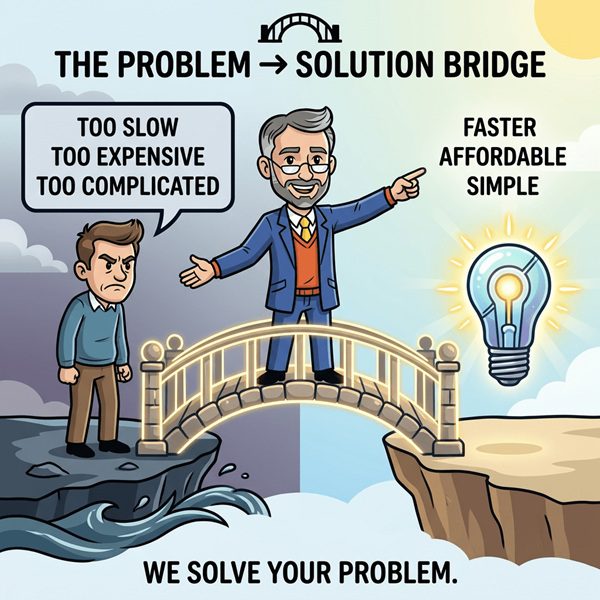
Testing and refining your value proposition is crucial for success, and credibility is a core part of what you’re testing. Here’s a quick framework:
- Do: Tie claims to a time window (“within 90 days”)
- Don’t: Promise instant transformation with no context
- Do: Use ranges and conditions (“for teams of 5–50 sales reps”)
- Don’t: Say “cut costs by 90% overnight,” which triggers skepticism
- Do: Reference a specific case or pilot (“2024–2025 pilot with 30 UK retailers”)
- Don’t: Make claims you can’t support if a prospect asks for proof
Ranges, timeframes, and conditions keep promises both attractive and honest. A powerful value proposition feels ambitious but real.
Adapt Your Value Proposition for Different Segments and Channels
While your core proposition stays consistent, you’ll need tailored versions for different customer segments and touchpoints. A startup founder and an enterprise CFO care about different things, even for the same product.
Here’s how one core idea adapts across three places:
| Channel | Version |
|---|---|
| Website hero | “Cut your weekly reporting from 6 hours to 30 minutes. AI analytics built for ecommerce teams.” |
| Sales deck opening slide | “We help ecommerce marketing teams reclaim 5+ hours per week by replacing manual reporting with AI-driven insight, with an average 18% lift in conversion within 90 days.” |
| LinkedIn company tagline | “AI analytics for ecommerce teams tired of drowning in dashboards.” |
| Each version echoes the same fundamental promise and proof points, but the length, emphasis, and tone shift to match the context. Your marketing and sales efforts should reinforce each other, not contradict. |
For B2B with a buying committee, adjust the angle by role: a CFO version highlights cost savings and ROI; a Head of Operations version emphasizes time saved and error reduction. The core proposition stays the same. Keep messaging aligned across ads, landing pages, onboarding emails, social media accounts, and in-app prompts. When your sales team says one thing and the homepage says another, trust erodes fast.
Test, Validate, and Refine Your Value Proposition with Real Data
A/B testing helps refine value propositions based on customer feedback, and in 2026 the tools to run these tests are more accessible than ever. Here are practical methods:
- A/B test homepage headlines: Run two versions of your hero text and measure which drives more demo sign-ups or trial activations
- Ad variations: Test 2–3 Google Ads or LinkedIn Ads with different value prop angles and compare click-through rates and cost per qualified lead
- Email subject lines: Send different versions to comparable segments and track open rates, reply rates, and conversions
Key metrics to watch go beyond clicks. Track demo or trial sign-up rates, time on page, activation and retention rates, and ultimately revenue. You’re looking for product market fit signals, not just ad clickbait.
Qualitative feedback is equally powerful. In onboarding calls, ask new customers: “What on our site or in our pitch caught your eye?” and “What almost stopped you from choosing us?” Feed those insights back into the proposition canvas. Conduct customer interviews regularly to validate value proposition assumptions.
Professor’s Note
Visitors typically take 10–20 seconds to decide whether to stay on a page. If your value prop isn’t crystal clear in that window, they’re gone.
Modern AI tools can help pre-screen phrasing or flag confusing claims with synthetic audiences, but they must complement, not replace, real customer conversations. Set a quarterly review cadence to revisit and fine tune your value proposition as markets and customer expectations shift.
Common Mistakes When Creating a Value Proposition (and How to Avoid Them)
Here are the errors that sink otherwise decent businesses:
Talking about features instead of benefits. Focusing on features instead of benefits is a common mistake. Instead of “AI-powered platform for modern teams,” say “Cut your weekly status meetings in half by automatically summarizing project updates.” Customers care about what changes in their life, not your tech stack.
Trying to appeal to everyone. Mixing customer segments dilutes value propositions. When you try to speak to startups, enterprises, and freelancers in one statement, no ideal customer strongly identifies with it. Pick a segment, write for them, and create variations for others.
Using vague adjectives without proof. Words like “innovative,” “world-class,” and “cutting-edge” say nothing without evidence. Replace them with specific, measurable claims.
Ignoring emotional drivers. Overlooking emotional drivers can make propositions feel flat. Customers buy for peace of mind, confidence, and relief from negative emotions, not just rational cost calculations. A customer centric value proposition speaks to both functional and emotional jobs.
Never validating with real people. 70% of SaaS companies don’t regularly talk to customers. Without customer feedback, you’re guessing. Even five conversations can reveal whether your messaging lands or falls flat.
Trying to address every pain and gain. Trying to address every pain and gain reduces effectiveness. Focus on the top 2–3 pains that matter most to your customer profile and build your proposition around those.
Examples of Strong, Modern Value Propositions (and Why They Work)
Studying real world examples and value proposition examples from recognizable brands reveals clear patterns. A strong value proposition enhances market positioning because it tells the right people exactly why this product is for them.
Slack positions itself around eliminating work chaos. Its core proposition promises to replace scattered emails and meetings with organized, searchable conversations. It works because the customer problem (fragmented communication) is universal, the gain (clarity and speed) is immediately felt, and the emotional payoff (less stress) is real.
Airbnb promises belonging and authentic local experiences rather than sterile hotel stays. The proposition speaks to a social job (feeling like a local, not a tourist) and an emotional gain (connection and adventure). Value propositions must address customer pain points directly, and Airbnb nails this by targeting the frustration of generic travel.
A 24/7 emergency locksmith in Manchester might use: “Locked out at 2 AM? We’re at your door in 20 minutes, guaranteed, with transparent pricing and no call-out surprises.” This is a great value proposition for a local business because it names the customer’s challenge (locked out, late at night), promises a specific response time, and removes the anxiety of hidden costs. The service uniquely addresses an urgent, emotional moment.
An AI-assisted cloud accounting firm might say: “For UK freelancers earning £30K–150K, CloudCount files your Self Assessment in under 10 minutes and guarantees HMRC accuracy or we pay the penalty.” This proposition design works because it quantifies the gain, names the audience, and includes a guarantee that shifts risk.
The patterns across these proposition examples are consistent: brevity, specificity, a sharp target audience, and alignment between what’s promised and what the product or service can realistically deliver.
How to Keep Your Value Proposition Evolving with Your Customers

Markets, regulations, and technologies shift constantly. What customers expect in mid-2026 differs from what they needed in 2024. AI automation, GDPR and CCPA updates, economic pressures, and new competitive entrants all change what your target audience sees as strategic value versus table stakes.
Set up systematic feedback loops:
- Quarterly customer interviews: 5–10 conversations per quarter focused on what’s changed in their world
- NPS follow-ups: Ask detractors and promoters alike what drove their score
- Support ticket reviews: Look for recurring complaints or requests that signal unmet customer needs
- Win/loss analysis: Ask prospects who chose a competitor why, and ask new customers what tipped the decision
Create a simple internal “proposition backlog” where your team logs new insights and hypotheses. Periodically test the most promising ones. If customer interviews reveal a new pain that didn’t exist six months ago, draft a variation and A/B test it.
Internal alignment matters too. Your sales team, marketing, product, and customer success teams should all be trained on the latest core proposition so every touchpoint reinforces the same promise. A deep understanding across departments prevents message drift and keeps customer experiences consistent.
Your own value proposition is a living asset, not a one-time copywriting task. It’s central to maintaining product market fit and customer loyalty. Treat it as part of your business strategy, not just your homepage.
Frequently Asked Questions About Creating a Value Proposition
How long should a value proposition be?
A succinct value proposition typically runs 1–3 sentences. It should be short enough to scan in under 10 seconds but detailed enough to communicate who it’s for, what problem it solves, and what makes it different. Think concise statement, not paragraph. Supporting copy on your landing page can expand on the details, but the core value prop needs to hit fast.
Can I have more than one value proposition?
Yes. Most businesses serve multiple customer segments with different needs. You’ll want one core proposition that captures your company offers at the highest level, plus tailored versions for each segment. What you want to avoid is cramming all segments into a single statement, which creates a generic mess nobody connects with.
How does a value proposition differ from a tagline or mission statement?
A tagline is a memorable brand phrase (“Think Different”). A mission statement describes your company’s purpose and values. Neither tells a potential customer what specific problem you solve, for whom, or why you’re the best choice. A value proposition does all three. It’s operational and customer-facing, not aspirational.
Do small local businesses really need a formal value proposition?
Absolutely. A local plumber, physiotherapist, or accounting firm competes for attention just like a SaaS company. When a homeowner searches “emergency plumber near me,” the business that clearly communicates its key benefits, such as response time, pricing transparency, and guarantee, wins the call. A good value proposition isn’t about being corporate; it’s about being clear. Your business model doesn’t change the need for clarity.
How often should we update our value proposition?
Review it quarterly. Markets shift, competitors adjust, and customer pains evolve. You don’t need to rewrite it every quarter, but you should pressure-test it against fresh customer feedback, new competitive entries, and changes in your own product or service. If your business growth has shifted your ideal customer or your product has added significant capabilities, it’s time to revisit.
What if our product serves very different customer segments?
Create separate value propositions for each segment. A project management tool might serve both creative agencies and construction firms. The customer pains, language, and buying behaviors are completely different. Use the value proposition canvas for each segment independently, then craft distinct messaging. Keep a shared company-level proposition as the umbrella, but let segment-specific versions do the heavy lifting on landing pages and in sales conversations.
How does the value proposition canvas compare with other frameworks?
The value proposition canvas focuses specifically on the fit between what you offer and what customers need. Other frameworks like the Business Model Canvas are broader, covering revenue streams, partnerships, and cost structure. Forrester’s B2B model adds buyer journey stages and pricing. The canvas is the most practical starting point for messaging because it forces you to get granular about customer jobs, pains, and gains before you write a single word.
From Theory to Practice: Next Steps to Create Your Own Value Proposition
Here’s the process distilled into concrete action steps:
- Define your ideal customer. Pick one primary segment. Describe them with enough specificity that you could find them at a conference.
- Map their jobs, pains, and gains. Run 5–10 customer interviews. Use the proposition canvas. Write down what they say in their own words.
- Connect your offer. List features that relieve the top pains and create the biggest gains. Drop everything that doesn’t connect.
- Conduct market research on competitors. Find the white space. Identify where your competitive edge lives.
- Draft 3–5 versions. Use the template. Emphasize different angles: speed, cost savings, risk reduction, emotional relief. Make each customer happy in a different way.
- Test and refine. A/B test your headlines. Ask new customers what landed. Set a quarterly review.
Schedule a 2-hour workshop this week with a small cross-functional team. Bring your customer interview notes, competitor screenshots, and a filled-in canvas. Walk out with a draft you can test on your homepage by Friday.
A compelling, customer centric value proposition is a practical growth tool for business growth, not an academic exercise. In a 2026 environment where attention is scarce and competition is global, it’s the single clearest lever you have for market positioning and revenue.
Start now. Pull up your current homepage or pitch deck. Read the hero text out loud. If it doesn’t pass the “so what?” test, you know what to do. Use the templates, the canvas, and the examples from this guide to rewrite it. Then test it, measure it, and keep improving. That habit of consistently testing and refining your proposition is one of the highest-leverage practices for achieving and maintaining product market fit over the long term.