
Table of Contents
The CEO’s Growth Dilemma: Beyond Disconnected Tactics
Introducing the Strategic ChatGPT Funnel: AI Optimization for Inbound Deals
Deconstructing the AI-Powered Inbound Funnel: How ChatGPT Drives Qualified Leads
Bridging the Divide: Achieving Sales and Marketing Alignment with AI
Building Your AI-Optimized Funnel: A Practical Implementation Framework
Measuring Impact and Maximizing ROI: A Strategic Approach to AI Growth
Navigating the Future: Sustaining AI-Driven Inbound Growth
Are you a CEO tired of isolated marketing tactics that fail to convert into predictable inbound deals, weary of the perpetual sales-marketing blame game? If your company’s growth has plateaued despite significant investment, you likely feel exhausted by the constant search for the next “silver bullet” technology. This article isn’t another promise of a magic solution. Instead, it unveils a strategic, integrated approach for leveraging ChatGPT as a strategic inbound deal generator in your sales funnel.

Professor’s Note
We will explore how this AI optimization for CEOs can transform disconnected marketing efforts into a consistent, reliable source of qualified inbound leads, ensuring ChatGPT becomes a true strategic asset.
The CEO’s Growth Dilemma: Beyond Disconnected Tactics
As a strategic advisor for revenue growth, I frequently encounter a common refrain from successful CEOs: “We are investing heavily, but growth feels stagnant. Our sales team points to marketing for unqualified leads, and marketing blames sales for not closing opportunities.” This sentiment is more than mere frustration; it represents a tangible barrier to scaling.
The Unspoken Frustration
You have likely poured significant resources into your sales and marketing departments, investing in new hires, ad campaigns, CRM systems, and content strategies. Yet, the growth trajectory you once enjoyed has hit a wall. There is a gnawing sense that these investments are not yielding the predictable, qualified inbound leads necessary for sustainable expansion. You have seen countless presentations on the “next big thing,” each promising revolutionary results, only to find them adding to a cacophony of disconnected tactics. This “silver bullet” fatigue makes you inherently skeptical of any new technology, especially one as buzzy as artificial intelligence. What you need is not another point solution, but a strategic advantage.
The Symptom of Disconnection
The core issue is not necessarily a lack of effort or talent; it is a profound lack of cohesion. Classic sales marketing alignment challenges manifest as finger-pointing, where misaligned goals and metrics create internal friction rather than unified progress. Marketing might generate high volumes of leads that sales deems irrelevant. Simultaneously, sales struggles to convert opportunities due to insufficient nurturing or context from marketing.
Your teams are likely drowning in disconnected data, operating in silos, and implementing a tactical overload of initiatives that do not communicate with each other. An expensive marketing automation platform might not be fully integrated with your CRM, leading to crucial insights lost in translation. What is missing is a cohesive, strategic funnel—a unified pipeline designed for predictable revenue, not just a series of isolated campaigns. This disconnection leads to unpredictable outcomes, wasted resources, and ultimately, stalled growth.
Introducing the Strategic ChatGPT Funnel: AI Optimization for Inbound Deals
The answer is not to work harder within the same broken framework, but to work smarter by fundamentally redefining your approach to inbound growth. This requires integrating powerful artificial intelligence where it can have the most strategic impact: within a structured sales funnel.
Redefining Inbound Growth
Traditional inbound lead generation, while valuable, often struggles with scalability, consistency, and true qualification. It relies heavily on manual processes, guesswork, and often, a reactive approach to market demand. The future of inbound growth lies in AI-optimized processes. Here, artificial intelligence proactively identifies, engages, qualifies, and nurtures prospects with unprecedented precision and efficiency. This approach is not about replacing human ingenuity, but amplifying it. It is about building a system that predictably delivers opportunities ready for your sales team to convert.
What is a “ChatGPT Funnel”?
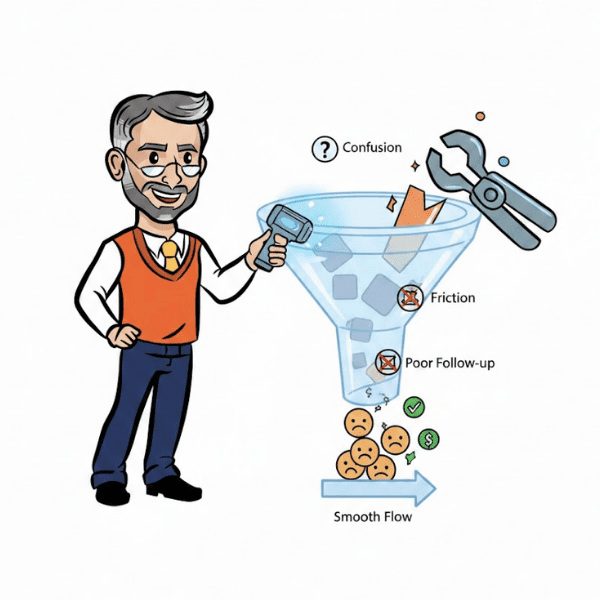
When discussing a “ChatGPT funnel,” the reference is not merely to slapping a chatbot on your website; that is a tactic, not a strategy. A true ChatGPT funnel is a comprehensive, integrated strategy. It leverages Large Language Models (LLMs) like ChatGPT across every stage of your sales funnel. This systemic approach is designed to automate, personalize, and optimize the journey from initial awareness to qualified opportunity. The singular focus is predictable, qualified inbound lead generation. This means moving beyond generic inquiries to delivering prospects who fit your Ideal Customer Profile (ICP), have demonstrated clear intent, and are genuinely ready for a sales conversation. Consider it an intelligent nervous system connecting every part of your inbound machine, ensuring each touchpoint is optimized for conversion.
The Strategic Imperative: Why AI Optimization is No Longer Optional for Revenue Growth
Your skepticism towards new “silver bullet” technologies is well-founded. Many tools promise much and deliver little. This is where the distinction lies: ChatGPT, when applied strategically, is not a disconnected tool. It is a core integration that solves the pervasive problem of fragmented efforts, serving as the connective tissue that bridges your marketing efforts to your sales outcomes.
The core promise of an AI-optimized ChatGPT funnel is profound: it transforms fragmented, inconsistent marketing and sales activities into a consistent, predictable source of qualified inbound leads. This is not about replacing your team, but equipping them with an unparalleled competitive advantage. In a market where every competitive edge counts, true AI optimization for revenue growth is no longer optional; it is a strategic imperative for any CEO seeking to break through growth plateaus and achieve sustainable, predictable expansion.
Deconstructing the AI-Powered Inbound Funnel: How ChatGPT Drives Qualified Leads
Let us dissect how ChatGPT, intelligently integrated, can revolutionize each stage of your sales funnel. This ensures every step funnels genuinely qualified leads towards your sales team. This framework is about establishing robust methods for how to get inbound leads from ChatGPT that yield tangible results.
Awareness & Discovery: AI-Powered Content Creation and SEO
The top of your funnel is where prospects discover you. ChatGPT can dramatically amplify your reach and relevance.
AI for Hyper-Targeted Topic Ideation and Keyword Strategy
Instead of relying on guesswork or limited keyword research tools, ChatGPT can analyze vast amounts of data. This allows it to identify high-intent search queries, emerging market gaps, and competitor content weaknesses. It helps uncover the precise pain points and questions your Ideal Customer Profile (ICP) is asking online, enabling content creation that directly addresses their needs. Furthermore, ChatGPT can generate comprehensive content outlines, ensuring your articles, whitepapers, and web pages are structured for maximum SEO visibility and reader engagement. This extends beyond simple keywords; it encompasses semantic understanding and user intent.
Scaling Content Production with ChatGPT
One of the biggest bottlenecks for inbound lead generation is content creation. ChatGPT can be an invaluable co-pilot, helping you scale your output without sacrificing quality or brand voice. It assists in developing SEO-optimized blog posts, detailed articles, and authoritative whitepapers, drafting initial versions that your human experts then refine.
Professor’s Note
Beyond long-form content, ChatGPT excels at crafting compelling landing page copy and conversion-focused website content, ensuring your digital storefront effectively captures visitor interest.
Crucially, by leveraging prompt engineering techniques, you can guide the AI to maintain a consistent brand voice, tone, and messaging across all your content assets, reinforcing your authority and trustworthiness.
Enhancing Social Media & Ad Creative
Awareness is not solely about organic search. ChatGPT can rapidly generate engaging social posts tailored for different platforms, along with captivating ad headlines and persuasive ad descriptions. This capability allows your marketing team to iterate faster, test more variations, and optimize campaigns for higher click-through rates. Imagine running A/B tests on dozens of ad copy variations within hours, a task that would take days or weeks manually.
Interest & Engagement: AI-Driven Interaction and Nurturing
Once prospects discover you, the next step is to nurture their interest and gather more information. This is where AI excels at intelligent, scalable interaction.
Intelligent Chatbots for Initial Lead Qualification
The days of generic chatbots are over. An AI-powered chatbot, deeply integrated into your website and CRM, can automate initial conversations, acting as a sophisticated digital receptionist. It gathers essential prospect information, answers FAQs, and directs users to relevant resources. More importantly, it pre-qualifies leads based on predefined criteria—such as company size, industry, or specific pain points—significantly reducing the volume of unqualified traffic reaching your sales team. This ensures your sales development representatives (SDRs) spend their valuable time on prospects who genuinely fit your ICP and demonstrate buying intent. This represents a critical component of how to get inbound leads from ChatGPT that are truly sales-ready.
Personalized Content Delivery & Recommendations
As prospects engage, their interests become clearer. AI can dynamically serve relevant content, recommending articles, case studies, videos, or product pages based on their browsing behavior, previous interactions, and expressed needs. This hyper-personalization guides prospects naturally through the funnel. It ensures they receive the most impactful information at the right moment, keeping them engaged and moving towards a deeper understanding of your value.
AI-Assisted Email Nurturing Sequences
Email nurturing remains a powerful tool, yet generic sequences often fall flat. ChatGPT can craft personalized, high-conversion email drip campaigns tailored to specific segments or individual prospect behaviors. It optimizes subject lines for improved open rates and calls-to-action for higher click-through rates, learning from past performance to continually refine its approach. This ensures your nurturing efforts resonate deeply, building trust and moving prospects closer to conversion.

Desire & Consideration: AI for Deep Lead Qualification and Value Proposition Refinement
As prospects move down the funnel, their desire for a solution intensifies. This is where AI moves beyond basic qualification to deep intent analysis and customization.
Advanced Lead Scoring and Prioritization with AI
Traditional lead scoring often relies on simple demographic data. AI takes this to the next level by analyzing complex behavioral patterns, intent signals (such as website pages visited, whitepapers downloaded, or questions asked in chatbots), and engagement levels across all touchpoints. This allows you to pinpoint the highest-value leads with unparalleled accuracy, ensuring your sales team focuses efforts on those most likely to convert. This maximizes their efficiency and closing rates.
AI-Powered Sales Collateral Customization
Generic sales proposals and presentations rarely hit the mark. ChatGPT assists sales teams by rapidly tailoring proposals, presentations, and case studies to specific prospect needs and expressed pain points. By analyzing discovery call transcripts or prospect data, it can help generate personalized value propositions that resonate directly with their unique challenges, making your offering feel indispensable.
Validating Potential: HubSpot’s Perspective on AI Lead Quality
This is not just theoretical. Leading industry voices are validating the power of AI in lead generation. For example, HubSpot’s research on the use of AI in sales and marketing workflows has highlighted significant improvements in lead quality and conversion rates. Their findings suggest that when AI is leveraged strategically, especially in qualification and nurturing, companies see a demonstrable increase in the percentage of Marketing Qualified Leads (MQLs) that convert into Sales Qualified Leads (SQLs) and ultimately, customers. This is not about generating more leads; it is about generating better leads. This evidence from a respected authority like HubSpot underscores that AI, when implemented thoughtfully, can fundamentally enhance the efficiency and effectiveness of your lead generation efforts, directly impacting your bottom line.
Action & Conversion: Streamlining the Handoff to Sales
The moment of truth: handing off a qualified lead to your sales team. AI ensures this transition is seamless and intelligent, empowering your sales professionals for success.
Automated Meeting Scheduling and Follow-up Reminders
AI-powered scheduling tools can eliminate the frustrating back-and-forth of setting up meetings. Seamlessly integrated with calendars and CRM systems, these tools allow qualified prospects to book appointments directly. This reduces friction and ensures prompt follow-up. AI can also trigger automated reminders, reducing no-show rates.
AI-Powered Sales Handoff Briefs
One of the biggest causes of sales-marketing friction is a poor lead handoff. ChatGPT can generate comprehensive, pre-qualified lead context and conversation histories for your sales team. This brief includes everything from initial questions asked by the prospect in the chatbot, to content they engaged with, specific pain points identified, and their lead score. This ensures a smooth transition, equipping sales with actionable insights and allowing them to personalize their approach from the very first touchpoint. This significantly improves their chances of closing the deal.
Continuous Funnel Optimization
The AI-powered ChatGPT funnel is not static. ChatGPT, combined with analytical tools, constantly identifies and eliminates conversion bottlenecks by analyzing performance data across every stage. It can suggest A/B test variations, pinpoint underperforming content, or identify points where prospects drop off, enabling continuous, data-driven improvement.
Bridging the Divide: Achieving Sales and Marketing Alignment with AI
Internal finger-pointing between sales and marketing is a chronic ailment for many organizations, often leading to wasted resources and stunted growth. It stems from historical silos, miscommunication, and frequently, conflicting KPIs that hinder shared success. Marketing measures MQLs; sales measures closed deals. This disconnect often feels insurmountable.
The Root Cause of Sales Marketing Alignment Challenges
At its core, the misalignment stems from disparate processes and definitions. Marketing generates leads based on one set of criteria, while sales often finds those leads do not meet their definition of a qualified prospect. Data is not shared seamlessly, feedback loops are broken, and each team operates with a different understanding of the customer journey. This leads to inefficient handoffs, wasted follow-up efforts, and a lack of accountability for the collective revenue goal. The solution is not just better communication; it is a shared platform and process.
How ChatGPT Becomes the Unifying Force
This is where the ChatGPT funnel truly shines, directly addressing sales marketing alignment challenges by providing a common language and operational backbone.
Shared Language and Consistent Messaging
From the first impression of an AI-generated blog post to the tailored sales proposal, AI ensures a unified voice and consistent messaging throughout the entire customer journey. This eliminates conflicting narratives that confuse prospects and ensures both teams convey the same value proposition. When the AI-powered chatbot qualifies a lead, the language it uses remains consistent with marketing materials and the sales team’s pitch—all driven by a central, AI-managed content repository.
Automated Information Flow
One of AI’s greatest strengths is its ability to process and transfer information seamlessly. By integrating ChatGPT with your CRM and marketing automation platforms, manual data entry and misinterpretations are drastically reduced. Lead context, engagement history, and qualification scores are automatically updated and accessible to both sales and marketing in real-time. This eliminates common complaints, such as ‘marketing sent us junk leads’ or ‘sales did not follow up properly,’ by providing an undeniable, shared source of truth.
Unified Lead Definition and Qualification
Perhaps the most critical alignment factor is a shared understanding of what constitutes a ‘qualified lead.’ AI-driven qualification criteria, collaboratively defined by both sales and marketing leadership, ensures that both teams agree on the parameters for a sales-ready prospect. The AI-powered chatbot and lead scoring models enforce these criteria consistently, guaranteeing that only truly qualified leads are passed to sales. This builds trust and efficiency.
Real-time Feedback Loops
With AI automating data collection and analysis, marketing gains instant insights from sales outcomes. If leads from a particular campaign are not converting, the AI can flag it immediately, allowing marketing to rapidly optimize their AI-driven content generation or nurturing sequences. Conversely, sales can provide structured feedback directly into the AI system regarding lead quality, which the AI can then use to refine its lead qualification processes. This creates a virtuous cycle of continuous improvement, fostering a culture of collaborative growth. The result is data-driven insights, not delayed, anecdotal feedback.
Fostering a Culture of Collaborative Growth
By automating points of friction and providing shared visibility and unified objectives, ChatGPT moves your teams beyond internal blame. It fosters a shared commitment to revenue generation. Sales and marketing are no longer two separate entities but a single, highly efficient revenue operations engine, focused on the common goal of predictable growth. This collaboration, powered by AI, unlocks new levels of efficiency and effectiveness, ensuring every effort contributes directly to the bottom line.
Building Your AI-Optimized Funnel: A Practical Implementation Framework
Implementing a strategic ChatGPT funnel is not a flip of a switch; it is a phased approach that requires planning, precise execution, and continuous refinement. This actionable framework will guide you.
Phase 1: Strategic Assessment and Goal Definition
Before deploying any AI, you must first understand your current state and desired future.
Audit Your Existing Funnel
Begin by conducting a thorough audit of your current sales and marketing funnel. Identify bottlenecks, manual inefficiencies, data silos, and points of friction between your teams. Pinpoint where leads are falling out or where you are spending excessive human capital on repetitive tasks. This assessment will reveal prime opportunities for AI intervention and maximize your return on effort.
Define Your AI-Optimized Ideal Customer Profile (ICP)
Precision targeting is paramount. While you likely have an existing Ideal Customer Profile (ICP), leverage AI to refine it further. Use LLMs to analyze existing customer data, market trends, and competitive intelligence to create a hyper-specific, nuanced understanding of your ideal customer’s pain points, language, and online behavior. This ensures your AI-generated content and qualification criteria are precisely aligned with who you aim to attract.
Setting SMART AI Optimization Goals
Do not implement AI for AI’s sake. Instead, set Specific, Measurable, Achievable, Relevant, and Time-bound (SMART) objectives for your AI integration.
Professor’s Note
For example: ‘Increase MQL-to-SQL conversion rate by 20% within six months using AI-powered lead qualification,’ or ‘Reduce Customer Acquisition Cost (CAC) by 15% within 12 months by optimizing top-of-funnel content with AI.’ These quantifiable goals will serve as your north star.
Phase 2: Technology Integration and Prompt Engineering Mastery
Once your strategy is clear, it is time for the technical build-out.
Choosing the Right AI Tools and Platforms
ChatGPT is powerful, but it is part of a larger ecosystem. You will need to choose the right supplementary AI tools and platforms that integrate seamlessly with your existing CRM (such as Salesforce or HubSpot), marketing automation system, and analytics platforms. Consider specialized LLM APIs for specific tasks, AI-powered writing assistants for content creation beyond ChatGPT, and robust data visualization tools to track performance. The goal is an integrated tech stack, not a collection of disparate applications.
Mastering Prompt Engineering for Inbound Success
The quality of AI output is directly proportional to the quality of your input. Mastering prompt engineering is non-negotiable for inbound success. This involves techniques for crafting effective prompts for:
- Content Generation: Guiding the AI to produce SEO-optimized articles, persuasive landing page copy, and engaging social media updates in your brand voice.
- Lead Qualification: Training the chatbot with specific questions, decision trees, and criteria to accurately qualify prospects.
- Customer Interaction: Designing prompts for personalized email nurturing sequences and dynamic content recommendations. Iterative prompt refinement is crucial. Start with basic prompts, analyze the output, and continuously refine your instructions to achieve desired outcomes and quality. This ensures the AI consistently delivers results that meet your strategic goals.
Addressing Data Security and Privacy in AI Implementation
As you leverage LLMs and other AI tools, data security and privacy must be paramount. Understand how your chosen AI platforms handle sensitive customer information. Implement strict data governance policies, anonymize data where possible, and ensure compliance with relevant privacy regulations (such as GDPR or CCPA). Building trust with your prospects and customers by protecting their data is as important as generating leads.
Phase 3: Iteration, Measurement, and Continuous Optimization
The AI-optimized funnel is an evolving system, not a static deployment.
Launching Pilot Programs and A/B Testing
Do not overhaul your entire funnel at once. Implement AI interventions in controlled pilot programs. For example, start by using ChatGPT for blog topic ideation and outline generation for a specific content cluster. Alternatively, deploy an AI-powered chatbot for initial qualification on a single landing page. Conduct rigorous A/B testing to validate the impact of each AI intervention, comparing performance against your traditional methods. This allows for data-driven adjustments before scaling.
Key Performance Indicators (KPIs) for Your ChatGPT Funnel
Beyond vanity metrics, focus on tangible business results. Track Key Performance Indicators (KPIs) that directly relate to your SMART goals:
- Lead Volume and Quality: Not just quantity, but the percentage that are truly qualified.
- MQL-to-SQL Conversion Rate: The efficiency of your lead qualification.
- Opportunity-to-Win Rate: The effectiveness of sales closing AI-qualified leads.
- Customer Acquisition Cost (CAC): How efficiently new customers are acquired.
- Sales Cycle Length: How quickly prospects move from awareness to closed deal.
- Content Engagement Metrics: Time on page, bounce rate, and conversion from AI-generated content.
Continuous Learning and Adaptation
The AI landscape is rapidly evolving. Fine-tuning AI models and strategies based on real-world performance data is essential. This includes:
- AI-driven Conversion Rate Optimization (CRO) strategies: Using AI to analyze user behavior on your site and suggest improvements to funnel paths, calls-to-action, and content placement.
- Regularly updating your prompt library for ChatGPT based on new insights and performance.
- Staying abreast of new LLM advancements and considering how they can further enhance your funnel.
Measuring Impact and Maximizing ROI: A Strategic Approach to AI Growth
For any CEO, the bottom line is paramount. This is not just about efficiency; it is about quantifiable revenue growth. The strategic integration of ChatGPT can deliver significant, measurable ROI.
Quantifying the Benefits: Beyond Qualitative Improvements
When implemented thoughtfully, a ChatGPT funnel yields clear improvements that directly impact your financial performance.
Reduced Customer Acquisition Cost (CAC)
By automating lead qualification, personalizing content at scale, and focusing sales efforts on truly qualified prospects, you drastically reduce the human effort and marketing spend required to acquire each new customer. AI streamlines processes, eliminates waste, and improves efficiency across the entire customer journey, thereby driving down your CAC.
Increased Lead-to-Opportunity and Opportunity-to-Win Conversion Rates
The power of pre-qualification and intelligent nurturing cannot be overstated. When your sales team receives leads that are truly ‘sales-ready’—warm, engaged, and fitting your ICP—their conversion rates from lead to opportunity, and then from opportunity to win, dramatically increase. This translates to higher closing rates and more efficient use of valuable sales time.
Accelerated Sales Cycle
Intelligent lead nurturing, personalized content delivery, and seamless sales handoffs mean prospects move through your funnel faster. AI helps guide them through their decision-making process more efficiently, leading to a shorter sales cycle and quicker revenue recognition.
Improved Sales Team Efficiency
Your sales professionals are freed from chasing unqualified leads and performing repetitive administrative tasks. They are empowered with comprehensive, AI-generated lead briefs and can focus their energy on high-value conversations, strategic selling, and closing deals. This translates into higher sales productivity and morale.
Direct Impact on Revenue Growth
Ultimately, all these benefits—lower CAC, higher conversion rates, faster sales cycles, and more efficient sales teams—converge to have a direct, measurable impact on your top-line revenue growth. The ChatGPT funnel transforms disconnected efforts into a predictable revenue engine.
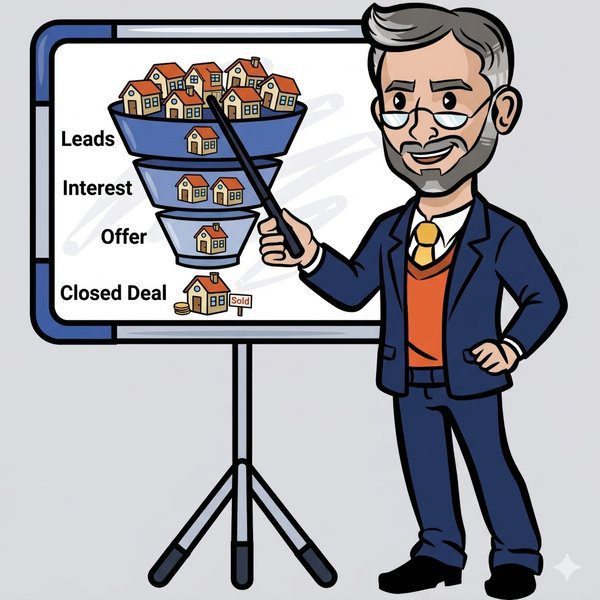
Case Study: Demonstrating Funnel Performance and ROI
Let us illustrate this with a scenario that reflects the challenges many CEOs face.
Scenario Setup
Consider InnovateCorp, a B2B SaaS company specializing in enterprise project management software, currently stuck at 10% annual revenue growth. Their CEO is frustrated by a high Customer Acquisition Cost ($5,000 per new client) and a low Marketing Qualified Lead (MQL) to Sales Qualified Lead (SQL) conversion rate (15%), largely due to marketing sending unqualified leads and sales struggling to convert them. Their sales cycle averages 90 days. Their marketing team produces about 10 blog posts a month, struggles with consistent messaging, and relies on generic email nurturing sequences.
AI Integration
InnovateCorp decides to implement a strategic ChatGPT funnel over a six-month period, focusing on key interventions:
- Awareness: They leverage ChatGPT for hyper-targeted topic ideation and outline generation, increasing their SEO-optimized blog output to 25 posts per month. AI also helps generate 50 unique ad variations for Google Ads, facilitating rapid A/B testing.
- Interest: An AI-powered chatbot is deployed on their website, trained on their ICP and qualification criteria. It handles 60% of initial inquiries, pre-qualifying leads before passing them to an SDR. AI also crafts personalized email nurturing sequences, dynamically suggesting content based on prospect behavior.
- Desire: AI-driven lead scoring is implemented, integrating data from the chatbot, website activity, and email engagement. This provides a precise ‘intent score’ for each lead. ChatGPT also assists sales in generating customized proposal summaries for top-scoring prospects.
- Action: Automated meeting scheduling is integrated, and comprehensive AI-powered handoff briefs are generated for every Sales Qualified Lead (SQL), including chat transcripts, content consumed, and specific pain points identified.
Results Analysis
After six months, InnovateCorp sees significant quantifiable improvements:
- Lead Volume: A 30% increase in overall inbound leads due to enhanced content visibility and ad performance.
- Lead Quality: The Marketing Qualified Lead (MQL) to Sales Qualified Lead (SQL) conversion rate jumps from 15% to 35%. This is because the AI chatbot and lead scoring filter out unqualified prospects and nurture others effectively.
- Sales Cycle: The average sales cycle reduces from 90 days to 65 days, as sales receives better-qualified leads with more context, enabling faster closing.
- Customer Acquisition Cost (CAC): CAC drops from $5,000 to $3,500 due to improved efficiency, higher conversion rates, and reduced wasted sales effort.
- Revenue Uplift: Conservatively, with 20% more SQLs converting at a higher rate and a faster cycle, InnovateCorp projects a 25% increase in new customer acquisition over the next year. This is directly attributable to the AI funnel, translating to millions in additional revenue.
ROI Calculation: Let us assume InnovateCorp generates 100 MQLs per month.
- Before AI: 100 MQLs * 15% conversion = 15 SQLs. If each SQL is worth $10,000 (average deal size), that generates $150,000 in revenue.
- After AI: (100 MQLs * 1.30 [new volume]) * 35% conversion = 45.5 SQLs (approximately 45). If each SQL is worth $10,000, that generates $450,000 in revenue. The incremental revenue is $300,000 per month. If the cost of AI tools, training, and integration is $10,000 per month, this represents a staggering 30x ROI. This allows InnovateCorp to break through its growth plateau and achieve scalable, predictable revenue.
Strategic Implications
This case study underscores that the ChatGPT funnel is not merely an efficiency play, but a strategic growth lever. It transforms the unpredictable nature of traditional inbound into a reliable revenue engine. By delivering more and higher-quality leads at a lower cost while accelerating the sales process, it directly fuels sustainable, predictable growth, providing a significant competitive advantage in the market.
Navigating the Future: Sustaining AI-Driven Inbound Growth
The journey does not end with implementation. Sustaining AI-driven inbound growth requires a forward-thinking mindset and a commitment to continuous adaptation.
Staying Ahead of the Curve
The field of artificial intelligence, particularly Large Language Models, is evolving at an unprecedented pace. New models, capabilities, and ethical considerations emerge constantly. As a CEO, your strategic imperative is to foster a culture of vigilance within your organization. This means staying abreast of new LLM advancements, understanding their potential applications for your ChatGPT funnel, and being prepared to adapt your strategies to leverage emerging technologies or integrate new features. Competitors will not wait.
Ethical AI Use in Sales and Marketing
As AI becomes more integral to customer interactions, ethical considerations are paramount. Building trust, ensuring transparency, and maintaining brand integrity are non-negotiable. This involves:
- Being transparent about when customers are interacting with AI (e.g., clear disclosures on chatbots).
- Ensuring AI-generated content is accurate, fair, and free from bias.
- Protecting customer data and privacy, adhering to all relevant regulations.
- Avoiding overly aggressive or manipulative AI tactics that could erode trust. Your brand’s reputation is a valuable asset; AI should enhance it, not compromise it.
Training Your Team for the AI Era
AI is a co-pilot, not a replacement. Your sales and marketing professionals need to be upskilled to effectively leverage these powerful tools. This involves:
- Prompt Engineering Training: Empowering them to extract the most value from LLMs.
- AI Tool Integration: Training on how to seamlessly incorporate AI into their daily workflows (e.g., using AI-powered CRM features).
- Strategic Oversight: Helping them understand how to interpret AI insights and use them for strategic decision-making, rather than simply accepting outputs blindly. Investing in your team’s AI literacy is an investment in your company’s future.
The Strategic Imperative for CEOs
For any CEO grappling with growth plateaus and disconnected sales and marketing efforts, embracing AI—specifically through a strategically built ChatGPT funnel—is critical for long-term competitive advantage and predictable growth. This is not about being ‘tech-forward’ for its own sake. It is about building a robust, intelligent engine for qualified inbound deal flow. It is about moving beyond reactive tactics to proactive, data-driven strategy. The future of revenue growth is not just about what you sell, but how intelligently you connect with your ideal customers and turn interest into tangible, predictable deals. The time for disconnected tactics is over. The era of the AI-optimized sales funnel is here, offering a clear path to break through your growth wall.
Ready to transform your disconnected marketing efforts into a consistent source of qualified inbound leads? Schedule a strategic consultation to design your AI-Optimized ChatGPT funnel and unlock new inbound deal flow.