
Table of Contents
The Challenge of Building and Optimizing Sales Funnels In-House
Introducing “Done For You Sales Funnel” Services
What a Comprehensive Done For You Sales Funnel Service Includes
The Strategic Decision: Outsource Sales Funnel Building vs. In-House
The Done For You Sales Funnel Process: A Step-by-Step Look
Choosing the Best Done For You Marketing Funnels Provider
Real-World Impact: Case Studies and Results
Addressing Common Concerns About Outsourcing Your Sales Funnel
Conclusion: Is a Done For You Sales Funnel Right for Your Growth Goals?
Further Reading
Are you a head of sales or marketing feeling the familiar pinch? You know the power of well-built sales funnels – they’re the engine for predictable lead generation and revenue growth. Yet, building, optimizing, and scaling them in-house often feels like trying to build a race car while simultaneously driving it. Resources are stretched, expertise is siloed, and the speed required to hit ambitious growth targets feels perpetually out of reach.
It’s a common scenario. You have the vision, the team has talent, but the sheer complexity and iterative nature of high-performance funnel development can consume disproportionate time and budget. This article cuts through the noise to evaluate a strategic alternative: leveraging a “done for you sales funnel” service. We’ll explore the pragmatic realities of outsourcing, what to expect, and how to determine if it’s the right accelerant for your growth engine.
The Challenge of Building and Optimizing Sales Funnels In-House
For growth-focused sales and marketing leaders, the idea of a perfectly tuned sales funnel is compelling. It promises efficiency, predictability, and scalability. The reality of building one internally, however, often presents significant hurdles that slow progress and dilute impact.
Why Traditional In-House Funnel Building is Often Slow and Resource-Intensive
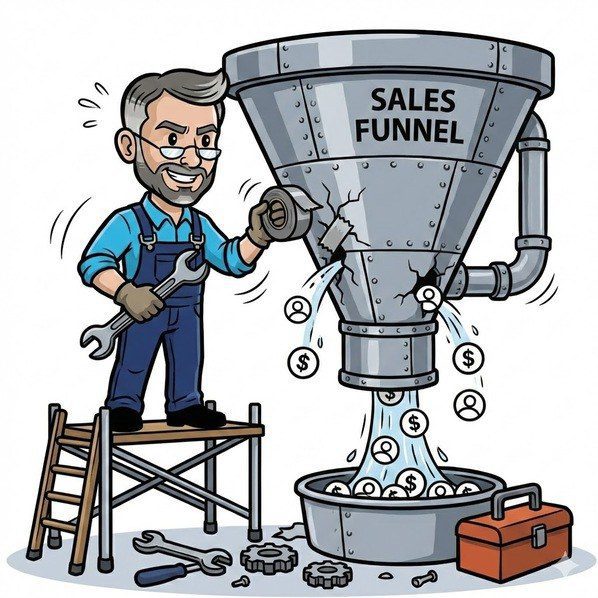
Building a modern sales funnel is a multidisciplinary undertaking. It requires strategic planning, compelling copywriting, intuitive design, precise technical implementation, data analysis, and continuous optimization. For many internal teams, possessing deep expertise across all these domains simultaneously is challenging. This often leads to bottlenecks as projects move from one specialist to another, or worse, compromises are made due to limited skill sets in a specific area. The sequential nature of internal processes – strategy handoff to copy, copy to design, design to tech, tech to traffic – inherently introduces delays. Each phase requires internal coordination, review cycles, and potential revisions, all of which consume valuable time and energy that could be directed elsewhere.
Common Bottlenecks Faced by Heads of Sales and Marketing
As a leader, you’re juggling multiple priorities: team management, overarching strategy, channel diversification, and managing stakeholder expectations, among others. Dedicated, uninterrupted focus on a single, complex funnel build is a luxury few can afford. Key bottlenecks often include:
Lack of Specialized Expertise: Your team might be excellent marketers or salespeople, but do they have deep, current expertise in conversion psychology, advanced marketing automation setup, or high-performance landing page design? Gaps in specialized skills necessitate hiring or extensive training, both of which are time-consuming and expensive.
Competing Priorities: The urgent often displaces the important. Funnel projects, while crucial for long-term growth, can get pushed back by immediate demands like quarterly campaigns, sales enablement requests, or unexpected market shifts.
Slow Execution: Internal processes, legacy systems, and the sheer volume of tasks can result in slower execution compared to a dedicated external team focused solely on the build. The pace of internal development often doesn’t match the desired speed-to-market required to capitalize on opportunities.
The High Cost of Internal Trial and Error in Conversion Rate Optimization
Building a funnel is one thing; making it perform is another. Conversion Rate Optimization (CRO) is not a one-time activity; it’s a continuous, data-driven process of testing hypotheses, analyzing results, and implementing changes. Doing this effectively in-house requires dedicated analytical resources, a robust testing infrastructure, and deep understanding of user behavior. Internal teams often lack the bandwidth or the specific expertise to run rigorous, statistically significant A/B tests consistently. This means relying on guesswork or infrequent testing, leading to suboptimal performance and leaving significant revenue on the table. The “cost” here isn’t just the resources spent on ineffective tests, but the lost opportunity from lower conversion rates over time.
The Need for Speed and Proven Processes in Achieving Growth Targets
In competitive markets, speed matters. The faster you can deploy effective lead generation and nurturing funnels, the sooner you can start generating qualified leads and closing deals. Growth targets are often aggressive, requiring rapid deployment and iteration. Relying on internal capacity and traditional project timelines can mean missing market windows or falling behind competitors who are leveraging more agile execution models. Heads of sales and marketing need access to proven frameworks and battle-tested processes that deliver results quickly and reliably, without reinvention each time.
Introducing “Done For You Sales Funnel” Services
Given these internal challenges, many growth leaders are looking beyond traditional models for solutions that offer speed, expertise, and predictable outcomes. This is where the concept of a “done for you sales funnel” service enters the picture.
Defining “Done For You Sales Funnel” (DFY) Services
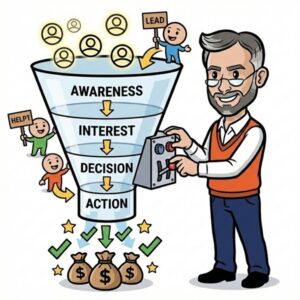
A “done for you sales funnel” service, or DFY service, is essentially an end-to-end solution provided by an external specialist or agency. Instead of hiring individual experts or tasking your internal team with the entire complex process, you engage a partner to handle the heavy lifting of designing, building, implementing, and often optimizing your sales funnel from strategy through execution. This goes beyond simply providing advice or a template; the service provider takes responsibility for the actual technical build and setup required to make the funnel live and operational.
The Concept of “Sales Funnel as a Service” (SFaaS)
Related to the DFY model is the concept of “Sales Funnel as a Service” (SFaaS). While sometimes used interchangeably, SFaaS often implies a more ongoing relationship. It’s not just a one-time build, but a continuous engagement where the provider manages the funnel’s performance, handles ongoing optimization, and perhaps even includes traffic generation as part of a retainer or performance-based agreement. Think of it less like hiring a contractor for a single build and more like subscribing to a service that delivers sustained funnel performance. This model is particularly appealing for companies seeking continuous improvement and predictable lead flow without the operational burden.
How DFY Services Differ from Traditional Marketing Agencies or Hiring Internal Staff
Understanding the distinction is crucial for evaluation.
vs. Traditional Marketing Agencies: While many marketing agencies offer funnel building as part of broader services, a dedicated “done for you sales funnel” provider specializes specifically in this area. Their core competency is the end-to-end mechanics and optimization of conversion pathways. They typically have refined processes and a deep focus on measurable results (leads, conversions, ROI) directly tied to the funnel’s performance, rather than broader brand awareness or content marketing goals.
vs. Hiring Internal Staff: Building an internal team capable of executing high-performance funnels requires hiring multiple specialists (strategist, copywriter, designer, developer, CRO expert, media buyer). This is a lengthy, costly process involving recruitment, onboarding, salary, benefits, and ongoing training. A DFY service provides immediate access to a pre-assembled team of experts with established workflows and a history of collaboration, significantly reducing time-to-value.
Addressing the Core Problem: Providing Expert Execution to Accelerate Growth and Free Internal Resources
The fundamental promise of a “done for you sales funnel” service is to solve the core challenges of time, expertise, and execution speed. By partnering with specialists, you bypass the internal bottlenecks. You gain immediate access to a team whose sole focus is building and optimizing high-converting funnels. This expert execution directly accelerates your time to market and time to results. Crucially, it frees up your internal sales and marketing teams to concentrate on their core strategic activities – engaging with leads, closing deals, managing customer relationships, and developing high-level strategies – rather than getting bogged down in the technical and iterative demands of funnel infrastructure. This strategic reallocation of internal resources can itself be a significant driver of growth.
What a Comprehensive Done For You Sales Funnel Service Includes
A truly comprehensive “done for you sales funnel” package encompasses more than just building a few pages. It should cover the entire lifecycle from strategic conception to technical implementation and, ideally, initial optimization. Here’s a breakdown of typical components:
Strategy and Planning
The foundation of any successful funnel is a solid strategy. A good DFY provider will dedicate significant time to this phase.
Audience Research and Segmentation: Understanding your ideal customer profile (ICP) is paramount. The provider should delve into your audience’s demographics, psychographics, pain points, desires, and online behavior to tailor the funnel messaging and flow. Segmentation ensures different audience groups receive relevant experiences.
Customer Journey Mapping: Mapping the customer’s path from initial awareness to conversion (and beyond) is essential. This helps identify key touchpoints, potential drop-off points, and opportunities for conversion acceleration within the funnel structure.
Goal Setting and KPI Definition: Clear, measurable goals are critical. The provider will work with you to define specific KPIs such as target lead volume, Marketing Qualified Leads (MQLs), Sales Qualified Leads (SQLs), desired conversion rates at each stage, and overall Return on Investment (ROI). This ensures the funnel is built with performance targets in mind.
Sales Funnel Strategy Development: Based on the research and goals, the provider develops a detailed strategy outlining the funnel stages, the offer at each stage (lead magnet, webinar, demo, etc.), messaging themes, traffic sources, and the overall technical architecture. This strategy should be tailored to your specific business model, whether B2B, B2C, e-commerce, or service-based.
Design and Development
Once the strategy is locked, the visual and structural build begins.
High-Converting Landing Page Design and Copywriting: This is a core component. Specialists craft persuasive copy focused on benefits and clarity, combined with clean, conversion-focused design. Landing pages are designed to capture attention and drive a single desired action.
Opt-in Form Creation and Integration: Seamlessly integrating forms that capture necessary lead information without creating friction. This includes setting up necessary fields and connecting the forms to your backend systems.
Sales Page or Service Page Development: For funnels leading directly to a sale or service inquiry, dedicated pages are built with compelling copy, social proof, and clear calls to action to move prospects toward a purchase decision or consultation.
Thank You Pages and Offer Fulfillment Setup: Designing thank you pages that reinforce value, set expectations, and potentially offer next steps or tripwires. Setting up the delivery mechanism for lead magnets or initial offers.
Ensuring Mobile Responsiveness and User Experience (UX): Critical in today’s multi-device world. All pages and components must function flawlessly and look appealing on desktops, tablets, and mobile phones, providing a smooth and intuitive user experience (UX).
Technical Implementation and Integration
This is where the pieces come together technologically, a common bottleneck for internal teams.

Setting Up Marketing Automation Platforms: Configuring your chosen marketing automation system (or recommending/setting up one if needed) to manage contacts, segment leads, and trigger automated actions.
CRM Integration for Lead Tracking and Sales Handoff: Ensuring leads captured by the funnel are correctly passed into your CRM system, enriching contact records with relevant data, and setting up automated notifications or tasks for your sales team for timely follow-up.
Email Sequence Automation Setup: Writing and configuring automated email sequences for lead nurturing (e.g., welcome series, educational content, case studies, promotional offers) to guide leads through the buyer’s journey.
Tracking and Analytics Setup: Implementing robust tracking mechanisms, including Google Analytics, conversion pixels (Facebook, LinkedIn, etc.), and event tracking to monitor key funnel metrics and user behavior. This data is essential for optimization.
Integration with Payment Gateways or E-commerce Platforms (if applicable): For funnels designed for direct sales, integrating with payment processors (Stripe, PayPal, etc.) or connecting to your e-commerce platform is a necessary technical step.
Traffic Generation and Optimization
While some DFY services focus purely on the build, others offer ongoing traffic generation and optimization as part of the package or as an add-on.
Planning and Executing Paid Traffic Campaigns: Developing and managing advertising campaigns on platforms like Google Ads, Facebook Ads, Instagram Ads, LinkedIn Ads, etc., to drive targeted traffic to the funnel entry points. Note: Confirm the scope of traffic management – some providers specialize in build/CRO, while others are full-service.
Conversion Rate Optimization (CRO) Testing and Iteration: Implementing a continuous process of testing variations of landing pages, headlines, calls to action, form fields, and other elements to systematically improve conversion rates. This is a key driver of increased ROI from the funnel.
Ongoing Performance Monitoring and Adjustments: Regularly analyzing data from tracking systems to identify underperforming areas of the funnel and making data-driven adjustments to copy, design, technical setup, or traffic targeting to improve results.
The Strategic Decision: Outsource Sales Funnel Building vs. In-House
Evaluating “outsource sales funnel building” as a strategy requires a pragmatic comparison against the traditional in-house approach. It’s not just about cost; it’s about capability, speed, and strategic focus.
Evaluating the Costs
The upfront cost of a “done for you sales funnel” might seem higher than just paying your team’s salaries, but a true cost analysis reveals a different picture.
Analyzing the True Cost of Building In-House: Beyond salaries, consider the cost of necessary software licenses (marketing automation, CRM, landing page builders, testing tools), training for your team members on specialized skills, and crucially, the time cost of delays. Every week or month spent building internally is time lost generating leads and revenue through a potentially faster-deployed, higher-performing outsourced funnel. There’s also the hidden cost of internal meetings, project management overhead, and the opportunity cost of your team not working on other critical tasks.
Understanding the Pricing Models for “Done For You Sales Funnel” Services: DFY providers offer various models. Project-based pricing is common for a single funnel build. Retainer models are used for ongoing optimization and SFaaS. Performance-based models, where payment is tied to results (e.g., cost per lead, percentage of revenue), align incentives but require careful structuring. Understanding what’s included in each model is essential for comparison.
Comparing Potential ROI and Time-to-Value: A well-executed outsourced funnel, built by experts using proven methodologies, can potentially launch faster and achieve higher conversion rates than an internal build. This means a faster path to generating leads and revenue, leading to a quicker return on investment. While the initial outlay might be higher, the accelerated time-to-value and potentially greater efficiency can result in a superior overall ROI compared to the protracted timeline and learning curve of an internal effort.
Assessing Expertise and Speed
This is arguably the most compelling argument for outsourcing.
Access to Specialized, Cross-Functional Expertise Instantly: A reputable DFY provider brings a full spectrum of specialized skills to the table from day one. You don’t need to hire a conversion copywriter, a UX designer specializing in landing pages, a marketing automation architect, and a CRO analyst individually. You access their collective, battle-tested expertise immediately, without the time and expense of recruitment or training.
Leveraging Proven Frameworks and Battle-Tested Strategies: DFY providers who specialize in funnels have built and optimized them across various industries and business models. They possess libraries of proven frameworks, design patterns, copy approaches, and technical configurations that have a track record of converting. You benefit from this accumulated knowledge and avoid reinventing the wheel or making common mistakes.
Significantly Faster Speed to Market and Results: Because DFY providers have streamlined processes and dedicated teams focused solely on funnel execution, they can typically move from strategy to live funnel much faster than an internal team juggling other responsibilities. This accelerated deployment means you start generating leads and revenue sooner, directly impacting your growth trajectory.
The Impact of Expert Execution on Conversion Rates: Expertise in areas like conversion psychology, persuasive copywriting, intuitive UX design, and rigorous A/B testing directly translates into higher conversion rates at every stage of the funnel. Even small percentage increases in conversion can have a dramatic impact on the volume of qualified leads and ultimately, revenue, providing a significant ROI boost.
Resource Allocation and Focus
Outsourcing allows you to strategically deploy your most valuable internal assets: your people and their time.
Freeing Up Internal Marketing and Sales Teams: By offloading the complex, time-consuming task of funnel building and maintenance, your internal teams are free to focus on their core competencies. Marketing can concentrate on broader strategic initiatives, content creation, or channel innovation. Sales can spend more time engaging with qualified leads delivered by the funnel, nurturing relationships, and closing deals.
Reducing the Operational Burden: Managing complex technical setups, monitoring performance dashboards, troubleshooting integrations, and constantly running tests requires significant operational bandwidth. Outsourcing this to a specialized provider removes this burden from your internal team, allowing them to focus on higher-level strategic thinking and direct revenue-generating activities.
The Benefit of Having a Dedicated Team Focused Solely on Funnel Performance: Unlike internal teams whose focus is fragmented across multiple projects, a DFY provider’s success is directly tied to the performance of the funnels they build. They have a singular focus on optimizing that specific conversion pathway, leading to more concentrated effort and potentially better results.
Control and Customization
Concerns about “losing control” are valid, but can be mitigated by choosing the right partner.
Potential Concerns About Losing Control vs. Gaining Capacity and Expertise: Handing over a critical function can feel unsettling. However, framing it as gaining capacity and expertise to achieve faster, better results can shift perspective. Reputable providers involve you in the strategic process and provide visibility throughout the build.
How Reputable DFY Providers Ensure Brand Consistency and Strategic Alignment: A good partner will invest time in understanding your brand guidelines, voice, and overall business strategy during the discovery phase. They work collaboratively with your team, presenting drafts for feedback at key stages (copy, design) to ensure alignment and brand consistency. You maintain strategic oversight while leveraging their tactical execution.
Level of Customization Offered by “Sales Funnel as a Service” Providers: While providers use proven frameworks, the best SFaaS offerings are highly customizable. They tailor the strategy, design, copy, and technical setup to your specific audience, offer, and business model. It’s not a one-size-fits-all solution, but a tailored application of expert methodologies.
The Done For You Sales Funnel Process: A Step-by-Step Look
Understanding the typical process helps demystify what happens when you engage a “done for you sales funnel” provider. While variations exist, a robust process usually includes these key stages:
Initial Consultation and Goal Alignment: The process starts with a discussion to understand your business, current challenges, growth objectives, and whether a DFY funnel is the right fit. This is where you and the provider determine if there’s mutual potential.
Discovery Phase: If there’s a good fit, the provider conducts a deep dive into your business. This involves detailed conversations about your target audience, existing marketing and sales processes, competitive landscape, available assets (content, data), and tech stack.
Strategy Development and Proposal Presentation: Based on the discovery, the provider develops a detailed sales funnel strategy tailored to your specific goals. This includes outlining the funnel stages, proposed offers, messaging framework, required technical components, key performance indicators (KPIs), timeline, and a detailed proposal outlining the scope of work and investment.
Design and Copywriting Phase: Once the strategy is approved, their specialist teams get to work creating the visual design and persuasive copy for all necessary funnel assets – landing pages, opt-in forms, thank you pages, sales pages, email sequences, etc. This stage typically includes feedback loops where you review drafts and provide input.
Technical Build and Integration: The technical team takes the approved designs and copy and builds the funnel infrastructure. This involves setting up pages on the chosen platform, configuring marketing automation workflows, integrating with your CRM and other necessary tools, and setting up tracking pixels and analytics.
Testing and Quality Assurance: Before launch, the entire funnel undergoes rigorous testing. This includes checking all links, forms, integrations, tracking, and mobile responsiveness across different devices and browsers to ensure everything functions correctly.
Launch and Initial Monitoring: The funnel goes live. The provider monitors initial performance closely, looking for technical glitches or immediate red flags in conversion rates.
Ongoing Optimization and Reporting (for Retainer Services): For SFaaS or retainer models, the work shifts to continuous optimization. The provider analyzes performance data, runs A/B tests, and makes data-driven adjustments to improve conversion rates, lead quality, and ROI. Regular reporting keeps you informed of progress and results.
Client Handover and Training (for Project-Based Services): If it’s a one-time project, the provider hands over the completed funnel assets and provides documentation and training to your internal team on how to manage and maintain the funnel going forward.
This structured process provides clarity and ensures all critical aspects of funnel development are addressed by experienced professionals.
Choosing the Best Done For You Marketing Funnels Provider
Not all “done for you marketing funnels” providers are created equal. Selecting the right partner is crucial for achieving your growth objectives and ensuring a positive ROI. Here are key criteria to evaluate:
Key Criteria for Evaluation
Look beyond just their portfolio. Dig into their process, expertise, and how they approach your specific needs.
Proven Track Record and Expertise: This is paramount.
Demonstrable Results and Case Studies: Ask for specific examples of funnels they’ve built and the measurable results they achieved for clients (e.g., percentage increase in conversion rate, reduction in cost per lead, increase in MQL volume). Look for case studies that show a clear “before and after” picture, demonstrating their impact (a strong E-E-A-T signal).
Experience in Your Industry or With Similar Business Models: While not always mandatory, experience with businesses like yours means they understand your market nuances, buyer behavior, and common challenges. Experience with similar business models (B2B, SaaS, e-commerce, local service) is often even more important than specific industry.
Team Expertise in Conversion Rate Optimization, Sales Psychology, and Technical Implementation: Probe the expertise of their actual team members. Do they have dedicated CRO specialists, copywriters trained in sales psychology, and experienced technical integrators? Their collective skillset directly impacts the quality and performance of your funnel.
Process and Communication: A clear, collaborative process is essential.
Clear, Documented Process for Strategy, Build, and Optimization: A professional provider has a well-defined process. They should be able to walk you through their steps from discovery to launch and optimization. This indicates organization and predictability (an E-E-A-T signal).
Transparent Communication and Reporting Methods: How do they keep you informed? Look for providers who offer regular updates, use project management tools you can access, and provide clear, data-driven performance reports.
Defined Project Timelines and Deliverables: They should provide a realistic timeline for each phase of the project and clearly define the deliverables at each step.
Understanding of Your Specific Needs: Avoid providers who offer generic, cookie-cutter solutions.
Do they invest time in understanding your ideal customer profile and sales cycle? A good provider will ask probing questions about your business, your customers, and how your sales process works. They won’t jump straight to solutions without this foundational understanding.
Are they proposing a custom strategy or a cookie-cutter solution? Based on their understanding, they should propose a strategy specifically tailored to your unique offer, audience, and goals, not just implement a standard template.
Technology Stack: Compatibility is key.
Compatibility with Your Existing CRM, Marketing Automation, or Other Tools: Ensure their technical team is proficient in integrating with the platforms you currently use or plan to use. Migrating systems mid-project is often costly and disruptive.
Expertise in the Platforms Relevant to Your Strategy: If your strategy relies heavily on a specific platform (e.g., HubSpot, Marketo, ActiveCampaign, ClickFunnels, Kajabi), confirm they have deep expertise with that platform.
Pricing and Contract Terms: Transparency is critical here.
Clear Pricing Structure with No Hidden Fees: Ensure the proposal clearly outlines all costs involved. Ask about potential additional costs for revisions, extra integrations, or scope changes.
Flexible Contract Terms That Align with Your Goals: Understand the contract length, payment terms, and what happens if performance targets aren’t met (if applicable to the pricing model).
Questions to Ask Potential Providers
Use these questions during your evaluation process to assess candidates against the criteria above:
Can you share examples of funnels you’ve built and the measurable results achieved (e.g., conversion rate lift, CPL reduction)?
How do you approach strategy development and ensure the funnel is customized to our specific business, audience, and offer?
What is your typical timeline for building a funnel of our complexity? What factors can influence this timeline?
How do you handle communication and reporting throughout the process? How often will we receive updates and performance data?
What level of involvement is required from our internal team at each stage?
How do you ensure the funnel integrates smoothly with our existing tech stack (e.g., our CRM, marketing automation platform)? Can you walk us through that process?
What ongoing support or optimization services do you offer after the initial build is complete? (Especially important if you’re considering SFaaS).
What is your approach to Conversion Rate Optimization (CRO) and A/B testing once the funnel is live?
Asking these pointed questions will help you differentiate providers and find one who truly understands your needs and has the expertise to deliver results.
Real-World Impact: Case Studies and Results
To truly evaluate the potential of a “done for you sales funnel” service, it’s helpful to look at how they can translate into tangible business outcomes. While I cannot share specific confidential client data, we can illustrate the potential impact with hypothetical scenarios based on common improvements seen with expert funnel execution. These examples are designed to demonstrate the type of results achievable when leveraging specialized expertise.
Hypothetical Case Study 1: B2B Lead Generation Funnel
The Situation: A B2B SaaS company needed to increase Marketing Qualified Leads (MQLs) for their sales team but struggled to scale lead volume and quality from their existing generic website forms and manual follow-up processes. Their internal team lacked dedicated expertise in paid media lead generation and sophisticated nurturing sequences.
Before Outsourcing: Using basic landing pages and generic form fills, their CPL was high ($150), and MQL conversion rate from leads was low (5%). Sales spent significant time qualifying leads.
After Leveraging a Done For You Sales Funnel Service: The provider developed a targeted lead magnet funnel with tailored landing pages, segmented email sequences, and automated lead scoring integrated with their CRM. They also managed the paid media campaigns.
The Results: Within three months, the CPL dropped by 30% ($105), and the MQL conversion rate from leads more than doubled (12%). Sales received higher quality leads, reducing time spent on unqualified prospects.
Key Drivers of Success: Expert copywriting focused on the ICP’s pain points, strategic segmentation within the email sequence, precise targeting of paid media, and effective CRM integration for timely sales follow-up.
Hypothetical Case Study 2: E-commerce Sales Funnel
The Situation: An e-commerce brand selling a niche product struggled with cart abandonment and converting traffic from social media ads into buyers. Their product pages had decent traffic, but the conversion rate was below industry benchmarks.
Before Outsourcing: A standard e-commerce checkout process with no dedicated sales funnel pages. Average Conversion Rate: 1.5%. Average Order Value (AOV): $50.
After Leveraging a Done For You Sales Funnel Service: The provider implemented a dedicated “sales funnel as a service” approach, building specific offer pages separate from the main site, optimizing the checkout process, and adding upsell/downsell sequences post-purchase. They also performed continuous CRO testing on product and offer pages.
The Results: The conversion rate on the dedicated offer pages increased to 3.5%. Implementation of post-purchase upsells increased the AOV by 20% ($60). Overall revenue from traffic directed to these funnels saw a significant lift.
Key Drivers of Success: High-converting sales page design and copy, optimized checkout flow reducing friction, strategic use of urgency/scarcity, and rigorous A/B testing on calls to action and offer presentation.
Hypothetical Case Study 3: Service-Based Business Funnel
The Situation: A consulting firm wanted to generate more qualified leads for booked consultation calls but relied heavily on generic website contact forms and manual outreach, resulting in a high cost per booked meeting.
Before Outsourcing: Website traffic converting to consultation requests at 1%. Manual qualification process. High Cost Per Acquisition (CPA) for booked calls.
After Leveraging a Done For You Sales Funnel Service: The provider built a funnel centered around a valuable free assessment tool (lead magnet) followed by a short application process and automated calendar booking integration. They used targeted content and paid ads to drive traffic to the assessment.
The Results: Conversion rate from website visitors to assessment completion reached 8%. Conversion from assessment completion to booked call was 25%. The CPA for a qualified booked call decreased by 40%.
Key Drivers of Success: A highly valuable lead magnet directly addressing a core prospect need, a streamlined application and booking process removing manual steps, and clear, benefit-driven communication at each funnel stage.
These hypothetical examples illustrate how leveraging expert execution across strategy, design, technical build, and optimization can lead to measurable improvements in key metrics like conversion rates, lead quality, cost per acquisition, and ultimately, accelerated revenue growth. They underscore the importance of the provider’s expertise in CRO and sales psychology, which are often the hidden levers of funnel performance.
Addressing Common Concerns About Outsourcing Your Sales Funnel
It’s natural to have reservations when considering outsourcing a critical business function. Let’s address some common concerns heads of sales and marketing often raise about engaging a “done for you sales funnel” service.
Loss of Control
How Providers Mitigate This: Reputable DFY providers understand the need for client involvement. They establish clear communication channels, provide access to project management tools, and build regular feedback loops into their process, especially during the strategy, copy, and design phases. You retain strategic control and provide input, while they handle the tactical execution. Think of it as gaining expert hands to execute your vision, not relinquishing oversight.
Cost Concerns
Re-framing Cost as an Investment with a Clear ROI Potential: While the upfront cost might seem significant compared to perceived internal costs, it’s essential to view it as an investment with a clear potential for high ROI. By accelerating launch, achieving higher conversion rates, and freeing up internal resources, a successful funnel can generate significantly more revenue than it costs, often on a faster timeline than an internal build. The analysis should focus on projected ROI and time-to-value, not just the initial expenditure.
Finding the “Right Fit”
Strategies for Thorough Vetting and Evaluation: As outlined in the “Choosing the Right Provider” section, thorough vetting is critical. Don’t rush the decision. Use the criteria and questions provided to evaluate multiple candidates. Look for providers who demonstrate genuine understanding of your business, offer transparent processes, show relevant case studies, and have strong communication skills. Consider starting with a smaller project if possible to test the working relationship.
Integration Challenges
How Expert Providers Handle Technical Complexities: A key advantage of specialized DFY providers is their technical expertise. They should be well-versed in integrating various marketing automation, CRM, and other relevant platforms. Discuss your existing tech stack upfront and get detailed explanations of how they handle integrations, potential complexities, and data flow. A provider with extensive integration experience can navigate these challenges efficiently, preventing headaches for your internal IT or operations teams.
Addressing these concerns proactively with potential providers ensures you enter the engagement with realistic expectations and confidence in the partnership.
Conclusion: Is a Done For You Sales Funnel Right for Your Growth Goals?
For heads of sales and marketing navigating the demands of aggressive growth targets, the strategic decision to build complex sales funnels in-house or leverage external expertise is significant. We’ve explored the inherent challenges of internal execution – the bottlenecks, the slow pace of iteration, the high cost of trial and error, and the drain on precious internal resources.
A “done for you sales funnel” service, or “sales funnel as a service,” presents a compelling alternative. By partnering with specialists, you gain immediate access to a concentrated pool of expertise across strategy, copywriting, design, technical implementation, and conversion rate optimization. This expert execution translates into significant benefits: accelerated speed to market, potentially higher conversion rates due to battle-tested methodologies, and the invaluable ability to free up your internal team to focus on their core, high-impact responsibilities like engaging with leads and closing deals.
Outsourcing your sales funnel building is often the most strategic choice when:
You need to launch high-performing funnels quickly to capitalize on market opportunities.
Your internal team lacks deep, specialized expertise in all facets of funnel development and optimization.
You want to free up your internal marketing and sales resources to focus on strategy and direct revenue activities.
You are looking for a faster, more predictable path to achieving measurable ROI from your lead generation and sales efforts.
Choosing the right partner is paramount. Thoroughly evaluate providers based on their proven track record, expertise (especially in CRO), transparent process, understanding of your needs, and technical capabilities.
Ultimately, the single most important message to take away is clear: A “done for You sales funnel” service can significantly accelerate growth by leveraging expert execution, freeing up internal resources and delivering faster ROI if you choose the right partner. Evaluating this option is a critical step for any growth-focused leader looking to build a predictable, scalable revenue engine in today’s competitive landscape.
Ready to accelerate your growth with expertly built funnels? Explore our done-for-you sales funnel packages to see how we can help you achieve your objectives.
Further Reading
- Optimizing Your B2B Marketing Funnel Stages for Peak Revenue Conversion
- The ROI of a CRO Agency: Proving the Value of Conversion Rate Optimization
- How Conversion Rate Experts Drive Revenue Growth & ROI
- How Buyer Personas Directly Drive Revenue Growth
- Clay.com Alternatives: Best Tools for Advanced Data Enrichment and Prospecting Workflows