
Table of Contents
The Strategic Edge: Why Mastering Marketing Vocabulary is Crucial for Leaders
The Tangible Impact of Precise Marketing Vocabulary
A Foundational Marketing Vocabulary: Definitions and Context
Communicating Marketing Strategy Effectively Through Vocabulary
Building Confidence: Mastering Technical Marketing Jargon
Implementing a Shared Marketing Vocabulary Within Your Team
Conclusion: Vocabulary as a Cornerstone of Strategic Success
Further Reading
Imagine this: A sales leader and a marketing leader are discussing performance in a quarterly review. The marketing leader proudly reports a significant increase in MQLs, attributing success to a new content strategy focused on lead generation. The sales leader, however, expresses frustration, noting that the *quality* of these leads hasn’t translated into SQLs or closed deals, citing high CAC and low conversion rates further down the funnel.
The conversation stalls. The marketing leader feels misunderstood, focusing on volume and efficiency metrics they were tasked with improving. The sales leader feels unheard, concerned with revenue metrics they are accountable for. Both are using marketing terms, but are they truly speaking the same language?
This scenario, unfortunately, isn’t uncommon. It highlights a critical challenge many organizations face: a disconnect rooted in imprecise or misunderstood marketing vocabulary. For sales and marketing leaders, navigating the complex landscape of modern business requires more than just strategic vision; it demands the ability to communicate that vision clearly, interpret data accurately, and foster genuine collaboration across teams. This isn’t about reciting buzzwords; it’s about ensuring that when you discuss your marketing strategy, your team, peers, and stakeholders understand exactly what you mean, what you’re aiming for, and why.
As a Communication & Alignment Advocate, my goal with this article is to bridge that gap. We’ll explore why mastering a precise marketing vocabulary is fundamental to strategic success, provide clarity on essential business marketing definitions and key concepts, and discuss how developing a shared language can empower you and your team to execute more effectively, report performance with confidence, and achieve true strategic alignment. The single most important message you should take away today is this: Mastering key marketing vocabulary empowers leaders to communicate strategies effectively, interpret performance data accurately, and foster better collaboration between sales and marketing.
The Strategic Edge: Why Mastering Marketing Vocabulary is Crucial for Leaders
In the fast-paced world of business, miscommunication isn’t just annoying; it’s costly. When leaders and teams lack a shared understanding of fundamental marketing concepts glossary terms, strategic discussions become muddy, execution falters, and opportunities are missed.
One of the most frequent common communication pitfalls occurs at the critical intersection of sales and marketing. Marketing might launch a campaign based on a specific definition of a “qualified lead,” while sales operates with a different, often stricter, criteria. This disconnect leads to friction, wasted effort, and finger-pointing when targets aren’t met.
Beyond the sales-marketing dynamic, imprecise marketing terminology can create confusion within leadership teams and when interacting with other departments like Product, Finance, or Engineering. Requesting budget for “improving our search presence” means very different things depending on whether you’re talking about SEO, SEM, local search, or a combination. A lack of clarity here can result in inadequate resources, mismatched expectations, and difficulty justifying marketing’s impact.
The cost of misunderstood or imprecise marketing terminology in strategic discussions is tangible. It leads to:
- Delayed decision-making due to the need for constant clarification.
- Wasted resources on initiatives based on flawed assumptions.
- Demotivated teams struggling with ambiguous directives.
- Inaccurate reporting that misrepresents performance.
- Erosion of trust between departments.
This article is focused on establishing the article’s focus: empowering leaders with precise language. We aim to equip sales and marketing leaders with the vocabulary needed to confidently articulate their vision, analyze results, and drive cohesive action. The ultimate goal is achieving strategic alignment and demonstrably better performance through clear communication. By mastering the language of modern marketing, you unlock your potential to lead with greater clarity and impact.
The Tangible Impact of Precise Marketing Vocabulary
Adopting a shared, precise marketing vocabulary isn’t just about tidiness; it has direct, positive impacts on how your teams function and how your strategies unfold.
Enhanced Cross-Functional Alignment and Collaboration
At the heart of many organizational challenges lies a breakdown in communication between departments. Marketing speaks in terms of brand awareness, engagement rates, and MQLs, while sales focuses on quotas, pipelines, and closed deals. Product talks about features and roadmaps, and Finance discusses budget and ROI.
A shared marketing lexicon acts as a universal translator, bridging the gap between sales and marketing teams and facilitating collaboration with other departments. When everyone understands what a Buyer Persona is and how it informs strategy, sales can provide better feedback on lead quality, and marketing can develop more relevant content. When KPIs are clearly defined and agreed upon, both teams can work towards common objectives, fostering a sense of shared responsibility and success. This ensures shared understanding during planning meetings and campaign reviews, leading to more productive discussions and unified goals. This improved communication also extends to improving collaboration with other departments (Product, Finance, etc.), ensuring marketing’s initiatives are understood and supported across the organization.
Improved Strategic Planning and Execution
Strategy is built on clear objectives and defined paths to achieve them. Ambiguity in the initial planning phase trickles down, leading to confusion and inefficiency in execution.
Using precise business marketing definitions allows leaders to define objectives and KPIs with clarity and accuracy. Instead of saying “we need more leads,” you can specify “we need to increase MQL volume by 15% for our Enterprise ICP in Q3, with a specific focus on leads generated from content marketing.” This level of detail is only possible when terms like MQL, ICP, and Content Marketing are understood and agreed upon by all. Precise vocabulary enables you to translate strategy into actionable tasks for the team, leaving no room for guesswork. It also helps in avoiding ambiguity in briefs, plans, and directives, ensuring everyone is working towards the same clear goals with the same understanding of the methods and metrics involved.
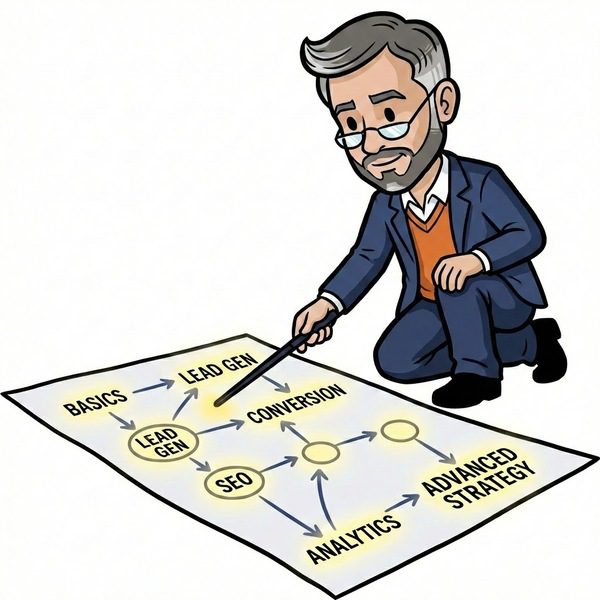
More Accurate Performance Analysis and Reporting
Marketing today is highly data-driven. Leaders are expected to interpret analytics and report results to stakeholders. However, data loses its value if it’s misinterpreted or reported using inconsistent terminology.
A shared marketing concepts glossary ensures that your team is interpreting metrics and data points consistently across teams. If one team defines “conversion rate” differently than another (e.g., website visit to form fill vs. form fill to demo request), reporting on a campaign’s success becomes impossible. Standardized vocabulary is essential for presenting results to stakeholders using agreed-upon terminology, building credibility and trust in marketing’s performance. It allows leaders to confidently identify true successes and areas for improvement based on clear definitions, making data-driven decisions based on a unified understanding of what the numbers actually represent.
Building Confidence and Authority
Finally, mastering marketing vocabulary empowers leaders personally. When you understand the technical terms and concepts your team uses daily, you gain confidence in strategic discussions, team meetings, and presentations.
This leads to leaders feeling comfortable discussing technical marketing concepts with specialists on their team, asking informed questions, and providing valuable input. It enables you to communicate strategy confidently to team members and the board, articulating complex ideas with precision and conviction. Ultimately, it helps you in representing the marketing function with credibility and authority, demonstrating your expertise and leadership in a critical area of the business.
A Foundational Marketing Vocabulary: Definitions and Context
Let’s establish a foundational understanding of some key marketing terms. This isn’t an exhaustive list, but it covers essential business marketing definitions that sales and marketing leaders frequently encounter in strategic planning, execution, and reporting. Think of this as a mini marketing concepts glossary designed for leadership context.
Core Strategic Concepts & Planning
These terms are fundamental to defining who you serve, what value you offer, and how you communicate it.
- Marketing Strategy: This is your overarching plan detailing how you will reach your target audience, deliver value, and achieve your business objectives. It’s the ‘what’ and ‘why’ behind your marketing efforts. It includes components like defining your target market, value proposition, messaging, positioning, and channel strategy.
- Target Market vs. Ideal Customer Profile (ICP) vs. Buyer Persona: These terms are often confused but are distinct and crucial for audience definition.
- Target Market: A broad group of consumers that a company aims its marketing efforts towards. Defined by demographics, geography, etc. (e.g., “Small businesses in the US”).
- Ideal Customer Profile (ICP): A hypothetical company that would realize the most value from your product or service and provides the most value in return (e.g., “Software companies with 50-200 employees and recurring revenue \> $5M”). Used primarily in B2B.
- Buyer Persona: A semi-fictional representation of your ideal customer *within* your target market or ICP, based on research and data. It includes demographics, behavior patterns, motivations, and goals. (e.g., “Marketing Manager ‘Megan’: 35, works at a B2B SaaS company, motivated by demonstrating ROI, challenges include siloed data”). Buyer personas help understand *who* you are selling to at a human level.
- Customer Segmentation: The process of dividing your target market or customer base into distinct groups based on shared characteristics (demographics, behavior, needs, etc.). This allows for more tailored and effective marketing efforts.
- Messaging vs. Positioning:
- Messaging: What you communicate about your product or service – the core themes, benefits, and calls to action. It’s about *how* you talk about yourself.
- Positioning: How your product or service is perceived by customers relative to competitors. It’s about *where* you stand in the market and the unique space you occupy in the customer’s mind. Your messaging should support your desired positioning.
- Value Proposition: A clear statement explaining what benefits your product or service offers, why it’s better than alternatives, and why a customer should choose you. It’s the promise of value delivered.
- Brand Guidelines: A set of rules and standards that dictate how your brand should be represented visually (logo usage, color palette, typography) and verbally (tone of voice, approved messaging). Understanding these is crucial for consistent communicating marketing strategy and brand identity across all touchpoints.
Key Performance Indicators (KPIs) and Measurement
Understanding how to measure success is vital for any leader.
- KPIs vs. Metrics: This is a critical distinction for strategic focus.
- Metrics: Quantifiable measurements used to track and assess the status of a specific process (e.g., website visits, email open rate, social media likes). You can track thousands of metrics.
- KPIs (Key Performance Indicators): A *specific type* of metric that measures progress towards a defined strategic goal (e.g., Marketing Qualified Leads (MQLs) generated per month, Customer Acquisition Cost (CAC), Website Conversion Rate for a key action). KPIs are the *most important* metrics tied directly to your objectives, and they are typically fewer in number than total metrics. Focusing on KPIs is why it matters for strategic focus.
- ROI (Return on Investment): A performance measure used to evaluate the efficiency of an investment. In marketing, it’s used to assess the profitability of marketing campaigns or initiatives. Calculation: (Revenue attributed to marketing investment \- Cost of marketing investment) / Cost of marketing investment. Understanding ROI calculation and application in marketing is essential for justifying spend and demonstrating value.
- CAC (Customer Acquisition Cost): The total cost spent on sales and marketing efforts required to acquire a new customer. Calculation: (Total Sales & Marketing Costs) / (Number of New Customers Acquired). Understanding CAC understanding the cost of growth helps evaluate the efficiency of acquisition channels and strategies.
- CLTV (Customer Lifetime Value): The total revenue a business can reasonably expect from a single customer account throughout the entire relationship. Understanding CLTV why long-term value is crucial helps determine how much you can afford to spend to acquire a customer and informs retention strategies.
- Conversion Rate: The percentage of users who complete a desired action (a “conversion”) out of the total number of users who had the opportunity to take that action. Defining Conversion Rate defining conversions in different contexts (e.g., visitor to lead, lead to MQL, MQL to SQL, SQL to Customer) is essential for accurate funnel analysis and reporting.
- Attribution Models: Rules or sets of rules that determine how credit for sales and conversions is assigned to touchpoints in conversion paths. Examples include First Touch, Last Touch, Linear, Time Decay, and U-shaped. Understanding Attribution Models how different models measure impact is crucial for evaluating which marketing channels and activities are most effective in driving conversions, recognizing that different models tell different stories.
- Marketing Qualified Lead (MQL) vs. Sales Qualified Lead (SQL): Standardizing these definitions is paramount for smooth sales-marketing handoff.
- MQL: A lead deemed more likely to become a customer compared to other leads, based on engagement with marketing efforts (e.g., downloaded multiple guides, attended a webinar). This definition is set by marketing, often in collaboration with sales.
- SQL: A lead that has been vetted by both marketing and sales and is deemed ready for direct sales follow-up. This definition is typically agreed upon jointly by marketing and sales leadership and often involves specific criteria like budget, authority, need, and timeline (BANT) or other qualification frameworks.
Execution and Channel Terminology
These terms relate to the specific tactics and platforms used to execute your marketing strategy.
- Content Marketing: A strategic marketing approach focused on creating and distributing valuable, relevant, and consistent content to attract and retain a clearly defined audience—and, ultimately, to drive profitable customer action. Defining Content Marketing defining content types and goals (blog posts, e-books, videos, webinars, etc.) is key to understanding its strategic role beyond just “creating stuff.”
- SEO (Search Engine Optimization): The practice of improving a website’s visibility on unpaid (“organic”) search engine results pages. Core concepts include identifying relevant keywords, building quality backlinks, and improving website domain authority and technical performance. Understanding SEO core concepts (keywords, backlinks, domain authority) is vital for attracting organic traffic.
- SEM (Search Engine Marketing): A broader term that includes both SEO and Paid Search efforts. It’s about marketing using search engines. Understanding SEM paid vs. organic search clarifies the two primary ways to appear in search results.
- Paid Advertising (PPC): Advertising where advertisers pay a fee each time their ad is clicked (Pay-Per-Click). Key terms include impressions (how many times the ad was shown), clicks (how many times it was clicked), CTR (Click-Through Rate) (clicks/impressions), CPC (Cost Per Click) (cost/clicks), and CPA (Cost Per Acquisition) (total ad cost / number of conversions).
- Social Media Marketing: Using social media platforms to connect with your audience to build your brand, increase sales, and drive website traffic. Includes both Organic vs. Paid activities and tracking engagement metrics (likes, shares, comments).
- Email Marketing: Sending commercial messages to a group of people, typically using email. Key concepts include audience segmentation (sending targeted emails), open rates (percentage of recipients who opened the email), and click rates (percentage of recipients who clicked a link in the email).
- Landing Page: A standalone web page created specifically for a marketing or advertising campaign. It’s where a visitor “lands” after clicking on a link in an email, ad, or other digital location. Understanding its purpose and key elements (focused message, clear CTA) is important for conversion optimization.
- Call to Action (CTA): A prompt on a website or piece of marketing content that tells the user what to do next (e.g., “Download Now,” “Sign Up Free,” “Learn More”). Defining effective CTAs is crucial for guiding users toward desired actions.
- A/B Testing: Also known as split testing, this is an experimental approach to web design, marketing, or optimization where two versions of a variable (A and B) are compared to see which one performs better. Understanding A/B Testing understanding experimental optimization is key for making data-driven improvements to marketing assets.
Data, Analytics, and Insights
These terms relate to collecting, analyzing, and reporting on marketing performance.
- Marketing Analytics: The practice of measuring, managing, and analyzing marketing performance to maximize its effectiveness and optimize return on investment. What it encompasses and its purpose is to provide data-driven insights that inform strategy and execution.
- Dashboard: A visual display of data, typically showing key metrics and KPIs at a glance. What makes a good strategic dashboard is its ability to quickly communicate progress towards goals, providing actionable insights relevant to the audience (e.g., a leader’s dashboard focusing on KPIs vs. an analyst’s dashboard showing granular metrics).
- Tracking Code (e.g., Pixel): A snippet of code placed on a website or online asset to collect data about user behavior (visits, clicks, conversions, etc.). How data is collected via these codes is fundamental to understanding web analytics.
- Data Segmentation: Analyzing specific groups of data based on shared characteristics (e.g., analyzing website behavior only for visitors from a specific region, or email engagement only for leads in a particular industry). This allows for deeper insights than looking at aggregate data alone.
- Reporting: The process of compiling and presenting marketing data and insights to stakeholders. Understanding different types of marketing reports and their audience (e.g., a weekly performance report for the team vs. a quarterly strategic overview for the board) ensures the information is relevant and actionable.
This foundational marketing concepts glossary provides a starting point. The real value comes from consistently using these terms with shared, agreed-upon business marketing definitions within your organization.
Communicating Marketing Strategy Effectively Through Vocabulary
Strategic leadership in marketing isn’t just about formulating brilliant plans; it’s about making sure those plans are understood, embraced, and executed correctly by your team and peers. Your vocabulary is your primary tool for achieving this.
When you are using precise terms when articulating strategic objectives to the team, you eliminate guesswork. Instead of a vague goal like “improve brand awareness,” a leader using clear vocabulary might say, “Our strategic objective this quarter is to increase organic search visibility for our key service pages (a key SEO KPI) by 20%, targeting our defined ICP through a focused content marketing initiative on topics X, Y, and Z.” This leaves no doubt about the objective, the method, the target audience, or a key measurement metric.
Framing initiatives using standard definitions is equally crucial. When you kick off a “lead gen campaign,” does everyone on the team and in sales agree on what constitutes a “lead” for this specific effort? Using the standardized MQL and SQL definitions discussed earlier ensures that everyone is aligned on the quality and type of lead the campaign aims to deliver.
Precise language is paramount ensuring alignment during strategic planning workshops. When discussing potential channels, metrics, or target segments, using universally understood terms prevents confusion and ensures that decisions are made based on a common understanding of the underlying concepts. This collaborative approach fosters buy-in and ownership.
Furthermore, you can using vocabulary to justify budget allocation and resource requests. When you can articulate the expected ROI of a specific initiative, the projected CAC for a new channel, or the potential CLTV increase from a customer retention program, you demonstrate a clear understanding of the financial impact of your marketing efforts. This builds confidence with finance and leadership, making it easier to secure the resources needed to execute your strategy effectively. Your ability to confidently use these terms reflects your expertise and strategic thinking.
Building Confidence: Mastering Technical Marketing Jargon
For leaders whose background might not be exclusively in technical marketing fields, interacting with specialists on the team or discussing detailed campaign performance can sometimes feel intimidating. The abundance of acronyms and specific terminology – the technical marketing jargon – can feel like a barrier. Addressing the Specific Audience Nuance head-on: leaders need confidence in using and understanding technical/specialist marketing terms when interacting with team members, partners, and stakeholders.
But it doesn’t have to be. Building confidence in this area is entirely achievable through focused effort and a willingness to learn. Here are some strategies for leaders to learn and retain new terminology:
- Embrace Curiosity, Not Shame: It’s okay not to know every term instantly. What’s not okay is pretending to understand when you don’t. Foster a culture where it’s safe to ask questions.
- Don’t Be Afraid to Ask for Clarification: When a team member uses a term you’re unsure about, simply ask for a brief explanation. Frame it collaboratively: “Just to make sure we’re perfectly aligned, could you quickly clarify what you mean by ‘Negative Keywords’ in this context?” This not only helps you learn but also reinforces the importance of clear communication within the team. Encouraging questions and clarification in team settings creates a learning environment for everyone.
- Leverage Team Members’ Expertise: Your team members are specialists. View them as valuable resources for expanding your own knowledge. Ask them to walk you through concepts or the meaning of specific report metrics. Leveraging team members’ expertise empowers them and educates you.
- Use Internal Resources: Many marketing teams create internal documentation. Make use of internal marketing concepts glossary documents, wikis, or training materials. If none exist, propose creating one\!
- Practice Using Terms in Context: Start using the terms you’re learning in meetings, emails, and reports. The more you use them correctly, the more natural they will become. Start small and build up your usage.
- Connect Terms to Strategic Outcomes: Don’t just learn definitions; understand *why* a term matters. How does understanding CPC help you manage budget? How does knowing the difference between MQL and SQL impact sales handoff efficiency? Connecting terms to strategic impact makes them easier to remember and more relevant.
- Overcome the Fear of Misusing Terms: Everyone makes mistakes when learning something new. The important thing is to try, learn from any corrections, and keep practicing. Your team will appreciate your effort to speak their language.
Remember, your team wants you to understand them. They want to know that their work is valued and that you grasp the nuances of their efforts. By actively working to master marketing vocabulary, you demonstrate respect for their expertise and strengthen your position as an informed and capable leader.
Implementing a Shared Marketing Vocabulary Within Your Team
Building individual confidence in marketing vocabulary is powerful, but the real strategic advantage comes from establishing a shared marketing vocabulary across your entire team and relevant cross-functional partners, particularly sales. This is an ongoing process, not a one-time fix.
Here are practical steps for implementation:
- Create a Team-Specific Business Marketing Definitions Guide: This is perhaps the most crucial step. Work collaboratively with your team to define the most frequently used marketing terms within your specific context. What does “Lead,” “Opportunity,” “Conversion,” or “Engagement” mean *to your team* and *within your systems*? Document these business marketing definitions in a clear, accessible format. This living document serves as your team’s internal marketing concepts glossary.
- Regular Training or Vocabulary Review Sessions: Dedicate time in team meetings or specific training sessions to review key terms, discuss definitions, and address any confusion. This reinforces the importance of shared language and provides a platform for ongoing learning.
- Standardize Terms in Documents, Templates, and Reporting Dashboards: Ensure that the vocabulary used in your strategic plans, campaign briefs, email templates, project management tools, and especially your reporting dashboards is consistent and aligns with your documented definitions. If a report uses the term “Conversion,” make sure it’s explicitly defined *on the dashboard* or in a linked document, and that definition matches your team’s standard.
- Establish Clear Definitions for Cross-Functional Handoffs: Work particularly closely with sales to define terms like MQL, SQL, and Opportunity stages. Ensure these definitions are agreed upon, understood by both teams, and documented. This is fundamental for smooth lead handoff and accurate funnel reporting.
- Make Vocabulary a Living Document: The marketing landscape, your strategy, and your team’s processes will evolve. Your business marketing definitions guide should evolve too. Schedule regular reviews to add new terms, refine existing definitions, and ensure it remains relevant.
- Leading by Example: Consistent and Accurate Usage by Leaders: As a leader, your use of language sets the standard. Make a conscious effort to use the standardized terminology correctly in your communications – meetings, emails, presentations. When you consistently use the agreed-upon terms, it encourages your team to do the same and reinforces their importance.
Implementing a shared vocabulary requires effort and commitment, but the payoff in terms of clearer communicating marketing strategy, reduced friction, and improved performance is substantial.
Conclusion: Vocabulary as a Cornerstone of Strategic Success
We’ve explored the profound impact of a precise marketing vocabulary – from preventing costly communication pitfalls to enabling seamless cross-functional collaboration, sharpening strategic planning, and ensuring accurate performance analysis. We’ve established a foundational marketing concepts glossary of essential business marketing definitions and discussed practical ways for leaders to build confidence and implement a shared language within their teams.
The link between precise language and strategic outcomes is undeniable. In today’s data-driven, cross-functional business environment, ambiguous language is a liability. Mastering the language of marketing isn’t merely about appearing knowledgeable; it’s about ensuring that your strategic vision translates into clear direction, measurable results, and ultimately, business success.
For sales and marketing leaders, prioritizing marketing vocabulary mastery isn’t just recommended; it’s essential. It’s an investment in stronger team performance, clearer strategy, and ultimately, superior business results. By committing to a shared language, you empower your teams, elevate your strategic discussions, and position your organization for sustained growth.
Ready to assess your command of essential marketing terms?
Test your Marketing Vocabulary with our Quick Quiz.
Further Reading
- Decoding the Meaning of On-Target Earnings (OTE)
- NPS Meaning: What is Net Promoter Score and How To Measure It
- Essential Marketing Terms Leadership Must Know
- The Core Components of a Winning Marketing Strategy
- Marketing for Banks: Navigating Digital & Trust in Finance
- Scalable Local Marketing Frameworks
- Frameworks for Effective Lead Generation
- How to Effectively Set, Monitor, and Act on Your KPIs