
Table of Contents
Why Startups Need Integrated Sales and Marketing Technology
Understanding the HubSpot for Startups Program
Core HubSpot Functionality Relevant to Startup Growth
Solving Specific Startup Challenges with HubSpot
Evaluating HubSpot for Your Startup: Key Considerations
Real-World Success: Startup Case Studies and Testimonials
Further Reading
As a startup leader tasked with building or scaling early-stage sales and marketing, you know the drill: massive goals, limited resources, and a relentless need for efficiency. The technology stack you choose isn’t just a supporting player; it’s a critical engine for growth. Get it right, and you build a scalable machine. Get it wrong, and you face data silos, wasted budget, and stunted potential. The core challenge is finding powerful, integrated tools that fit a startup budget and are easy enough for a lean team to implement and iterate quickly.
This is precisely the challenge many early-stage companies face when navigating the complex landscape of sales and marketing technology. You need capabilities typically reserved for larger enterprises – robust CRM, effective marketing automation, streamlined sales processes – but without the enterprise price tag or implementation overhead.
This article is designed to help you evaluate one specific solution often considered by scaling startups: HubSpot for Startups. We’ll go beyond the surface to understand what this offering entails, how it directly addresses the unique needs and challenges of early-stage sales and marketing teams, and ultimately, help you determine if it’s the right foundation for your company’s rapid, efficient growth as we look at the landscape in late April 2025.
Why Startups Need Integrated Sales and Marketing Technology
In the chaotic early days of a startup, it’s tempting to grab a free tool here, a cheap tool there, and stitch them together. A free email marketing service, a separate spreadsheet for leads, a basic helpdesk widget. While this patchwork approach might seem cost-effective initially, it quickly creates significant friction.
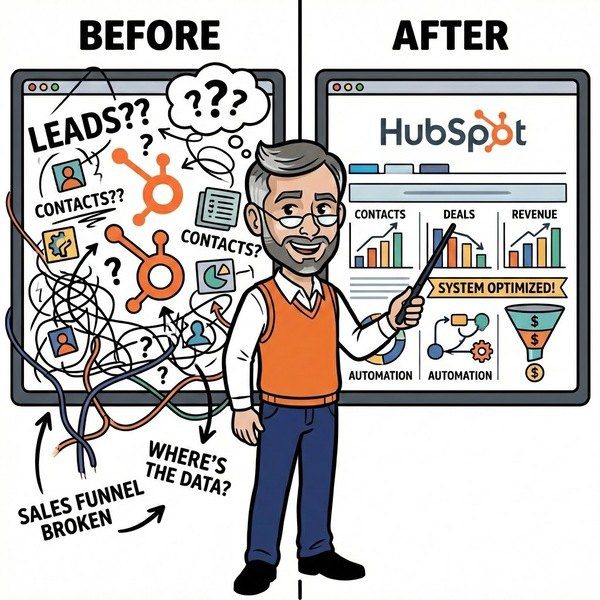
The fundamental problem lies in data silos. Your marketing team generates leads, but that lead data doesn’t flow seamlessly to sales. Sales has conversations and closes deals, but that valuable customer interaction data doesn’t easily inform marketing campaigns or customer success efforts. This disconnect leads to disjointed customer experiences, inefficient workflows, and a lack of unified visibility into your entire customer journey.
For lean startup teams, efficiency isn’t a luxury; it’s a necessity. Every manual data transfer, every piece of information lost between systems, is time taken away from engaging prospects, closing deals, or delighting customers. You need to automate repetitive tasks, gain insights quickly, and ensure everyone is working from the same single source of truth about your customers and prospects. Building a foundation for scalable growth means establishing unified processes and data flows from day one. Relying on scattered free tools or manual processes might seem viable for the first few customers, but it becomes a significant bottleneck long before you hit product-market fit at scale.

An integrated platform solves these issues by connecting your sales, marketing, and customer service data and activities. It allows teams to work together seamlessly, provides comprehensive reporting across the customer lifecycle, and automates the handover of leads from marketing to sales, and customers from sales to service. This unification is essential for startups aiming for rapid, capital-efficient growth.
Understanding the HubSpot for Startups Program
HubSpot is a name synonymous with inbound marketing and sales, offering a powerful suite of tools across its various “hubs.” However, their standard pricing can often be a barrier for early-stage companies operating on lean budgets. Recognizing this, HubSpot created a specific offering tailored to the startup ecosystem.
What is the HubSpot for Startups Program?
The HubSpot for Startups program is specifically designed to provide eligible startups with access to HubSpot’s growth platform at a significantly reduced cost, coupled with tailored educational resources and community support. Its core purpose is to empower early-stage companies to build their sales, marketing, and service operations on a solid, scalable platform from the beginning, without the prohibitive upfront investment of standard pricing.
This program differs from standard HubSpot pricing primarily in its cost structure and included resources. While standard pricing scales based on feature tiers and contact database size, the startup program offers a substantial discount on eligible HubSpot software for a defined period, typically starting at lower-tier products suitable for early-stage needs. The eligibility criteria for the program usually involve factors like company age, funding stage (e.g., seed-stage, Series A), and affiliation with a recognized accelerator, incubator, or venture capital firm within HubSpot’s partner network.
The target audience for the program is clear: startups that have demonstrated early traction, have a plan for growth, and need a sophisticated yet user-friendly platform to execute their sales and marketing strategies but require pricing that aligns with their current financial realities.
Key Benefits of the Program
The advantages of joining the HubSpot for Startups program extend far beyond just a price reduction. For a resource-constrained startup, these benefits can be game-changers:
Significant Upfront Discount: This is often the most immediate and impactful benefit. The program provides a substantial discount (typically 50-90% off standard pricing for the first year, depending on eligibility tier) on eligible HubSpot software subscriptions. This makes accessing powerful tools like marketing automation for startups and a robust best crm for startups solution financially feasible early on. This directly addresses the critical startup challenge of budget constraints, freeing up capital for other essential investments like talent or product development.
Access to Educational Resources and Tailored Content: Startups often have limited in-house expertise across all growth disciplines. The program provides access to HubSpot’s extensive library of educational content, including courses, certifications, guides, and templates, many tailored specifically to the needs and challenges of startups. This empowers teams to learn and implement best practices quickly.
Community Access and Potential Mentorship Opportunities: Being part of the program often connects you with the broader HubSpot community and network of startup founders and operators. This can provide invaluable peer support, shared learning experiences, and potential mentorship opportunities through partner VC firms or accelerators.
Support Specifically Geared Towards Startups: While premium support varies by plan, the program often facilitates access to support resources that understand the unique context and urgency of a startup environment.
How the Program Addresses Startup Budget Constraints Directly: By offering a significantly reduced cost for powerful software, the program removes a major barrier to entry. It allows startups to invest in a top-tier platform much earlier in their journey than standard pricing would permit, enabling them to build efficient processes and data foundations from the outset.
These benefits collectively empower startups to punch above their weight, leveraging sophisticated technology and knowledge to accelerate growth efficiently.
Core HubSpot Functionality Relevant to Startup Growth
At its heart, HubSpot is a platform built around a central CRM, with interconnected hubs for different aspects of the customer journey. For startups, several of these hubs and their functionalities are particularly relevant for establishing strong growth foundations.
Best CRM for Startups: Centralizing Customer Data
Why is a dedicated CRM essential for startups from the start? Simple: growth requires relationships, and managing those relationships requires organization. Relying on spreadsheets or individual inboxes is unsustainable. A CRM provides a central database for all your contact and company information, interactions, and history. It’s the single source of truth for your customer base. For a startup evaluating the best crm for startups, HubSpot’s offering is a strong contender due to its robust free tier and seamless integration with other growth tools.
The HubSpot CRM Free tier itself is a powerful starting point for any startup. It allows you to:
Contact and Company Management: Organize all your leads, prospects, and customers in one place. Track essential details, demographics, and firmographics.
Tracking Interactions and Communication History: Automatically log emails sent and received (when connected to your inbox), track calls, and record notes from meetings. This provides a complete timeline of your interactions with each contact or company, ensuring no context is lost, even as team members change.
Pipeline Management for Sales Teams: Visual drag-and-drop sales pipeline allows sales teams to track deals through custom stages, forecast revenue, and identify bottlenecks in their process. This is critical for predicting growth and managing sales activities effectively.
Customization for Unique Startup Workflows: While the free CRM is robust, paid tiers (accessible via the startup program discount) offer increasing levels of customization for properties, deal stages, and views, allowing you to tailor the CRM precisely to your startup’s unique sales process.
Starting with the free HubSpot CRM is an excellent way for any startup to get organized and evaluate the platform before committing to a paid plan through the startup program. It lays the essential groundwork for managing relationships effectively from the earliest stages.
Marketing Automation for Startups: Engaging and Nurturing Leads
Once you start generating leads, managing and nurturing them manually quickly becomes overwhelming for a lean team. This is where marketing automation becomes indispensable. Marketing automation for startups refers to using software to automate repetitive marketing tasks like email sending, social media posting, and lead nurturing workflows. Its value lies in its ability to deliver personalized, timely communications to your audience at scale, without requiring constant manual effort.
HubSpot’s Marketing Hub, accessible at discounted rates through the startup program, offers key features for marketing automation for startups:
Key Marketing Automation Features in HubSpot: This includes tools for creating landing pages and forms to capture leads, robust email marketing capabilities (segmentation, A/B testing, analytics), social media scheduling and monitoring, and, crucially, automated workflows.
Building Lead Generation Funnels: HubSpot allows you to build and manage entire lead generation funnels within a single platform – from attracting visitors with blog posts and landing pages, capturing their information with forms, to nurturing them via automated email sequences.
Nurturing Leads Efficiently Without Manual Effort: Workflows allow you to automatically send a series of targeted emails to leads based on their behavior (e.g., downloading an ebook, visiting a specific page). This keeps leads engaged and moves them down the funnel even while your team focuses on high-touch activities.
Segmenting Audiences for Targeted Messaging: The CRM integration allows for powerful segmentation based on collected data. This means you can send highly relevant, personalized messages to different groups of leads or customers, increasing engagement and conversion rates.
Measuring Marketing Campaign Effectiveness: Integrated analytics provide detailed insights into how your marketing efforts are performing – website traffic, lead conversion rates, email open rates, click-through rates, and more. This data is crucial for startups needing to quickly understand what’s working and iterate on their strategies.
Implementing marketing automation for startups early allows you to scale your marketing efforts without exponentially increasing headcount, ensuring that valuable leads are nurtured consistently.
Sales Hub for Startups: Streamlining the Sales Process
As your startup grows, the sales process becomes more complex. Moving beyond basic contact management requires tools specifically designed to increase sales efficiency and close deals faster. HubSpot’s Sales Hub, also available via the startup program, provides these capabilities, building directly on the foundation of the CRM.
Transitioning from a basic CRM to more advanced sales tools typically happens as your sales team grows (even if it’s just from 1 to 2 people) and the volume of leads and deals increases. Key features within Sales Hub are designed to streamline the sales process:
Key Features for Sales Efficiency: This includes robust deal tracking with customizable properties and pipeline views, task management to ensure follow-ups don’t fall through the cracks, meeting scheduling tools that sync with calendars and allow prospects to book time directly, and automated email sequences to automate outreach while maintaining personalization.
Improving Sales Productivity for Small Teams: Tools like templates, snippets, and document tracking reduce repetitive work, giving sales reps more time to focus on selling. The automation of tasks like logging activities ensures data is accurate and up-to-date without manual entry.
Forecasting and Reporting on Sales Performance: Sales Hub provides valuable reporting on pipeline health, deal velocity, sales activity, and revenue forecasting. For startup leaders, this visibility is critical for understanding sales performance, identifying areas for improvement, and making accurate projections for growth.
Integrating with Other Sales Tools or Processes: While HubSpot aims to be an all-in-one platform, Sales Hub integrates with many other common sales tools, ensuring flexibility within your existing or future tech stack.
Leveraging Sales Hub functionality allows startups to professionalize their sales process, increase the productivity of their sales team (even a small one), and gain crucial insights into their revenue generation engine.
Service Hub & Other Hubs (Briefly Mention Relevance)
While sales and marketing are often the initial focus for startups, customer retention and success are equally vital for sustainable growth. HubSpot’s Service Hub provides tools for managing customer support, building help centers, and gathering customer feedback. While perhaps not the absolute first priority for a pre-product-market fit startup, establishing a foundation for customer service early on is crucial for building loyalty and reducing churn, especially in a SaaS model. The integrated nature means customer service interactions are tied back to the same CRM record, providing a complete view of the customer relationship.
As a startup scales, other hubs like CMS Hub (for website building) or Operations Hub (for data automation and sync) may become relevant, demonstrating how the HubSpot for Startups platform is designed to grow with your company, avoiding the need to switch platforms entirely as your needs evolve.
Solving Specific Startup Challenges with HubSpot
Beyond just offering features, the power of the HubSpot for Startups offering lies in how it directly addresses the most acute pain points faced by early-stage companies.
Addressing Budget Constraints
As mentioned, the most significant hurdle for many startups evaluating powerful software is cost. The hubspot startup program directly tackles this by offering substantial discounts on their software licenses. This isn’t just a small percentage off; these discounts can be transformative for a startup’s budget, making Pro or Enterprise-level features accessible at a fraction of the standard price for a critical period.
Calculating the ROI for a startup considering this investment involves looking beyond the sticker price. The question is: does the efficiency gained, the leads captured and nurtured more effectively, the sales deals closed faster, and the data silos eliminated justify the discounted cost? For many startups, the ability to implement sophisticated marketing automation for startups and manage their pipeline with a top-tier CRM leads to measurable improvements in lead velocity, conversion rates, and sales cycles, delivering a clear return on investment even at the program’s reduced price point. It’s about balancing the cost with the powerful functionality and growth potential it unlocks.
Ease of Use and Rapid Implementation
Startups don’t have months for complex software rollouts. They need tools that are intuitive, easy to learn, and quick to implement so they can start seeing results immediately and iterate on their strategies rapidly. HubSpot has a strong reputation for user-friendliness.
Getting the team up to speed quickly is essential. HubSpot invests heavily in user interface design and provides extensive training resources (many included or easily accessible through the startup program) that enable even non-technical team members to start using the platform effectively within days or weeks, not months. This ease of use allows startups to iterate on their sales and marketing strategies quickly. For example, imagine your marketing lead has a new idea for a lead nurturing sequence. With HubSpot, they can likely build that workflow and launch it within an afternoon, test its performance, and make adjustments based on real data, rather than waiting for IT or grappling with complex, non-intuitive interfaces. This agility is vital for startups in search of repeatable growth models.
Integration and Platform Unification
The value of an integrated platform vs. a patchwork of disconnected tools cannot be overstated for a startup. Every minute spent transferring data, reconciling conflicting information, or trying to build custom integrations is a minute not spent growing the business.
HubSpot’s design as an integrated platform connects sales, marketing, service, and CMS data around the central CRM. This ensures a single source of truth for customer information, providing a 360-degree view of every interaction. This unification eliminates data silos, reduces manual work, and enables powerful reporting across the entire customer lifecycle.
Beyond its own hubs, HubSpot also boasts a robust App Marketplace with integrations to hundreds of third-party tools relevant to startups, from accounting software like QuickBooks to communication platforms like Slack, and countless niche marketing and sales tools. This allows startups to leverage their existing tools where necessary while still benefiting from the integrated core platform, avoiding the significant drag created by disconnected systems.
Scalability for Long-Term Growth
Choosing technology in a startup isn’t just about current needs; it’s about anticipating future growth. A platform that works for 10 customers but breaks at 100 or 1000 creates a painful and costly migration headache down the line.
One of the key advantages of HubSpot is its inherent scalability. The platform is designed to grow with a startup. As your needs evolve, you can easily upgrade within the HubSpot ecosystem, moving from Free CRM to Starter, Professional, or Enterprise tiers within the relevant hubs. You don’t need to rip out one system and replace it with an entirely new one. This smooth upgrade path avoids the need to switch platforms later, saving significant time, money, and operational disruption.
HubSpot supports growth from seed stage through Series A and beyond, providing increasingly sophisticated tools for automation, reporting, team management, and customization as your company matures. This makes it a technology investment that can potentially support your journey for years, if not the lifetime of your business.
Evaluating HubSpot for Your Startup: Key Considerations
Deciding whether HubSpot for Startups is the right fit requires careful evaluation against your specific context and needs. As a startup leader, here are some key considerations:
Is the program the right fit for your current stage and funding? The program is typically designed for companies with some level of funding or accelerator affiliation. Ensure your startup meets the eligibility criteria. Also, consider if your current scale truly warrants a platform like HubSpot, even at a discount. Are you generating enough leads or managing enough customer interactions to leverage its power?
Identifying your most pressing sales and marketing needs. Are you primarily struggling with lead generation? Sales pipeline management? Customer communication? While HubSpot is integrated, understanding your core pain points will help you prioritize which hubs and features will deliver the most immediate value.
Comparing HubSpot’s offering to other “best crm for startups” alternatives. While this article focuses on HubSpot, it’s essential to do your due diligence. Compare HubSpot’s features, ease of use, scalability, and especially the cost after the program discount period ends against other contenders in the “best crm for startups” space. Consider options like Salesforce Essentials, Zoho CRM, Pipedrive, or platform alternatives like ActiveCampaign, evaluating which best aligns with your specific needs and projected future costs.
Assessing the level of complexity your team can handle. While HubSpot is user-friendly, it is a powerful platform with many features. Ensure your team has the capacity and willingness to learn and utilize the platform effectively. Training resources are available, but dedicating time to learning is necessary.
Understanding the ongoing costs after the program discount period. The program offers a significant upfront discount, but it’s crucial to have a clear understanding of what the subscription costs will be once the discount period expires (typically 1-2 years). Plan for this step-up in cost and ensure it aligns with your projected revenue and growth trajectory.
This structured evaluation process will help you move beyond the initial attraction of the discount and make a strategic decision based on long-term fit and value.
Real-World Success: Startup Case Studies and Testimonials
Hearing directly from other startup leaders who have navigated this decision can provide valuable perspective and add significant E-E-A-T. While specific names can vary frequently, the types of successes startups achieve with HubSpot are consistent themes.
Many startups report significant improvements in lead conversion rates after implementing marketing automation for startups workflows and leveraging HubSpot’s landing page and form tools. Others highlight how the visual pipeline and sales automation features of Sales Hub dramatically reduced administrative time for their sales reps, leading to more time spent selling and faster deal cycles. Startups focused on content marketing often find the integrated blogging and SEO tools invaluable for driving organic traffic and generating inbound leads directly into the CRM.
Examples of common successes include:
A seed-stage SaaS company increasing their marketing-qualified leads by 300% in six months by implementing HubSpot’s marketing automation workflows.
A startup sales team reducing their average sales cycle by two weeks through better pipeline management and the use of sales productivity tools like meeting links and email sequences.
An early-stage e-commerce business improving customer retention by using HubSpot’s Service Hub to manage support inquiries and gather feedback efficiently.
These tangible results underscore how leveraging an integrated platform tailored for growth can translate directly into key business outcomes for startups. The experiences of founders and sales/marketing leaders in other early-stage companies provide social proof and illustrate the potential ROI.
Making the Decision: Is HubSpot for Startups Right for You?
Choosing the right technology stack is a foundational decision for any startup. For sales and marketing leaders, selecting a platform that can support rapid, efficient growth from day one is paramount.
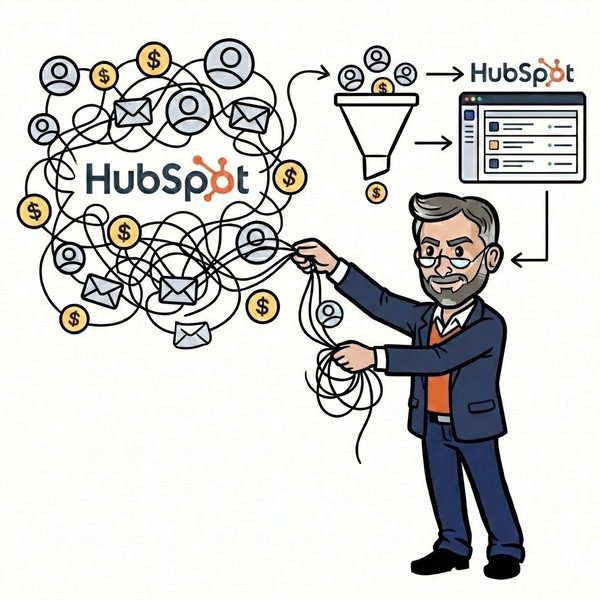
HubSpot for Startups offers a compelling proposition: access to a powerful, integrated platform with robust CRM, marketing automation for startups, sales tools, and more, all at a price point designed to be accessible to early-stage companies through the hubspot startup program. It directly addresses key startup challenges like budget constraints, the need for ease of use, the imperative for integration, and the requirement for scalability.
The single most important message to take away is this: HubSpot for Startups provides a scalable, integrated platform and resources specifically priced and designed to help early-stage sales and marketing teams build foundations for rapid, efficient growth. It’s an investment in building a connected, data-driven growth engine rather than assembling a fragile collection of disparate tools.
To make an informed decision for your startup, consider these actionable steps:
Verify Your Eligibility: Check if your startup meets the criteria for the hubspot startup program.
Identify Your Core Needs: Clearly define the most critical sales and marketing challenges you need to solve right now.
Explore the Platform: Take advantage of the HubSpot CRM Free tier to get hands-on experience with the core database and basic functionalities.
Request a Tailored Demo: Reach out to HubSpot’s startup team for a demo specifically focused on your company’s challenges and how the platform can address them.
Understand the Long-Term Cost: Get a clear picture of the pricing structure after the program discount expires and factor that into your long-term financial planning.
Evaluating HubSpot for Startups is a strategic exercise. By considering its tailored benefits, core functionalities, and how it addresses specific startup pain points, sales and marketing leaders can determine if this integrated growth platform is the right technological cornerstone for their journey towards rapid, sustainable scale.
Ready to see how HubSpot for Startups could work for your team? Explore HubSpot for Startups pricing and features tailored for early-stage companies.
Further Reading
- Inside Sales vs. Outside Sales: Choosing the Right Model
- What is ICP? A Guide to Creating Your Ideal Customer Profile
- How HubSpot Training Translates to Measurable Performance Gains
- What is Growth Consulting? A Leader’s Guide to Accelerating Sales & Marketing Performance
- What do Gym Marketing Agencies Do Best? Unlocking Growth for Fitness Businesses