Table of Contents
The High Cost of Confusion: Why Your Value Proposition Needs a Serious Upgrade
Deconstructing “Value Proposition”: What It Truly Means for Your Business
Laying the Foundation: Deep Customer Understanding is Non-Negotiable
The Workshop: A Step-by-Step Framework for Crafting Your Powerful Value Proposition
Forging Uniqueness: How to Articulate Your Competitive Advantage
The Bridge: Implementing Your Value Proposition Across Sales and Marketing
Measuring Success: Quantifying the Impact of a Strong Value Proposition
Conclusion: Your Value Proposition as the Engine of Alignment and Growth
Useful Related Posts from Sales Funnel Professor
“Why aren’t our sales conversions higher?” or “Is our marketing message really clear?”
If you’re a marketing or sales leader, chances are questions like these keep you up at night. You know your product or service delivers value. You see the potential. Yet, articulating exactly what makes your offering uniquely valuable to your target customers often feels harder than it should. This difficulty translates into inconsistent messaging across your teams, wasted marketing spend on poorly targeted campaigns, and frustratingly long, inefficient sales cycles.
As an expert focused on aligning marketing and sales for tangible business growth, I see this challenge constantly. The disconnect isn’t usually about the quality of the offering itself, but about the clarity and consistency of the message.
This article is designed to cut through that confusion. We’re going to break down the concept of a value proposition from a practical, strategic perspective. We’ll walk through tangible steps to craft, refine, and effectively communicate a compelling value proposition that truly resonates with your ideal customer profile. This isn’t theoretical; it’s about building the foundational core that drives both marketing effectiveness and sales efficiency. Because, at the end of the day, a clear, customer-centric value proposition is the bedrock of efficient and effective sales and marketing, directly driving growth by communicating a unique benefit.

The High Cost of Confusion: Why Your Value Proposition Needs a Serious Upgrade
It’s a scenario I’ve witnessed countless times: executive teams who intuitively understand the impact their solution has, but struggle to distill that impact into a crisp, universally understood statement. They know why they built it, but articulating why a specific customer should care right now feels elusive.
This lack of clarity isn’t benign; it has real, measurable consequences throughout your organization:
- Inconsistent Messaging: Different sales reps describe the value differently. Marketing campaigns use varying language. Your website says one thing, your sales deck another. This fragments your brand identity and confuses potential customers.
- Wasted Marketing Spend: Without a sharp understanding of the unique value you offer and to whom, your marketing efforts become scattershot. Generic campaigns targeting broad audiences, irrelevant content, and low click-through rates are direct symptoms. You’re spending money to talk to people who don’t see why they should listen.
- Inefficient Sales Cycles: Sales teams without a clear, shared value proposition are forced to figure out the core message on the fly in every conversation. This leads to longer discovery calls, difficulty handling objections, lower conversion rates, and increased sales training overhead. Reps end up selling features instead of the transformative benefits.
- Lost Deals: When prospects don’t immediately grasp the unique benefit you provide relative to their specific problems and other options (including doing nothing), they disengage. Your offering might be genuinely better, but if the value isn’t communicated effectively, it’s a missed opportunity.
The symptoms—wasted spend, lost deals, low conversion rates—aren’t the root cause. They are the outcomes of a fundamental issue: a weak, unclear, or inconsistently communicated value proposition. Getting this right isn’t a marketing exercise or a sales training add-on; it’s the strategic core for unlocking efficiency and driving sustainable growth.
Deconstructing “Value Proposition”: What It Truly Means for Your Business
Let’s move past the buzzwords and define what a value proposition really is in the context of driving sales and marketing outcomes. It’s far more than a catchy slogan or a lofty mission statement.
A truly effective value proposition is a clear statement that explains:
- Who your ideal customer is.
- What specific problem or need you solve for them.
- How your solution uniquely addresses that problem or need.
- What tangible, quantifiable benefits the customer receives by choosing you.
It’s a promise of value delivered, a statement of the unique outcome a customer can expect.
Understanding the core components is crucial:
- Specific Target Audience: You can’t offer value to everyone. Your value proposition must speak directly to a defined group of people (your ideal customer profile) with specific needs and problems.
- Clear Customer Problem or Need: What keeps your target audience up at night? What are their frustrations, challenges, or unmet aspirations? A strong value proposition starts by acknowledging and validating their struggle.
- The Unique Solution Offered: How does your product or service directly address that specific problem or need? This is where you introduce your offering, but always framed in terms of the solution it provides.
- Quantifiable and Tangible Benefits: This is perhaps the most critical piece. Customers don’t buy features; they buy what those features do for them. Focus on the positive outcomes: saving time, reducing costs, increasing revenue, improving safety, gaining peace of mind, etc. Ideally, these benefits should be as concrete and measurable as possible.
Let’s clarify a common point of confusion: Value Proposition vs. Unique Selling Proposition (USP). Think of your Value Proposition as the overarching promise of value to a specific customer segment, encompassing the problem, solution, and benefits. Your Unique Selling Proposition (USP) is a component of the value proposition, specifically highlighting what makes your offering distinct from alternatives. The USP answers: “Why choose us over anyone else?” It’s the core differentiator. While related, the Value Proposition is broader, focusing on the entire bundle of value delivered.
Crucially, mastering your value proposition requires understanding the difference between features and benefits.
- Features: What your product is or does. (e.g., “Our software has a cloud-based dashboard.”)
- Benefits: What the customer gains from that feature. (e.g., “Access your data from anywhere, anytime, reducing reporting delays and improving decision-making speed.”)
Your value proposition must be benefit-driven. Sales teams stuck talking only about features will fail to connect with customer needs. Marketing material listing only features will fall flat. Focus relentlessly on the outcome for the customer, potential customers, and nurturing them until they reach a state where they are receptive and qualified for a sales conversation.
Laying the Foundation: Deep Customer Understanding is Non-Negotiable
Before you can articulate value, you must understand who you’re offering it to and what they truly value. This goes beyond surface-level demographics and requires a deep dive into your ideal customer profile (ICP).
Identifying your ICP isn’t just about saying “SMBs” or “Marketing Managers.” It requires precision. What industry are they in? What size company? What is their role and seniority? What are their specific responsibilities and pressures?
Going Beyond Demographics: Understanding Psychographics and Behavior
To craft a value proposition that resonates, you need to understand the human behind the job title.
- Motivations, Goals, and Aspirations: What are they trying to achieve professionally and personally? What are their ambitions for their company or their career? How does success look for them?
- How They Make Purchasing Decisions: What is their typical process? Who is involved? What information do they seek? What are their criteria for evaluating solutions? What are their potential hesitations or risks?
Understanding these psychographics helps you frame your value proposition in language that aligns with their worldview and objectives.
Uncovering and Empathizing with Customer Pain Points
This is where the real insight lies. What are the specific problems, challenges, frustrations, and obstacles your ICP faces? These are their pain points, and your value proposition must position your offering as the reliever of that pain or the enabler of desired gains.
Methods for deep customer research are essential here:
- Customer Interviews: Speak directly to your best customers and your target prospects. Ask open-ended questions about their challenges, their goals, their current processes, and their experiences with existing solutions.
- Surveys and Questionnaires: Gather feedback at scale, but design questions that uncover problems and needs, not just satisfaction levels.
- Analyzing Customer Feedback: Pour over support tickets, customer reviews, sales call notes, and social media mentions. What are the recurring themes of frustration or desire?
- Observing Behavior: How do they use your product? Where do they get stuck? Where do they achieve unexpected success?
Identifying pain points isn’t just listing frustrations; it’s about empathizing. Put yourself in their shoes. Feel the weight of their problems.
Adopting a “Jobs-to-Be-Done” perspective can be incredibly powerful here. (Reference: Jobs-to-Be-Done framework). Instead of focusing solely on the customer or the product, JTBD focuses on the underlying problem the customer is trying to solve or the progress they are trying to make in a specific circumstance. What “job” is the customer trying to hire your product (or a competitor’s, or an internal process) to do? Understanding the job provides a deeper context for their needs and motivations.
Finally, you must connect these customer needs and pain points directly to your offering. This isn’t a leap of faith; it’s a logical bridge. Because your customer experiences Pain X and needs Gain Y, Feature A of your solution provides Benefit Z, which directly addresses X and enables Y.
The Workshop: A Step-by-Step Framework for Crafting Your Powerful Value Proposition
With a solid understanding of your customer and their needs, you’re ready to begin crafting your value proposition. This is an iterative process, not a one-time event.
Start with initial brainstorming and hypothesis generation. Based on your customer research, what do you think is the core value you offer to your ICP? Jot down initial ideas, focusing on the problem-solution-benefit linkage.
Leveraging the Value Proposition Canvas for Structure and Clarity
A highly effective tool for structuring this process is the Value Proposition Canvas, developed by Alexander Osterwalder. (Reference: “Value Proposition Canvas”). It provides a visual framework to ensure you achieve alignment between what your customer wants and what you offer.
The canvas has two main sides:
- Customer Segment Side: This side is based entirely on your deep customer understanding.
- Customer Jobs: What are the tasks your customers are trying to perform, the problems they are trying to solve, or the needs they are trying to satisfy? (Think functional jobs, social jobs, emotional jobs, and supporting jobs).
- Pains: What are the bad outcomes, risks, and emotions your customer experiences in relation to the jobs they are trying to do? (Think undesired outcomes, obstacles, and risks).
- Gains: What are the outcomes and benefits your customer wants? (Think required gains, expected gains, desired gains, and unexpected gains).
- Value Map Side: This side describes how you intend to create value for that customer segment.
- Products and Services: A list of all the products and services your value proposition builds around.
- Pain Relievers: Describes how your products and services alleviate specific customer pains. How do you eliminate or reduce negative emotions, undesired costs and situations, and risks experienced by your customer?
- Gain Creators: Describes how your products and services create customer gains. How do you produce positive outcomes, benefits, and savings that your customer wants?
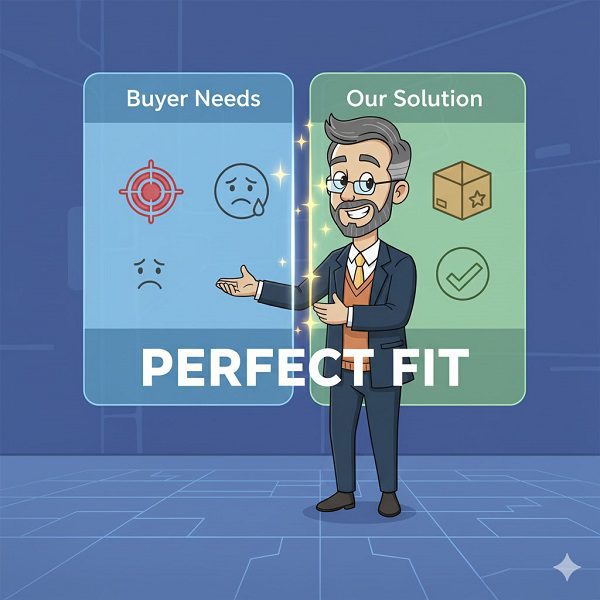
The magic happens when you achieve “fit” between the two sides. Problem-Solution Fit is achieved when your Pain Relievers and Gain Creators directly address the most important Pains and Gains in your customer segment. Product-Market Fit is achieved when your value proposition is embedded in business models that are scalable and profitable. The Value Proposition Canvas helps you visualize and test this fit.
Drafting initial value proposition statements can feel awkward at first. Common pitfalls include:
- Being too generic (“We help businesses succeed”).
- Focusing only on features (“Our software has X, Y, Z”).
- Using jargon the customer won’t understand.
- Not clearly stating who it’s for or what problem it solves.
Refining and sharpening your statement is key. Aim for conciseness, clarity, and impact. A good test: Could a customer read it and immediately understand if your offering is relevant to them?
Integrating principles for clarity, such as those from the StoryBrand methodology, can be helpful. (Reference: StoryBrand methodology). StoryBrand emphasizes positioning the customer as the hero, not your company. Your company is the guide that helps the hero (the customer) overcome their challenge and achieve success. Framing your value proposition through this lens ensures it remains firmly customer-centric, focusing on their journey and their desired outcome.
Your refined value proposition statement should be a crisp, internal touchstone – a single source of truth that all teams understand and can articulate in their own words depending on the context.
Forging Uniqueness: How to Articulate Your Competitive Advantage
In a crowded market, simply solving a problem isn’t enough. Your value proposition must clearly articulate why your solution is different and better for your specific ICP than the alternatives. This is where your competitive advantage comes into play.
Begin by analyzing your direct and indirect competitors. Who else is trying to solve a similar problem for your target audience? What are their stated value propositions? What are their strengths and weaknesses from the customer’s perspective? Don’t forget indirect competitors – the ways customers currently solve their problem, even if it’s inefficiently (e.g., spreadsheets, manual processes, or simply doing nothing).
Identifying true differentiators is critical. What do you do genuinely better or differently in a way that matters to your ICP? This could be:
- Superior performance (faster, more reliable)
- Lower cost (over time, considering TCO)
- Unique features that provide specific, valuable benefits
- Better customer experience or support
- Specific expertise or niche focus
- A unique business model
The challenge is translating internal strengths into external customer value. For example, having patented technology is an internal strength. The external customer value is the benefit that technology provides – perhaps it enables greater efficiency or reduces risk in a way competitors can’t match.
Articulating your Unique Selling Proposition (USP) within the broader value proposition context provides that sharp edge. Your USP answers the question: “Why only you?” It’s the core reason a customer should choose your solution specifically. It might be “the fastest implementation in the industry” or “the only solution built specifically for X niche with Y compliance.” Your USP should be memorable and clearly linked to a key benefit.
Learning from Real-World Successes and Failures: Unique Value Proposition Examples
Let’s look at anonymized, hypothetical examples to illustrate the power of a strong value proposition compared to a weak one. (Please note: These are illustrative, hypothetical scenarios created for this article to demonstrate concepts.)
Hypothetical Example 1: Project Management Software
- Weak/Generic Statement (Common Pitfall): “Our project management software helps teams stay organized and complete projects faster.”
- Analysis: Who is it for? What specific pain does it solve? How is it different? This could apply to dozens of tools. It’s generic and forgettable.
- Stronger, More Unique Statement (Hypothetical): “For marketing teams overwhelmed by juggling multiple campaigns and unclear deadlines (ICP & Pain), our intuitive project management platform provides a single source of truth for all tasks, assets, and communication (Solution), reducing project delays by 20% and freeing up 5 hours per week per manager (Tangible Benefit & USP – faster, clearer outcomes for a specific group).”
- Analysis: Clear ICP, stated pain, specific solution, quantifiable benefits, and a hint of uniqueness (“intuitive,” “single source of truth” addressing a common marketing pain). This immediately tells a marketing manager why they should pay attention.
Hypothetical Example 2: B2B Cybersecurity Service
- Weak/Feature-Focused Statement (Common Pitfall): “We offer advanced threat detection and intrusion prevention systems.”
- Analysis: Jargon-heavy, focuses on technical features, doesn’t explain the impact for the business leader.
- Stronger, Benefit-Driven Statement (Hypothetical): “Protecting mid-sized e-commerce businesses from costly data breaches and reputational damage (ICP & Pain), our managed cybersecurity service proactively identifies and neutralizes threats using AI-powered surveillance (Solution), giving you peace of mind and significantly reducing your risk exposure without needing in-house security expertise (Tangible Benefit & USP – peace of mind, reduced risk, managed service advantage).”
- Analysis: Targets a specific business type with a major pain point (costly breaches), explains the solution in terms of outcome (proactively identifies), and clearly states the benefits (peace of mind, reduced risk) and the unique aspect (managed service, no in-house expertise needed).
Key Takeaways: Strong value propositions are specific, benefit-driven, address a clear customer problem, and articulate a meaningful difference. Weak ones are generic, feature-focused, and fail to connect with the customer’s reality. Use these principles to guide your own drafting and refinement.
The Bridge: Implementing Your Value Proposition Across Sales and Marketing
Crafting a brilliant value proposition on paper is only half the battle. Its true power is unlocked when it becomes the guiding principle for every customer interaction, from the first marketing touchpoint to the final sales pitch and beyond. This requires company-wide understanding and relentless internal alignment.
Ensure everyone who interacts with a customer – marketing, sales, customer success, even product development – understands the core value proposition. It shouldn’t live solely within the marketing department.
Training teams to live and breathe the value proposition is critical. Role-playing, workshops, and incorporating it into onboarding are essential. They need to understand why this messaging is important and how to translate it into their specific roles.
Integrating the Value Proposition into Your Marketing Strategy
Your value proposition should be the invisible hand guiding every marketing activity.
- Website Messaging and Architecture: Is your value proposition immediately clear on your homepage? Do landing pages speak directly to specific customer segments and their pain points, aligning with the VP?
- Optimizing Landing Pages: Each landing page should be a micro-value proposition for a specific offer or segment, clearly stating the problem solved and the benefit gained.
- Developing Compelling Content Marketing: Your blog posts, guides, videos, and webinars should consistently reinforce elements of your value proposition. Address the pain points you solve, showcase the benefits, and demonstrate your unique expertise.
- Crafting Effective Advertising Copy and Campaign Themes: Ad headlines and copy need to grab attention by highlighting the core problem you solve and the key benefit you provide, aligned with your VP.
- Guiding Social Media Communication: Your social presence should reflect your value proposition, engaging with your audience on topics related to their challenges and showcasing the value you offer.
Marketing’s role is to attract the right audience by clearly communicating the potential value to people with the problems you solve.
Empowering Your Sales Team to Sell on Value
A well-equipped sales team understands and can articulate the value proposition fluently.
- Incorporating the Value Proposition into Sales Scripts and Playbooks: Don’t just give reps bullet points; teach them how to weave the value proposition into conversational language.
- Using the VP to Structure Effective Discovery Calls: Train reps to ask questions that uncover the specific pains and gains outlined in the customer segment side of your value proposition canvas. The VP provides a roadmap for discovery.
- Leveraging the VP to Handle Common Objections Effectively: Most objections relate to perceived lack of value (cost, timing, need). A strong understanding of the VP allows reps to reframe the conversation around the significant benefits and ROI.
- Training Sales Reps to Articulate Benefits, Not Just Features: This is a continuous effort. Provide them with benefit-driven language and examples, tied directly back to the features. Instead of “It has X feature,” teach them “Because it has X feature, you can achieve Y benefit, which solves Z problem.”
Sales’ role is to confirm the potential value for a specific prospect and demonstrate how your unique solution delivers that value more effectively than alternatives.
Ensuring consistent messaging and positioning across all customer touchpoints builds trust and reinforces your brand identity. When marketing attracts leads with a specific message, and sales follow up with the same core message, the customer experience is seamless and credible. This alignment is where efficiency and effectiveness truly take off.
Measuring Success: Quantifying the Impact of a Strong Value Proposition
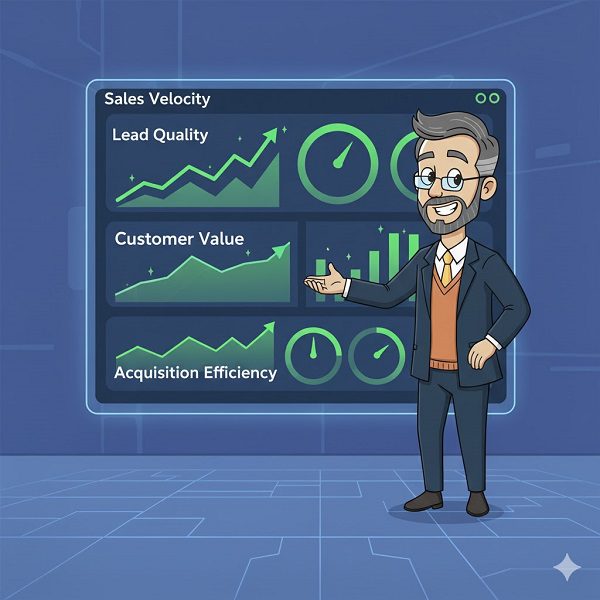
The impact of a well-defined and consistently communicated value proposition isn’t just theoretical; it’s measurable. By establishing key performance indicators (KPIs) linked to your sales and marketing efforts, you can track the tangible benefits.
Look for improvements in metrics such as:
- Improved Website Conversion Rates: Are more visitors taking desired actions (e.g., downloading a guide, requesting a demo) when landing pages clearly articulate value?
- Higher Quality Marketing Leads: Is marketing attracting prospects who are a better fit for your ICP and more likely to convert, indicating the message is resonating with the right people?
- Increased Sales Velocity and Shorter Sales Cycles: Are deals closing faster because prospects quickly grasp the value and how it solves their problems?
- Lower Customer Acquisition Costs (CAC): Is marketing spend becoming more efficient as campaigns resonate more strongly and attract higher-quality leads?
- Higher Customer Lifetime Value (CLTV): Are customers acquired with a clear understanding of your unique value more likely to be retained and expand their relationship with you?
- Improved Marketing Return on Investment (ROI): Are marketing campaigns delivering better results for the investment?
- Enhanced Brand Perception and Positioning: Are customers and prospects articulating your value proposition back to you in feedback? Is your brand becoming synonymous with solving the specific problem you address?
Establishing feedback loops is vital for continuous refinement. Sales teams hear customer objections and questions firsthand – this is invaluable input for refining messaging. Customer success teams understand where customers find the most value post-purchase. This feedback should flow back to marketing and product teams to ensure the value proposition remains relevant and accurate.
By connecting these measurable outcomes back to the strength and consistency of your value proposition, you can demonstrate its direct impact on business growth and efficiency gains. It moves from being a theoretical concept to a strategic driver of performance.
Conclusion: Your Value Proposition as the Engine of Alignment and Growth
We’ve covered significant ground, from deconstructing the true meaning of a value proposition to building it step-by-step, ensuring its uniqueness, and finally implementing and measuring its impact across sales and marketing.
The takeaway is clear: a clear, compelling, and consistently communicated value proposition is not a marketing luxury; it’s a fundamental necessity for any business aiming for efficient growth. It acts as the essential bridge between your offering and your customer’s needs, and critically, it serves as the single source of truth that aligns your marketing and sales teams.
When marketing messages attract prospects based on clearly articulated value, and sales conversations validate and deepen that perceived value, you create a powerful, unified go-to-market motion. This alignment reduces friction, eliminates wasted effort, and directly contributes to higher conversion rates, shorter sales cycles, and ultimately, sustainable revenue growth.
Refining and leveraging your value proposition is an ongoing process. Markets change, customer needs evolve, and your offering may adapt. Regularly revisit your value proposition, test its resonance with your ICP, and ensure it remains the sharpest tool in your sales and marketing arsenal. It is your competitive advantage, and mastering it is key to unlocking your business’s full potential.
Ready to get started crafting or refining your own?
[Get our guide: Crafting Your Winning Value Proposition]
Useful Related Posts from Sales Funnel Professor
Achieving true sales and marketing alignment begins with mastering your value proposition—but it doesn’t stop there. The following resources dive deeper into the strategies, audits, and frameworks that help turn clarity of message into measurable growth across your entire revenue engine:
- Funnel Building Skills – Learn the essential frameworks and techniques for designing high-performing funnels that guide prospects seamlessly from awareness to conversion.
- How to Set and Track KPIs – Discover how to define, measure, and optimize the metrics that truly reflect your revenue engine’s health and long-term growth potential.
- Sales Funnel vs Pipeline – Understand the critical differences between these two core concepts and how aligning them drives greater efficiency across marketing and sales.
- Sales Funnel Audit – An end-to-end audit of your entire sales process designed to uncover hidden revenue leaks, streamline handoffs, and eliminate conversion bottlenecks.
- Inside Sales Meaning – Explore what inside sales really entails, how it fits within a modern go-to-market model, and why it’s key to predictable revenue generation