
Table of Contents
The Unique Marketing Challenges Facing the Fitness Industry Today
Why Generalist Marketing Agencies Often Fall Short for Fitness Businesses
The Power of Specialization: How a Fitness Marketing Agency Delivers
Key Fitness Industry Marketing Strategies Driven by Specialized Agencies
Tangible Benefits and ROI of Partnering with a Fitness Marketing Agency
Choosing the Right Fitness Marketing Agency: What to Look For
Partnering for Growth: Integrating the Agency with Your Business
Further Reading
The fitness industry is booming, yet are you capturing the full potential of this growth? As a head of sales or marketing within this dynamic sector, you understand the unique pulse of fitness businesses. You navigate the high-energy environment of gyms, studios, and personal training practices, but you also wrestle with persistent challenges that can hinder sustainable, accelerated growth. Finding a marketing partner who truly grasps these complexities is paramount. This article delves into why specialized fitness marketing agencies are not just another vendor, but a strategic imperative for businesses aiming to thrive in today’s competitive landscape. Our goal is to provide clarity and guidance, helping you understand the distinct advantage these specialized partners offer in driving results that resonate deeply with the fitness audience.
The Unique Marketing Challenges Facing the Fitness Industry Today
Fitness businesses operate within an ecosystem unlike many others. The passion and dedication of members are offset by a set of inherent challenges that require a nuanced approach to marketing. Ignoring these specific hurdles means your marketing efforts, however well-intentioned, may fall short.
High client churn rates are perhaps the most notorious challenge specific to fitness and membership-based models. Unlike a one-time purchase, a gym membership or training package requires ongoing commitment. Life happens, motivation waxes and wanes, and the initial enthusiasm can fade. Marketing efforts must, therefore, extend far beyond the point of sale, focusing heavily on retaining the members you’ve worked hard to acquire. This isn’t just about preventing cancellations; it’s about fostering long-term engagement and maximizing member lifetime value.
Intense local competition adds another layer of complexity. Your potential members have choices proliferating around them – from established big-box gyms and boutique studios specializing in everything from HIIT to yoga, to independent personal trainers and increasingly sophisticated online fitness options. Standing out requires a deep understanding of your local market, your ideal member profile, and how to articulate a unique value proposition that cuts through the noise. Generic messaging simply won’t suffice when faced with such hyper-local competition.
Seasonality impacts member acquisition and engagement significantly. We all know January brings a surge of resolutions, but how do you maintain momentum through the summer slump or navigate the holiday season? Marketing strategies must be agile, anticipating these cycles and implementing campaigns designed to acquire members during peak times while focusing on retention and community building during slower periods. This requires foresight and the ability to adapt your messaging and offers throughout the year.
The critical need for community building and member engagement goes far beyond offering great classes or facilities. Fitness is often a social activity, a source of accountability, and a cornerstone of personal identity. Marketing in this sector must foster a sense of belonging. This means engaging members beyond their time in the gym or studio, whether through social media, member events, or personalized communication. A strong community isn’t just a nice-to-have; it’s a powerful retention tool and a source of organic growth through referrals.
Balancing acquisition with retention efforts is a constant tightrope walk. While acquiring new leads is essential for growth, neglecting your existing members is a costly mistake. The cost of acquiring a new member is significantly higher than retaining an existing one. Effective fitness industry marketing strategies must allocate resources strategically across the entire member lifecycle, ensuring that efforts to generate new leads don’t overshadow the vital work of keeping current members engaged and happy.
Many fitness businesses face limited internal marketing resources or specialized expertise. The core focus is on delivering exceptional fitness experiences – training, coaching, class instruction. Marketing often falls to individuals wearing multiple hats, who may not have the time, tools, or deep strategic knowledge required to execute sophisticated digital campaigns, manage complex SEO, or build robust email marketing sequences tailored to the fitness audience. This resource constraint can cap growth potential.
Finally, understanding and leveraging industry-specific trends and technology is crucial. From the rise of wearable tech and fitness apps to shifts in workout methodologies and evolving social media platforms, the fitness landscape is constantly changing. Marketing must stay ahead of the curve, integrating new technologies and adapting strategies to meet members where they are, leveraging data to personalize experiences, and keeping the brand relevant in a fast-moving environment.
Why Generalist Marketing Agencies Often Fall Short for Fitness Businesses
You might think any competent marketing agency can handle the job. After all, marketing fundamentals apply everywhere, right? While that’s true to an extent, relying on a generalist agency for your fitness business can be a significant misstep, often leading to wasted budget and missed opportunities.
The primary reason generalist agencies often fall short is a fundamental lack of specific industry knowledge and nuances. They understand marketing principles, but they don’t live and breathe fitness. They might not grasp the difference between marketing a high-intensity interval training studio versus a yoga sanctuary, or the specific motivations driving someone to seek a personal trainer versus join a large health club. This lack of inherent understanding means their strategies are often generic, failing to connect with the deeply personal nature of fitness goals and challenges.
Their generic strategies are not tailored to fitness audience psychology. The triggers that motivate someone to sign up for a software subscription are vastly different from what inspires them to commit to a fitness routine. Fitness marketing requires understanding aspirations, insecurities, the desire for transformation, and the need for support and accountability. A generalist agency, while skilled in broader consumer psychology, may miss these fitness-specific drivers, resulting in messaging that feels bland or irrelevant.
Generalist agencies often fail to understand member lifetime value versus acquisition cost in fitness. They might focus solely on driving down the cost per lead (CPL) or cost per acquisition (CPA) in isolation. While important metrics, in fitness, the true measure is the return on investment over the lifetime of the member. A specialized agency understands that investing slightly more to acquire a member who stays for years is far more valuable than acquiring a cheap lead who churns in a few months. This perspective gap can lead to short-sighted strategies that prioritize volume over value.
They have difficulty addressing fitness-specific challenges like churn effectively. A generalist agency might propose standard email nurture sequences, but they won’t know the critical touchpoints in a member’s fitness journey, the signs of disengagement, or the specific communication strategies proven to re-ignite motivation within a fitness context. They lack the playbook for mitigating churn that comes from years of working exclusively with fitness clients.
Inefficient use of marketing spend due to broad targeting is another common issue. Without a deep understanding of the fitness demographic and their specific online behaviors related to health and fitness, a generalist agency may target too broadly, wasting ad spend on individuals unlikely to convert. They might not know the most effective platforms, influencers, or ad creatives that resonate specifically with fitness enthusiasts or those looking to start their fitness journey.
Finally, generalists often miss opportunities in local marketing critical for gyms and studios. Fitness businesses are inherently local. Success hinges on being found by people nearby, engaging with the local community, and building a strong local reputation. A generalist agency might implement basic local SEO, but they may not have advanced strategies for local link building, managing hyper-local ad campaigns, or fostering community partnerships that drive foot traffic and local sign-ups – tactics that are bread and butter for specialized fitness marketing agencies.
The Power of Specialization: How a Fitness Marketing Agency Delivers
Partnering with a fitness marketing agency is not simply outsourcing; it’s gaining a strategic partner who understands your business at its core. This specialization translates directly into more effective strategies and tangible results.
A specialized fitness marketing agency possesses a deep understanding of the fitness landscape, audience, and buying journey. They know the motivations, pain points, and aspirations of potential members and clients. They understand that the decision to join a gym or hire a trainer is often emotional and deeply personal, influenced by factors like body image, health concerns, personal goals, and the desire for community. This intrinsic knowledge allows them to craft messaging and campaigns that truly resonate, speaking directly to the heart of the fitness consumer.
They bring expertise in the specific marketing channels effective for fitness. While all agencies use digital platforms, a specialized fitness agency knows which channels deliver the highest ROI for gyms, studios, and trainers. They understand the nuances of using Instagram for visual inspiration and community building, Facebook for targeted local ads and group engagement, and Google Search specifically for intent-driven queries like “gyms near me” or “personal trainer [your city]”. They know how to leverage fitness-specific platforms and technologies to their fullest potential.
Knowledge of industry benchmarks and performance metrics is another significant advantage. A specialized agency doesn’t have to guess what constitutes a good conversion rate for a gym’s landing page or a typical cost per lead for a fitness consultation. They have access to data and insights gleaned from working with numerous fitness clients, allowing them to set realistic goals, accurately measure performance against industry standards, and quickly identify what’s working and what’s not. This data-driven approach ensures your marketing budget is allocated effectively.
Their ability to anticipate and react to fitness market trends is crucial in a rapidly evolving industry. They stay updated on new workout fads, dietary trends, technology advancements, and changes in consumer behavior within the fitness sphere. This foresight allows them to proactively adjust your marketing strategy, capitalizing on emerging opportunities and ensuring your brand remains relevant and appealing to the modern fitness consumer.
A specialized agency focuses on strategies proven to work for gyms, studios, and trainers. They have a wealth of experience implementing and refining tactics that have consistently delivered results for businesses like yours. They know the most effective lead magnets for fitness, the email sequences that nurture leads into members, and the social media content that drives engagement and builds community. This tested knowledge minimizes trial and error, leading to faster, more predictable growth.
Ultimately, a specialized agency speaks the language of the fitness industry. You won’t spend time explaining basic concepts or the unique challenges you face. They understand terms like LTV, churn, class utilization, member referrals, and seasonal fluctuations implicitly. This shared vocabulary and understanding streamline communication, build trust, and allow the partnership to focus directly on strategic execution and results.
Key Fitness Industry Marketing Strategies Driven by Specialized Agencies
Specialized fitness marketing agencies excel at implementing a comprehensive suite of strategies tailored specifically to the industry’s demands. These aren’t just generic tactics; they are refined approaches designed to address the unique challenges and capitalize on the specific opportunities within fitness.
Lead Generation for Gyms, Studios, and Trainers
Effective lead generation for gyms, studios, and trainers is the lifeblood of growth. A specialized agency employs targeted strategies to attract individuals actively seeking fitness solutions. This includes:
Targeted Digital Advertising: Leveraging platforms like Google Ads and Social Media Ads (Facebook, Instagram, sometimes TikTok) to reach local audiences specifically interested in fitness, based on location, interests, demographics, and even search intent. They know how to craft compelling ad copy and visuals that speak directly to potential members’ goals.
Optimized Landing Pages: Designing high-converting landing pages specifically for fitness offers like free trials, discounted introductory packages, or consultation sign-ups. These pages are streamlined, mobile-friendly, and focused on a single conversion action, often featuring social proof (testimonials) and clear calls to action.
Content Marketing Tailored to Fitness Goals: Creating valuable content – blog posts, guides, infographics, videos – that addresses common fitness goals, challenges, and questions (e.g., “Best strength exercises for beginners,” “Healthy meal prep ideas,” “How to stay motivated”). This positions the business as a helpful resource and attracts organic traffic from individuals seeking fitness information.
Strategic Use of Lead Magnets: Offering valuable incentives in exchange for contact information, such as free trial passes, downloadable workout plans, nutrition guides, or access to exclusive workshops. These lead magnets are designed to appeal directly to the fitness interests of the target audience.
Partnerships and Local Collaborations: Identifying and partnering with complementary local businesses (e.g., health food stores, physical therapists, running shoe stores) or community groups for cross-promotional opportunities that drive local leads.
Leveraging Search Intent for Fitness-Related Queries (SEO for Fitness): Optimizing website content and structure to rank highly in search engine results for terms potential members use when looking for fitness options in their area (e.g., “yoga studio near me,” “affordable gym [city],” “personal trainer for weight loss”). This requires specific expertise in local SEO and keyword research for the fitness niche.
Member Acquisition and Conversion Funnel Optimization
Acquiring a lead is just the first step. A specialized agency focuses on optimizing the entire journey from initial interest to becoming a paying, committed member.
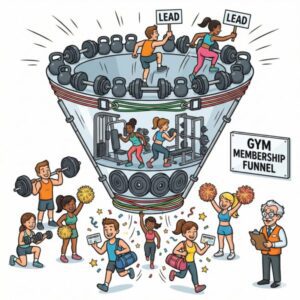
Designing Effective Sales Funnels: Creating conversion paths specifically designed for selling memberships or packages. This involves mapping out the steps a lead takes, from first contact through consideration, decision, and sign-up, ensuring each stage is optimized for conversion.
Nurturing Leads Through Targeted Email Marketing: Developing automated email sequences that provide value, build trust, address potential objections, and guide leads towards becoming members. These emails are segmented based on lead source or interest (e.g., someone interested in weight loss receives different content than someone interested in strength training).
Utilizing Retargeting Strategies: Showing targeted ads to individuals who have visited the website or interacted with social media but haven’t yet converted, reminding them of the offer and encouraging them to take the next step.
Optimizing Conversion Points on Website and Social Media: Continuously testing and refining elements like call-to-action buttons, sign-up forms, and website navigation to make it as easy as possible for potential members to inquire or purchase.
Strategies for Converting Trial Members: Developing specific communication plans and in-person strategies to maximize the conversion rate of individuals who sign up for a free trial or introductory offer into full-paying members.
Hypothetical Scenario: Imagine a boutique cycling studio running a social media campaign for a free trial class. A specialized agency would not just run ads; they’d ensure the landing page is frictionless, have an automated email sequence ready to follow up after the trial, and provide scripts or talking points to the front desk staff to maximize conversion during the post-class interaction.
Client Retention and Community Building
As noted, retention is critical in fitness. Specialized agencies implement strategies focused on keeping members engaged, happy, and loyal.
Implementing Member Communication Strategies: Establishing regular, personalized communication channels – email newsletters with tips and updates, app notifications about classes or events, and even personalized messages – to keep members informed and feeling valued.
Developing Referral Programs: Designing attractive incentives for existing members to refer friends and family. This leverages the power of word-of-mouth within your trusted community.
Creating Engaging Social Media Strategies Focused on Community Interaction: Going beyond promotional posts to share member spotlights, host Q&A sessions with trainers, run fitness challenges, and encourage members to interact with each other online, fostering a sense of belonging.
Utilizing Loyalty Programs and Member Appreciation Initiatives: Implementing programs that reward members for their loyalty, attendance, or achieving milestones, encouraging continued engagement and reinforcing the value of their membership.
Gathering and Leveraging Member Feedback: Setting up systems for collecting feedback through surveys or direct communication, showing members their opinions matter and using the input to improve services and tailor offerings.
Strategies for Re-engaging Inactive Members: Developing targeted campaigns (emails, calls, special offers) specifically aimed at members whose attendance has dropped off, encouraging them to return and providing support.
Hypothetical Scenario: Consider a large health club experiencing a dip in attendance among members who joined 6-12 months ago. A specialized agency would analyze attendance data, segment these members, and launch a multi-channel campaign featuring personalized emails with tips for reigniting motivation, social media posts highlighting the benefits of consistency, and maybe a limited-time “re-engage” offer for a free personal training session or class pass to encourage their return.
Local Marketing and SEO for Fitness Businesses
For most gyms, studios, and personal trainers, success starts locally. A specialized agency understands the nuances of attracting clients from your immediate geographic area.
Optimizing Google My Business Profiles: Ensuring your GMB listing is complete, accurate, regularly updated with posts and photos, and optimized with relevant categories and services. This is crucial for appearing in “near me” searches and the local map pack.
Building Local Citations and Online Directories: Ensuring your business information (Name, Address, Phone Number – NAP) is consistent across relevant online directories and local listing sites, boosting local search visibility and credibility.
Creating Location-Specific Landing Pages: If you have multiple locations, developing unique landing pages for each that highlight location-specific details, schedules, and testimonials, optimizing for searches related to that specific area.
Managing Online Reviews and Reputation: Actively encouraging members to leave reviews on platforms like Google, Yelp, and Facebook, and responding professionally to all reviews, both positive and negative. Positive reviews are powerful social proof for potential local members.
Local Search Advertising Campaigns: Running targeted paid ad campaigns on Google and social media specifically targeting individuals within a defined radius of your location, using keywords like “[type of fitness] near [neighborhood]” or “gyms in [zip code]”.
Strategies for Targeting Specific Neighborhoods or Service Areas: Crafting marketing messages and targeting strategies that speak directly to the residents or employees in your immediate service area, highlighting convenience and community relevance.
Leveraging Digital Channels & Technology in Fitness Marketing
The digital landscape is constantly evolving, and fitness businesses must leverage the right tools and platforms to stay competitive.
Advanced Social Media Marketing: Going beyond basic posting to implement sophisticated strategies for engagement (polls, Q&As, live sessions), community building (member spotlights, group features), and lead generation (targeted ad campaigns, lead forms). This includes understanding the visual nature of platforms like Instagram and the growing importance of short-form video on TikTok for showcasing workouts, facility tours, and trainer personalities.
Effective Email Marketing and CRM Implementation: Setting up robust email marketing systems (integrated with your CRM) to segment leads and members, automate communications (welcome series, retention sequences, event invitations), and track engagement. Selecting and optimizing CRM systems commonly used in the fitness industry (like Mindbody, Zen Planner, etc.) is key.
Video Marketing: Creating compelling video content showcasing your facility, introducing trainers, demonstrating exercises, sharing member success stories, and providing value-driven content. Video is highly engaging and performs well across social media and websites.
Website Design and Optimization: Ensuring your website is not only visually appealing but also user-friendly, mobile-responsive, fast-loading, and optimized for conversion. This includes clear navigation, compelling copy, and easy access to schedules, pricing, and contact information.
Utilizing Fitness-Specific Software Integrations: Connecting your marketing tools with fitness management software (for scheduling, billing, member tracking) to automate processes, personalize communications based on member activity, and gain deeper insights into member behavior.
Exploring Emerging Platforms and Digital Trends: Keeping an eye on new social media platforms, digital tools, or technology trends (like virtual reality fitness or AI-driven personalization) that could offer new marketing opportunities relevant to the fitness industry.
These fitness industry marketing strategies, when executed by a specialized agency, are designed to work together synergistically, creating a powerful engine for growth, from attracting the initial lead to fostering long-term member loyalty. They understand that successful fitness marketing requires a holistic approach that addresses the entire member lifecycle.
Tangible Benefits and ROI of Partnering with a Fitness Marketing Agency
The investment in a specialized fitness marketing agency yields measurable returns that directly impact your bottom line and overall business health. When you partner with one of the best marketing agencies for fitness, the benefits become clear:
You will see accelerated lead generation and member acquisition. With targeted strategies, optimized campaigns, and industry expertise, a specialized agency can dramatically increase the volume of qualified leads entering your pipeline and improve your conversion rates, leading to faster growth in your member base.
Improved member retention rates and lifetime value are significant benefits. By implementing proven community-building and retention strategies, the agency helps you keep members engaged longer, increasing their overall value to your business. This reduces the costly need to constantly replace churned members.
Increased brand visibility and authority within the local market are also crucial outcomes. Effective local SEO, social media engagement, and community involvement elevate your presence, making you the go-to fitness option in your area.
Ultimately, this leads to a higher return on marketing investment (ROI). Specialized agencies know where to allocate your budget for the greatest impact within the fitness niche, avoiding wasted spend on ineffective tactics and channels. They focus on measurable results and optimize campaigns for profitability.
You gain access to data-driven insights for continuous improvement. Specialized agencies track key performance indicators relevant to fitness (like LTV, churn rate, class utilization, lead-to-member conversion) and use this data to refine strategies, ensuring campaigns become more effective over time.
Partnering with an agency frees up internal resources. Your heads of sales and marketing, and your front-line staff, can focus on what they do best: delivering exceptional training, building relationships, and providing an outstanding member experience. The agency handles the complexities of marketing execution, allowing your team to concentrate on core business operations.
You get access to specialized tools and expertise that would be cost-prohibitive or difficult to acquire in-house. This includes advanced marketing software, analytics platforms, and the collective knowledge base of professionals dedicated exclusively to fitness marketing.
The result is measurable growth and predictable revenue streams. With a consistent flow of leads, improved conversion, and higher retention, your business can achieve more stable and predictable revenue, enabling better forecasting and strategic planning for future expansion.
Hypothetical Case Study Snippet: Consider a mid-sized gym that partnered with a specialized fitness marketing agency. Before the partnership, they struggled with inconsistent lead flow and high churn among new members. Within six months, the agency implemented a targeted local digital advertising campaign focused on lead generation for gyms and revamped their email nurturing sequence. Lead volume increased by 40%, and the conversion rate from trial member to full member improved by 15%. Simultaneously, they launched a member engagement program using segmented email and social media, resulting in a 10% reduction in monthly churn among members who had been active for over three months. This led to a significant increase in monthly recurring revenue and a clear positive ROI on their marketing investment. While this is illustrative, such tangible outcomes are the goal of specialized partnerships.
Choosing the Right Fitness Marketing Agency: What to Look For
Not all specialized agencies are created equal. To ensure you partner with one of the best marketing agencies for fitness for your specific business, consider these critical factors:
Look for proven experience and case studies specifically within the fitness industry. Do they have a portfolio showcasing results for gyms, studios, or trainers similar to yours? Can they provide references from current or past fitness clients? This experience demonstrates they understand the unique challenges and opportunities you face.
Ensure they understand your specific niche. Marketing for a large health club is different from marketing for a niche Pilates studio or an independent personal trainer. Does the agency have experience with your particular business model and target demographic?
Demand a results-focused approach with clear KPIs and reporting. The agency should define specific, measurable goals upfront (e.g., increase lead volume by X%, reduce churn by Y%, improve website conversion rate by Z%) and provide regular, transparent reports on progress against those goals. They should speak your language when it comes to metrics that matter for your business growth.
Their understanding of “best marketing agencies for fitness” standards goes beyond basic service delivery. It means they are innovative, stay ahead of trends, and consistently optimize for the highest possible ROI within the fitness sector.
Prioritize transparent communication and reporting processes. You should know exactly what the agency is doing, why they are doing it, and what results they are achieving. Look for an agency that provides regular updates, clear dashboards, and is readily available to answer your questions.
Cultural fit and a collaborative partnership approach are also vital. You’ll be working closely with this agency. Do they feel like an extension of your team? Are they genuinely invested in your success? A good agency acts as a partner, not just a vendor.
Confirm their ability to address your unique challenges. During the evaluation process, present your specific pain points (like high churn or difficulty with lead generation for gyms). Ask them how their proposed strategies would directly address these issues based on their fitness industry experience.
Look for testimonials and reviews from other fitness clients. What do their current and past fitness partners say about their experience? Do they highlight specific results achieved or the agency’s understanding of the fitness industry?
Choosing the right agency is a strategic decision that can significantly impact your growth trajectory. Take the time to vet potential partners thoroughly, focusing on their fitness-specific expertise and proven ability to deliver results.
Partnering for Growth: Integrating the Agency with Your Business
Once you’ve selected a specialized fitness marketing agency, successful partnership hinges on effective integration and collaboration. Treat them as a strategic extension of your team, not just an outsourced provider.
Begin by setting clear goals and expectations together. Define what success looks like, establish key performance indicators (KPIs), and agree on timelines and deliverables. Ensure both parties are aligned on the objectives driving the marketing strategy.
Establish effective communication channels. Determine how often you will meet, who the main points of contact will be on both sides, and how information will be shared. Regular, open communication is essential for staying aligned and addressing any issues promptly.
Provide necessary access and information. Grant the agency access to your website backend, social media accounts, CRM, marketing software, and any relevant data (like membership numbers, attendance trends, sales data). The more information they have, the better they can understand your business and optimize their strategies.
Conduct regular performance reviews and strategy adjustments. Marketing is not static. Schedule regular meetings to review results, discuss what’s working and what’s not, and make necessary adjustments to the strategy based on data and market feedback. The fitness landscape is dynamic, and your marketing needs to be too.
Collaborate on internal sales and member retention processes. Your agency can drive leads and improve retention through marketing, but your internal team’s efforts are also crucial. Work together to align marketing efforts with your sales process (e.g., how leads are followed up on) and your member experience efforts (e.g., onboarding, community events). The agency’s insights on member behavior can inform your internal operations.
Finally, ensure the agency’s strategy aligns with your business objectives and culture. Their marketing efforts should reflect your brand identity, values, and overall business goals. A strong partnership is one where the agency’s work feels authentic to your brand and supports your long-term vision.
Partnering with a specialized fitness marketing agency isn’t a silver bullet, but it is arguably the most effective path to accelerated and sustainable growth in the fitness industry today. Their deep niche expertise, results-focused strategies, and understanding of the unique challenges and opportunities you face allow them to deliver tangible ROI that generalist agencies simply cannot match. They speak your language, understand your members, and are dedicated to helping fitness businesses like yours thrive.
Ready to unlock the full growth potential of your fitness business? Find out how our specialized fitness marketing expertise can grow your business – Request a consultation today.
Further Reading
- The Funnel Building Skills Your Team Needs
- Geofencing Explained: A Marketing Leader’s Guide to Location Targeting
- How Sales Leaders Can Master Gatekeeper Navigation
- Shifting Fintech Landscape: Implications for Sales and Marketing Leaders
- Breaking Down Silos: Building a Unified Bank Sales & Marketing Engine for Accelerated Growth