
Table of Contents
Why Digital Marketing Matters for Selling Construction Equipment
Building Your Online Foundation: Website and Content Strategy
SEO Tactics for Visibility: Getting Found Online
Leveraging Social Media Effectively for B2B Equipment Sales
Driving Leads and Nurturing Relationships with Paid Ads and Email Marketing
Measuring Success and Demonstrating ROI
Integrating Asking for the Business into Your Process Seamlessly
Getting Started and Building a Sustainable Digital Strategy
Further Reading
The roar of heavy machinery on a job site is unmistakable. It signifies progress, power, and capability. For decades, buying that equipment often started with a handshake, a conversation at a dealership, or a referral. But today, the path to acquiring that crucial piece of iron looks fundamentally different.
Ask yourself: when a contractor, builder, or project manager needs to research their next major equipment purchase, where do they really start? More often than not, long before they pick up the phone or visit a showroom, they’re online. They’re searching for specs, comparing models, watching demos, and evaluating dealers.
If your dealership’s digital presence isn’t actively engaging those online researchers, providing the information they need, and guiding them towards a conversation, you’re not just missing leads – you’re missing opportunities to build trust and demonstrate value from the very first touchpoint.
This isn’t about replacing your experienced sales team; it’s about empowering them with higher-quality leads and making the entire sales process more efficient. This guide dives into the core digital marketing strategies that are most impactful for the unique, high-value, and relationship-driven world of construction equipment sales. We’ll explore how to attract the right prospects online, nurture their interest, and ultimately drive valuable leads that convert into sales.
Why Digital Marketing Matters for Selling Construction Equipment
The landscape of B2B purchasing, including the acquisition of heavy equipment, has irrevocably shifted. Buyers, steeped in B2C online experiences, bring those same expectations to their professional lives. Before they even think about engaging with a salesperson, they are conducting extensive online research. Statistics consistently show that a significant majority of B2B buyers complete a large portion of their research online, often up to 70%, before contacting a sales representative. For high-value assets like construction machinery, this initial online phase is critical for forming early impressions and narrowing down options.
The construction equipment market presents unique challenges and opportunities in the digital realm. Unlike selling smaller, less expensive items, you’re dealing with high-value assets and long sales cycles. A purchase decision can involve multiple stakeholders and significant financial investment. This isn’t an impulse buy; it’s a carefully considered capital expenditure. Therefore, your digital efforts must align with this reality, focusing on providing in-depth information, building trust, and supporting the relationship-driven sales process, rather than just driving quick transactions. Geographic considerations are also paramount – while you might have a local dealership footprint, your online reach allows you to connect with buyers researching from a wider area, who may be willing to travel for the right equipment or partnership.
Successfully integrating digital activities means using your online presence to supplement, strengthen, and inform your traditional sales activities. Digital channels can generate initial awareness, provide valuable data on buyer intent, nurture leads through the early stages, and keep your dealership top-of-mind. When a sales professional does engage, they can be armed with insights into what the prospect has already researched on your site, making the conversation more relevant and productive.
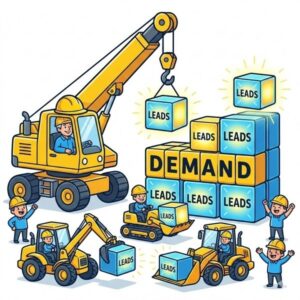
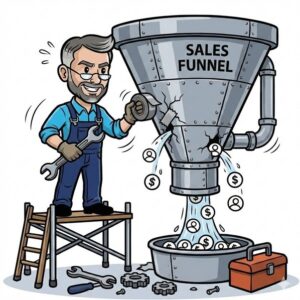
Measuring the impact of digital marketing in this context goes far beyond simple metrics like website clicks or social media likes. While those have their place, the real focus must be on lead quality and pipeline contribution. Are your digital efforts generating leads that fit your ideal customer profile? Are those leads progressing through the sales funnel? Are they contributing to closed deals and revenue? These are the questions digital marketing for construction equipment must answer.
Ultimately, embracing digital marketing is no longer optional; it’s a competitive necessity. Dealerships that fail to adapt risk being invisible to modern buyers who are starting their journey online. To survive and grow in today’s market, construction equipment dealerships must embrace a robust digital strategy that complements their existing strengths.
Building Your Online Foundation: Website and Content Strategy
Your digital marketing efforts need a strong home base, and for a construction equipment dealership, that’s your website. It’s the digital equivalent of your physical lot and showroom – but accessible 24/7 from anywhere.
The Equipment Dealership Website as a Hub
Your website isn’t just a brochure; it’s a powerful sales and information tool. It must be designed specifically to meet the needs of someone researching or looking to purchase heavy equipment.
Essential website features for equipment sales include:
Showcasing Inventory (New, Used, Rental): This is non-negotiable. Each piece of equipment, whether for sale or rent, needs its own dedicated page with clear status (in stock, sold, available for rent). This inventory should be easily searchable and filterable by type, make, model, year, hours, price (or price on request), and location (if you have multiple branches).
Detailed Equipment Specifications and High-Quality Imagery/Video: Technical specs are crucial for equipment buyers. Provide comprehensive details, downloadable spec sheets, and multiple high-resolution photos from different angles. Video walkthroughs or demonstrations showing the equipment in action are incredibly powerful for showcasing condition and capability.
Request a Quote/More Information Forms (Lead Capture): Make it simple and intuitive for prospects to express interest. Prominently placed forms on every equipment page and throughout the site encourage engagement and capture valuable lead information. Consider different forms for “Request a Quote,” “Request More Information,” “Schedule a Demo,” or “Check Availability.”
Service and Parts Information: Equipment ownership involves ongoing needs. Dedicated sections detailing your service capabilities, available parts, maintenance plans, and how to schedule service are essential for demonstrating long-term value and supporting existing customers.
Contact Information and Location Finder: Clear, easy-to-find contact details (phone numbers, email addresses) for sales, service, and parts are vital. A location finder or interactive map with addresses, hours, and directions is necessary for multi-location dealerships.
User experience (UX) and mobile-friendliness are absolutely critical. Your target audience – busy professionals, often in the field or on the go – are highly likely to access your site from a mobile device. A slow, clunky, or non-responsive website will send them straight to a competitor. Navigation must be intuitive, information easy to find, and forms simple to fill out on any screen size.
Website speed and technical performance also impact user experience and search engine rankings. A slow-loading site frustrates users and signals to search engines that your site may not provide a good experience.
Content Marketing for Authority and Lead Generation
Beyond just listing inventory, your website needs content that establishes your dealership as knowledgeable and trustworthy. Content marketing is about creating and distributing valuable, relevant, and consistent content to attract and retain a clearly defined audience – and, importantly, to drive profitable customer action.
Think about the questions your sales team answers every day. Those questions are the foundation of your content strategy. What kind of information is truly valuable to construction equipment buyers and operators?
Equipment Reviews and Comparisons: Objective analysis of different models or brands for specific applications (e.g., “Comparing Compact Track Loaders: John Deere vs. Caterpillar,” “Choosing the Right Excavator Size for Urban Projects”).
Case Studies and Success Stories: Highlight how your equipment has helped customers solve problems or achieve results. Imagine a case study titled, “How [Local Construction Company Name] Increased Earthmoving Efficiency by 20% with Our New [Make/Model] Excavator.” These demonstrate real-world value.
Maintenance Tips and Guides: Practical advice on extending equipment lifespan, performing routine checks, or troubleshooting common issues. This positions you as a partner in their equipment ownership journey.
Industry News and Trends Relevant to Equipment Use: How do new regulations, technology shifts (like telematics), or economic trends impact equipment needs or operations? Sharing these insights shows you understand their world.
Financing and Leasing Options Explained: Break down complex topics into understandable terms, helping buyers navigate the purchasing process.
Using content to address buyer pain points and answer common questions builds authority and trust. By providing helpful information upfront, you position your dealership as a valuable resource, not just a vendor. Content should be created for different stages of the buyer journey. Early-stage buyers might need comparison guides or industry trend analysis, while later-stage buyers might seek detailed specs, financing options, or customer testimonials.
Your blogging strategy is a core component of this. Regular blog posts on topics relevant to your audience, such as “5 Tips for Extending the Life of Your Dozer Tracks” or “Understanding Tier 4 Final Emissions Standards,” attract visitors searching for this information.
Video marketing is particularly effective in the equipment world. Showing equipment in action, providing detailed walkthroughs of features, sharing customer testimonials, or offering quick maintenance tips via video can be far more engaging and informative than text and images alone. Consider creating YouTube videos linked from your website and social media.
SEO Tactics for Visibility: Getting Found Online
Even the best website and most valuable content are useless if potential customers can’t find them. Search engine optimization (SEO) is the process of improving your site to increase its visibility for relevant searches on platforms like Google. For construction equipment dealers, effective SEO is crucial for capturing prospects actively looking to buy or rent.
Keyword Research for High-Intent Searches
The foundation of SEO is understanding what words and phrases your potential buyers are typing into search engines. For heavy equipment, these searches often have high commercial intent – meaning the user is looking to make a purchase or inquiry soon.
Identify keywords potential buyers use. These aren’t just generic terms like “construction equipment.” They are specific, often including location and condition:
“used excavator for sale [your city/state]”
“[Make] [Model] [Equipment Type] for sale” (e.g., “Caterpillar 320 for sale”)
“skid steer rental cost [near me]”
“heavy equipment dealer near me”
“[Make] [Model] parts [location]”
“service for [Make] [Model]”
Focusing on long-tail keywords – more specific phrases (typically three or more words) – can attract more qualified traffic. Someone searching for “used compact track loader with low hours in Arizona” is likely further along in the buying process than someone just searching for “construction equipment.”
Researching competitor keywords can also reveal opportunities. What terms are your successful competitors ranking for? Tools can help identify these. Using keyword tools specifically tailored to B2B and local search helps refine your strategy.
On-Page SEO Optimization
Once you know what keywords to target, you need to optimize the content on your website. This is especially important for your inventory pages.
Optimizing product/inventory pages: Each equipment page should be optimized for specific keywords related to that make, model, and condition (new, used, rental). Use the primary keyword in the page title, meta description (the short summary shown in search results), main heading (H1), within the body text description, and in the alt text for images.
Structuring content effectively with header tags (H1, H2, H3): Use H1 for the main page title. Use H2s for main sections (like “Specifications,” “Features,” “Get a Quote”). Use H3s or H4s for sub-sections within those (e.g., under Specifications: “Engine,” “Hydraulics,” “Dimensions”). This structure helps search engines understand the content and improves readability.
Internal linking strategy: Link relevant pages within your site. For example, from an excavator page, link to related attachments, service specials for excavators, or a blog post comparing different excavator models. This helps users find related information and helps search engines discover more of your content. You might link from a discussion about SEO to a dedicated resource like our guide: /blog/seo-tips-heavy-equipment.
Creating descriptive and SEO-friendly URLs: URLs should be clean and include relevant keywords, e.g., yourdealership.com/used-excavator-cat-320-phoenix.
Optimizing content for readability and relevance: While optimizing for keywords, ensure the content reads naturally and provides real value to the user. Answer their potential questions directly within the page copy.
Technical SEO for Performance
Technical SEO focuses on the backend of your website to ensure search engines can easily crawl, understand, and index your pages.
Site structure and navigation: A logical site hierarchy and clear navigation menu help both users and search engine crawlers find all the important pages on your site.
XML sitemaps and robots.txt: These files help search engines understand which pages to crawl and which to ignore.
Schema markup: This is structured data that helps search engines understand the context of your content. Implementing schema for equipment details (make, model, price, availability), your organization information, and local business details (address, phone, hours) can enhance your search listings.
Page speed optimization: As mentioned earlier, site speed is crucial. Optimize images, leverage browser caching, and minimize code to ensure fast loading times.
Ensuring mobile-first indexing readiness: Google primarily uses the mobile version of your site for indexing and ranking. Ensure your mobile site is fully functional and contains all the content of your desktop site.
Local SEO for Dealerships
For businesses with physical locations, local SEO is paramount. You want to appear prominently when someone nearby searches for equipment or related services.
Claiming and optimizing Google Business Profile (GBP): This is your most important local SEO asset. Claim your listing(s) for each dealership location. Fill out every section completely: accurate name, address, phone number (NAP), website link, hours, services offered (sales, service, parts, rental), categories (e.g., “Heavy equipment dealer,” “Construction equipment supplier”). Add high-quality photos of your dealership, inventory, and team. Utilize the Q&A feature and regularly post updates about new arrivals, specials, or events.
Managing online citations: Ensure your Name, Address, and Phone Number (NAP) are consistent across all online directories and platforms (Yelp, industry-specific directories, local business listings). Inconsistent information confuses search engines and potential customers.
Generating and responding to online reviews: Encourage satisfied customers to leave reviews on Google, industry sites, and Facebook. Respond promptly and professionally to all reviews, positive or negative. Reviews build trust and are a significant local ranking factor.
Local keyword targeting: Naturally incorporate local keywords (city, region) into your website content, meta descriptions, and GBP posts.
Building local links and mentions: Seek mentions and links from local business associations, chambers of commerce, local news sites, and community partners.
Link Building and Off-Page Authority
Link building involves acquiring backlinks (links from other websites to yours). Backlinks from reputable and relevant websites signal to search engines that your site is trustworthy and authoritative.
Strategies for acquiring high-quality backlinks: Focus on earning links from relevant sources. This could include industry directories, manufacturer websites (dealership locator pages), local business directories, reputable industry blogs, or partnerships with related businesses (e.g., a hauling company you recommend).
Building domain authority and trust: A strong backlink profile increases your website’s overall authority, which benefits all your pages.
Mentioning your dealership in relevant online publications or forums: Participate in industry discussions online (where appropriate and not spammy), sharing your expertise and linking back to relevant resources on your site.
Leveraging Social Media Effectively for B2B Equipment Sales
While often seen as a B2C tool, social media platforms can be incredibly effective for B2B lead generation and relationship building in the construction equipment world, provided you approach them strategically. It’s not just about broadcasting; it’s about connecting with your audience where they spend time online.
Choosing the Right Platforms
Not all social platforms are created equal for B2B equipment sales. Focus your efforts where your target audience is most active professionally and where your content resonates best.
LinkedIn: This is the premier platform for B2B networking. Use it to connect with decision-makers (owners, project managers, fleet managers), share industry insights, position your team as experts, and follow companies you want to do business with. It’s excellent for thought leadership and building professional relationships.
Facebook & Instagram: These platforms are valuable for showcasing inventory with high-quality visuals and videos. They are also great for local community engagement, running targeted ads (more on that later), and promoting used equipment or special offers that might appeal to a broader audience or smaller businesses.
YouTube: Essential for demonstrating heavy equipment. Buyers want to see machines in action, understand features, and hear from satisfied customers. Create walkthroughs, comparison videos, maintenance tips, and customer testimonials.
Other potential platforms: Depending on your niche, there might be specific industry forums or niche social networks where your audience gathers. Research where your customers get their information online. You can find more detailed social media strategies in resources like our dedicated post: /blog/social-media-strategy-equipment-dealers.
Social Media Content Strategy
Your social media content should be engaging, relevant, and aligned with your overall goals (lead generation, brand building, customer engagement).
Showcasing inventory with high-quality visuals and videos: Post striking photos and compelling videos of new arrivals, used equipment, and machines on the job site. Include key specs and a clear call to action (e.g., “Learn More,” “Request a Quote”).
Sharing relevant industry news and thought leadership: Curate and share articles about industry trends, market forecasts, or new construction techniques. Offer your expert perspective.
Highlighting successful customer projects (with permission): Share photos or videos of your equipment being used effectively on real projects. This provides social proof and showcases your machines’ capabilities in a real-world context. Always obtain permission before sharing customer information or project details. A great example might be a post celebrating, “Another successful foundation poured by [Customer Name] using our reliable [Make/Model] concrete pump!”
Behind-the-scenes look at the dealership, staff expertise: Humanize your brand. Introduce your sales team, service technicians, and parts counter staff. Highlight their experience and expertise. This builds trust and reinforces the relationship aspect of your business.
Promoting service and parts departments: Use social media to share maintenance tips, announce parts specials, or remind customers about seasonal service needs.
Running polls or asking questions: Engage your audience by asking about their favorite equipment, biggest job site challenges, or what they look for in a dealer.
Engagement and Community Building
Social media is a two-way street. Active engagement is key to building relationships and identifying potential leads.
Responding promptly to comments and messages: Be responsive. If someone asks a question about a machine or service via social media, reply quickly and professionally.
Participating in relevant groups and discussions: Join LinkedIn groups or Facebook groups related to construction, heavy equipment, or local business. Share your expertise and engage respectfully (avoid blatant self-promotion).
Connecting with potential leads and existing customers: Use LinkedIn to connect with individuals at target companies. Engage with their posts and share valuable content.
Running Q&A sessions or live streams: Host live Q&A sessions on Facebook or YouTube where your experts answer questions about specific equipment types, maintenance, or financing.
Using Social Media for Lead Generation
Social platforms offer built-in tools to help you generate leads directly.
Creating lead generation forms directly on platforms: LinkedIn Lead Gen Forms and Facebook Lead Ads allow users to submit their contact information with just a few clicks, as the forms are pre-populated with profile data. This lowers the barrier to entry for busy users on mobile.
Driving traffic to specific landing pages: Use social media posts and ads to direct users to optimized landing pages on your website for specific purposes, such as requesting a quote, downloading a spec sheet, or signing up for a demo.
Identifying potential leads through social listening: Monitor conversations mentioning your brand, competitor brands, specific equipment types, or industry challenges. This can uncover individuals or companies actively seeking solutions.
Integrating social media efforts with CRM: Ensure that leads generated through social media are captured and tracked in your Customer Relationship Management (CRM) system. This allows your sales team to follow up effectively and provides data on which social efforts are yielding results.
Driving Leads and Nurturing Relationships with Paid Ads and Email Marketing
Once you have a solid online foundation and are visible through SEO and social media, paid advertising and email marketing can accelerate lead generation and nurture prospects through the sales cycle.
Paid Advertising (PPC) Strategies
Pay-Per-Click (PPC) advertising allows you to reach specific audiences with targeted messages and drive them to your website or landing pages. For high-value equipment, focusing on generating qualified leads is paramount, rather than just high traffic.
Google Ads:
Search campaigns: Target users actively searching with high-intent keywords like “buy construction equipment,” “heavy machinery rental rates,” “[Make] [Model] price,” or “used equipment financing.” These are prospects close to a decision.
Display campaigns: Use the Google Display Network to show visual ads to specific audiences online. This is excellent for remarketing – showing ads to people who have recently visited your website but didn’t convert. It keeps your dealership top-of-mind.
Video campaigns on YouTube: Run ads before or during relevant YouTube videos (e.g., equipment reviews, construction tutorials) to showcase your machinery or dealership through compelling video content.
Local search ads: Target users searching for equipment or dealers specifically in your geographic area, promoting your local presence.
Social Media Advertising (e.g., LinkedIn Ads, Facebook Ads):
Targeting specific job titles, industries, or company sizes: LinkedIn Ads are powerful for reaching specific professional roles (e.g., Construction Manager, Equipment Procurement, Business Owner) within relevant industries (Construction, Mining, Agriculture). Facebook Ads allow targeting based on demographics, interests, and behaviors, useful for reaching local contractors or specific business types.
Running lead generation campaigns: Use the native lead form ad formats on these platforms to make it easy for prospects to request information without leaving the platform.
Remarketing: Target ads to people who have visited your website, engaged with your social content, or are on your email list.
Ad copywriting and creative best practices for B2B equipment: Your ad copy needs to be professional, highlight specific benefits, and speak directly to the needs of equipment buyers (e.g., focus on reliability, performance, financing options, service support). Use high-quality images or videos in your ads.
Optimizing landing pages for lead conversion: The page a user lands on after clicking your ad must be highly relevant to the ad’s message and designed to convert. Ensure a clear headline, concise value proposition, relevant images/video, and a prominent, easy-to-fill lead form.
Setting budgets and bidding strategies for high-value leads: Bidding strategies in PPC should focus on maximizing conversions (leads) or conversion value, rather than just clicks. Allocate budget to campaigns targeting high-intent keywords or audiences most likely to become qualified leads.
Email Marketing for Lead Nurturing and Customer Retention

Email marketing remains one of the most effective digital channels for B2B communication, particularly for nurturing leads over a long sales cycle and fostering customer loyalty.
Building an email list: Grow your list ethically through opt-ins on your website (e.g., “Subscribe for New Inventory Alerts,” “Download Our Equipment Buying Guide”), lead generation forms, trade shows, and interactions with your sales team.
Segmenting your audience: Not all contacts are the same. Segment your email list based on criteria like lead status (prospect, MQL, SQL), equipment interest (excavators, loaders, dozers), customer type (contractor, rental company, government), purchase history, or location. This allows for highly targeted messaging.
Types of email content: Send relevant, valuable emails based on audience segments.
New inventory alerts: Notify interested segments when specific types of new or used equipment arrive.
Promotions and special offers: Share details on financing deals, service discounts, or parts specials.
Maintenance reminders: For existing customers, send timely reminders for scheduled maintenance based on hours or time.
Industry news and tips: Share your latest blog posts, video releases, or curated industry articles.
Personalized follow-ups after inquiries: If someone requests a quote online, an automated email sequence can provide additional relevant information (financing options, customer testimonials, warranty details).
Newsletters: A regular newsletter can consolidate updates, highlight value, and keep your dealership top-of-mind.
Automated email workflows for lead nurturing: Set up automated email sequences triggered by specific actions (e.g., someone downloads a guide about excavators -> send a sequence of emails comparing models, detailing specs, and offering a demo). This keeps prospects engaged and moves them down the funnel even when a salesperson isn’t actively involved.
Integrating email marketing with your CRM system: This is crucial. Ensure leads and their engagement activity from email are tracked in your CRM, providing the sales team with valuable context. Sales can also trigger emails from the CRM.
Measuring email performance: Track key metrics like open rates, click-through rates, conversion rates (e.g., clicks leading to a quote request or contact form submission), and unsubscribe rates. Use this data to refine your email content and segmentation.
Measuring Success and Demonstrating ROI
In the world of high-value equipment sales, proving the return on investment (ROI) of marketing efforts is essential. Digital marketing provides robust tools for tracking and measurement, allowing you to move beyond guesswork and show tangible results.
Identifying Key Performance Indicators (KPIs)
Focus on KPIs that align digital activities with business outcomes: lead quality and sales efficiency.
Website traffic and source analysis: Monitor how many people visit your site, where they come from (organic search, paid ads, social media, email, direct), and which pages they visit. High traffic is good, but traffic from sources known to produce qualified leads is better.
Lead volume and quality: Track the number of leads generated through digital channels (website forms, phone calls from tracked numbers, social media forms). More importantly, work with your sales team to define and track lead quality (e.g., marketing-qualified leads (MQLs) that meet certain criteria vs. sales-qualified leads (SQLs) that the sales team has accepted).
Conversion rates: Measure the percentage of website visitors or ad clicks that complete a desired action (e.g., fill out a quote request form, submit a contact form, click a tracked phone number).
Cost per lead (CPL): Calculate the average cost to generate a single lead from each digital channel (e.g., total ad spend divided by the number of leads from that ad campaign). This helps evaluate channel efficiency.
Customer acquisition cost (CAC) from digital sources: Track the total sales and marketing spend attributable to digital channels required to acquire a new customer who originated from digital. This requires good CRM tracking.
Pipeline contribution and revenue attribution: This is the most critical KPI. Track how many leads generated from digital channels progress through the sales pipeline (become opportunities) and ultimately result in closed deals and revenue. Your CRM is essential for this.
Engagement metrics: While not direct ROI, engagement metrics (social media likes/shares/comments, email open/click rates, time on site, pages per session) indicate how well your content and presence are resonating with your audience.
Utilizing Analytics and Tracking Tools
Effective measurement requires proper setup of tracking tools.
Setting up Google Analytics goals and event tracking: Configure goals in Google Analytics to track specific actions that indicate lead generation, such as “Quote Request Form Submission,” “Contact Us Form Submission,” “Phone Number Click (Mobile).” Use event tracking for clicks on important buttons or downloads of spec sheets.
Using Google Tag Manager: This simplifies the process of adding and managing website tags (like Google Analytics tracking codes, conversion pixels for ad platforms, etc.) without needing to modify website code directly for every change.
CRM reporting and dashboards: Your CRM system is the central hub for tracking leads from their source (digital or traditional) through the entire sales pipeline. Ensure your CRM is set up to capture the lead source accurately and allows your sales team to update lead status and deal value. Build dashboards to visualize pipeline contribution by lead source.
Social media analytics platforms: Each social platform provides its own analytics on audience growth, engagement, and performance of paid campaigns.
Email marketing platform analytics: Track the performance of your email campaigns within your email service provider.
Call tracking solutions: Implement call tracking phone numbers on your website and potentially in ads to attribute phone calls (which are often high-quality leads) back to the digital source that drove them.
Calculating and Reporting ROI
Demonstrating ROI requires connecting your digital spend and efforts to actual revenue.
Defining what constitutes a successful conversion: Is it a form submission, a qualified phone call, or only a sales-accepted lead? Define clear conversion points that align with your sales process.
Tracking the value of leads generated through digital channels: Work with sales to understand the average deal size for leads originating from digital sources.
Calculating the return on investment: A simple ROI calculation is (Revenue from Digital Leads – Digital Marketing Cost) / Digital Marketing Cost. For a more granular view, calculate ROI per channel or per campaign.
Communicating results effectively: Regularly report key findings and ROI metrics to your sales team and management. Show them which digital efforts are generating the most qualified leads and contributing most to the pipeline. This fosters collaboration and justifies investment.
Using data to refine and optimize: The data you collect isn’t just for reporting; it’s for improvement. Use insights to refine your keyword targeting, optimize ad spend, improve website conversion paths, and tailor your content strategy. For instance, if you see that leads from LinkedIn Ads targeting Project Managers have a significantly higher conversion rate to opportunities than leads from a general Facebook campaign, you can shift budget accordingly.
Integrating Digital Marketing with Your Sales Process
For construction equipment sales, digital marketing should not operate in a vacuum. Its greatest power comes from seamless integration with your traditional sales activities. This alignment ensures marketing efforts support sales goals and that leads generated online are effectively handled.
Aligning marketing and sales goals is the first step. Both teams should agree on what constitutes a “qualified lead” and what the handover process looks like. Marketing generates leads; sales works to close them.
Implementing a CRM system is non-negotiable for effective integration. The CRM should be the central database where all lead information, regardless of source (website form, phone call, trade show, walk-in), is captured and tracked. This provides a unified view of the customer journey.
Establishing clear lead handover processes ensures no lead falls through the cracks. When a lead submits a high-intent form online (e.g., Request a Quote), the system should automatically notify the relevant salesperson or sales manager, perhaps assigning the lead based on location or equipment interest.
Enabling salespeople with digital tools and insights empowers them to be more effective. Providing access to the CRM allows them to see a prospect’s online activity (which pages they visited, what content they downloaded, what emails they opened), giving them valuable context before initial contact. Marketing can also create digital assets (spec sheets, videos, case studies) that salespeople can use in their follow-up.
Using marketing automation can help score and nurture leads before they are handed over to sales. Based on a prospect’s online behavior (e.g., visited multiple high-value equipment pages, downloaded a financing guide), they can be assigned a lead score. Once a certain score is reached, indicating strong interest and engagement, the lead is automatically passed to sales. Automated email workflows keep less-scored leads warm until they are ready for direct sales contact.
Gathering feedback from the sales team on lead quality is vital for continuous improvement. Regular communication between marketing and sales ensures that marketing is generating the right kind of leads. If sales reports that online leads are consistently unqualified, marketing can adjust targeting, messaging, or website forms.
Getting Started and Building a Sustainable Digital Strategy
Embarking on or refining your digital marketing journey for construction equipment sales requires a structured approach. It’s not about doing everything at once, but about building a sustainable strategy that delivers results over time.
Start by assessing your current digital presence. How does your website look and perform? Are you visible in search results for key terms? What are your competitors doing online? What digital assets do you currently possess?
Defining your target audience and their online behavior is crucial. Go deeper than just “contractors.” What types of contractors? What size are their businesses? What are their pain points? Where do they spend time online? What questions do they have about equipment?
Setting clear, measurable digital marketing goals is essential. Instead of a vague goal like “get more leads,” aim for specifics: “Increase qualified online leads for excavators by 15% within the next six months” or “Improve the close rate on digitally-sourced leads by 5% in the next year.”
Allocating budget effectively across different channels requires understanding where your target audience is and which activities are most likely to yield qualified leads. You might start with a focus on essential SEO and website improvements, then gradually invest in targeted paid ads or social media campaigns.
Building the right team or finding the right partners is key. Do you have internal marketing expertise? Do you need to hire? Or would partnering with a digital marketing agency that understands the B2B equipment market be a better fit?
Implementing a phased approach to digital adoption allows you to build momentum and learn as you go. Start with the foundational elements like your website and local SEO, then add content marketing, followed by paid channels and social media.
Finally, continual testing, learning, and adaptation are critical in a dynamic market. The digital landscape, search algorithms, platform features, and buyer behavior are constantly evolving. Regularly review your data, test new tactics, learn from what works and what doesn’t, and be prepared to adapt your strategy to stay ahead. By committing to a strategic, integrated digital marketing approach, construction equipment dealerships can significantly improve their lead quality, increase sales efficiency, and secure their position in a competitive market.
Further Reading
- Optimizing Your B2B Marketing Funnel Stages for Peak Revenue Conversion
- How Buyer Personas Directly Drive Revenue Growth
- How to Ask for the Sale Without Feeling Awkward: 3 Simple Closing Techniques
- How Conversion Rate Experts Drive Revenue Growth & ROI
- The ROI of a CRO Agency: Proving the Value of Conversion Rate Optimization